Saskatoon Serviceberry
Saskatoon Serviceberry
Couldn't load pickup availability
Saskatoon Serviceberry for Sale – Amelanchier alnifolia Berry Plant
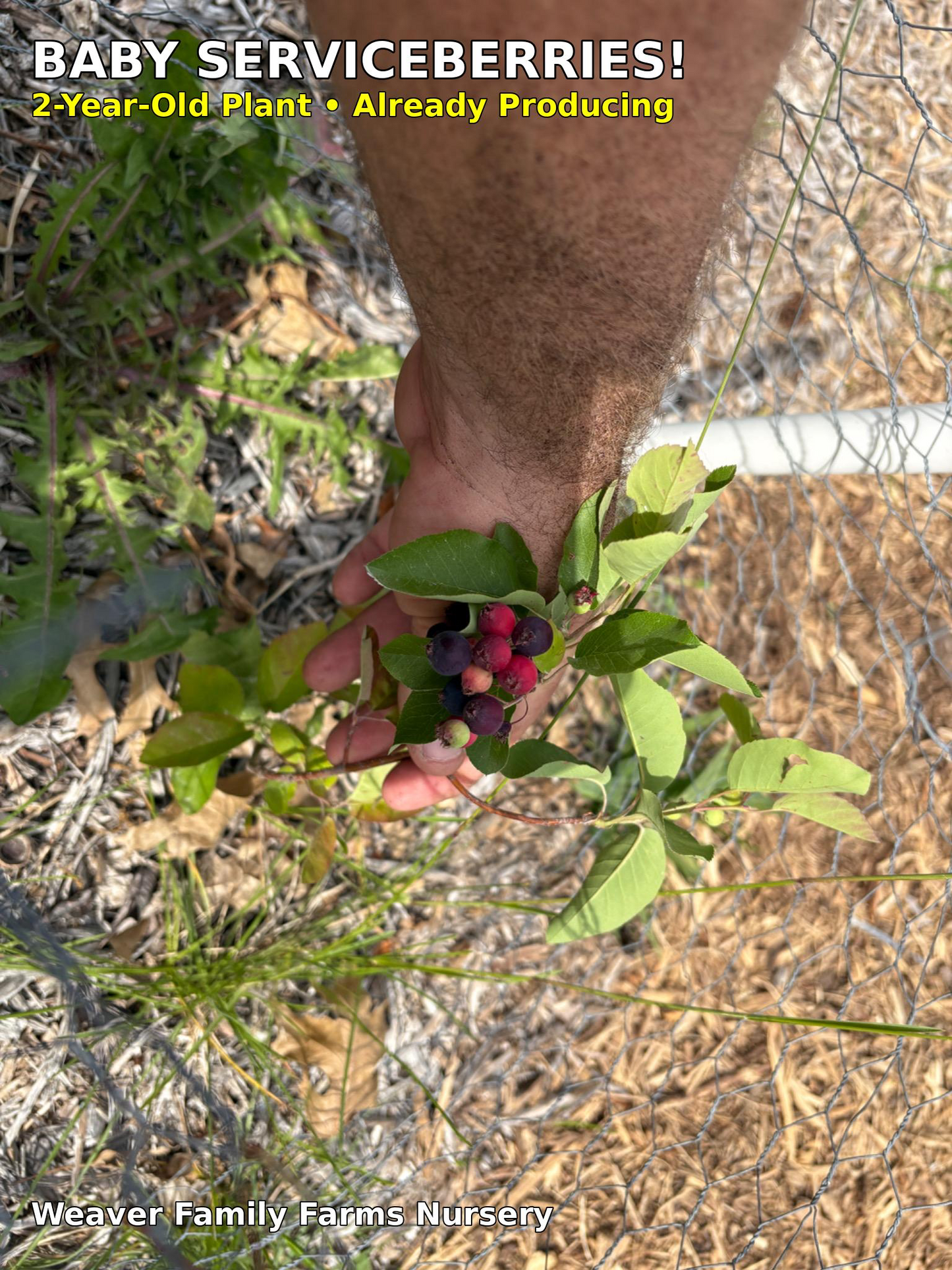
The Saskatoon Serviceberry (Amelanchier alnifolia) is one of the best native edible berry plants you can grow in your yard, homestead, or food forest. Known for its sweet blueberry-like berries, beautiful white spring flowers, and excellent cold hardiness, this productive plant has become increasingly popular across the United States.
Sometimes called Saskatoon Berry, Juneberry, or Western Serviceberry, this hardy plant produces flavorful purple-blue berries that many people compare to blueberries with a hint of almond or cherry flavor.
At Weaver Family Farms Nursery, we love offering productive plants that are both beautiful and useful. Saskatoon Serviceberries are fantastic for wildlife gardens, edible landscapes, and backyard berry production.
You can browse all of our available plants anytime here: explore our full nursery plant collection.
Why Grow Saskatoon Serviceberry Plants?
Saskatoon Serviceberries are loved for their combination of beauty, hardiness, and delicious fruit.
- Produces sweet edible purple-blue berries
- Beautiful white flowers appear in spring
- Excellent cold hardy native berry plant
- Attracts pollinators and wildlife
- Beautiful orange and red fall foliage color
The berries can be eaten fresh or used for jams, pies, syrups, baked goods, smoothies, and preserves.
What Makes Saskatoon Serviceberry Different?
While many people are familiar with standard serviceberry trees, Amelanchier alnifolia is slightly different and is especially prized for berry production.
Saskatoon Serviceberry plants are known for producing flavorful berries in larger quantities while still maintaining the ornamental beauty that serviceberries are famous for.
If you are also interested in other native edible plants, you may want to check out our Native Pawpaw Trees, American Elderberry Plants, or Triple Crown Blackberry Plants.
Delicious Edible Berries
The berries produced by Saskatoon Serviceberry plants are one of the biggest reasons gardeners love them. The fruit typically ripens in early summer and develops a rich purple-blue color.
Many people compare the flavor to blueberries, but with a richer and slightly nutty sweetness.
Saskatoon berries are often used for:
- Fresh eating
- Jams and jellies
- Pies and cobblers
- Syrups and sauces
- Smoothies and baking
If you enjoy growing edible backyard plants, you may also love our Bluecrop Blueberry Plants or our productive Seedless Concord Grape Vines.
Beautiful Through Multiple Seasons
One of the best things about Saskatoon Serviceberry plants is that they look beautiful during nearly every season of the year.
- Spring brings delicate white flowers
- Summer produces edible berries
- Fall foliage turns shades of orange and red
- Winter structure adds texture to the landscape
This makes Saskatoon Serviceberry an outstanding ornamental edible plant for landscaping.
Mature Size and Growth Habit
Saskatoon Serviceberry typically grows as a large shrub or small multi-stem tree.
- Height: 6 to 15 feet tall
- Width: 5 to 12 feet wide
- Growth rate: Moderate
- Shape: Upright rounded shrub or small tree
This moderate size makes it a great fit for backyard gardens, edible landscapes, and food forest plantings.
Growing Conditions for Saskatoon Serviceberry
Saskatoon Serviceberry plants are hardy and adaptable across many growing zones.
- USDA Zones 2 through 8
- Full sun to partial shade
- Well-drained soil preferred
- Cold-hardy and adaptable once established
For best results after planting, follow our helpful guide here: How to Care for Your New Tree.
When Is the Best Time to Plant Saskatoon Serviceberry?
Like many shrubs and small trees, Saskatoon Serviceberry plants do best when planted during spring or fall.
Learn more about planting timing in our guide here: When Is the Best Time to Plant a New Tree?.
Landscaping and Homestead Uses
Saskatoon Serviceberries work beautifully in both ornamental and edible landscapes.
- Edible landscaping
- Backyard berry gardens
- Food forest plantings
- Wildlife friendly landscapes
- Native pollinator gardens
Many homeowners combine Saskatoon Serviceberries with other productive plants such as Aurora Honeyberry Plants, Tundra Honeyberry Plants, and Indigo Treat Honeyberries to create productive berry gardens.
Native Wildlife Benefits
Saskatoon Serviceberry plants are excellent for wildlife friendly landscapes. The spring flowers help pollinators, while birds and wildlife enjoy the berries during summer.
Native edible plants like these help create a healthier and more natural ecosystem in your yard.
Why Buy From Weaver Family Farms Nursery
At Weaver Family Farms Nursery, we are proud to be a small American family nursery that truly cares about growing hardy plants for real landscapes.
We carefully grow and select plants that perform well across much of the United States and provide long-term beauty and productivity.
If you ever have questions about planting, shipping, or selecting the right berry plants, feel free to contact us anytime through our Contact Page.
Saskatoon Serviceberry Frequently Asked Questions
Are Saskatoon Serviceberries edible?
Yes. Saskatoon berries are edible and are often compared to blueberries in flavor.
What is the difference between Saskatoon Serviceberry and regular Serviceberry?
Amelanchier alnifolia is especially valued for berry production and cold hardiness while still providing beautiful ornamental value.
Is Saskatoon Serviceberry native to North America?
Yes. Saskatoon Serviceberry is native to parts of North America and grows very well across many colder regions.
How big does Saskatoon Serviceberry get?
Most Saskatoon Serviceberry plants grow around 6 to 15 feet tall depending on growing conditions.
Do birds eat Saskatoon berries?
Yes. Birds absolutely love Saskatoon berries, which makes these plants excellent for wildlife friendly landscapes.
Shipping
Shipping
All of our trees ship Bareroot which means they will ship with no soil and no pot. This allows the plants to have a safer trip through the mail as well as to cut down on shipping costs majorly. The roots will be carefully removed from the pot they are growing in, and then wrapped in moist material with the roots sealed up to keep them moist during transit.
Shipping Restrictions
Shipping Restrictions
To follow your state regulations, we can not ship this plant to California, AZ, AK, HI
Deliveries to WA, UT, ID, NV, MT, ND, and SD MUST be shipped Bareroot.
Check Out Our States We Can Ship To Guide
Will My Plant Have Leaves?
Will My Plant Have Leaves?
The arrival of your plant may vary depending on the season you order. In zone 6, plants have leaves during the growing season but not in late fall, winter, or early spring when they are dormant.

Bareroot Vs Potted Plants
Bareroot Vs Potted Plants
Our method involves combining potted and bareroot plants. They are initially grown in pots before being carefully shipped without the pot or heavy dirt, as per shipping regulations. The plant is then sent to you bareroot.
Click Here To See More Information About Bareroot VS Potted Trees

What Is A Dormant Tree?
What Is A Dormant Tree?
A dormant tree is a deciduous plant that appears asleep and does not have leaves upon arrival. Proper planting and care are necessary until it awakens in the growing season.
Click Here To See The Best Time Of Year For Planting Trees In The Ground

What Is A Grow Zone?
What Is A Grow Zone?
A grow zone is the precise USDA zone where you reside. Certain plants are not adaptable to colder zones, while others struggle in warmer zones. Familiarizing yourself with your zone and the plant's compatibility is vital. Click Here to learn more about grow zones.

What If I Have Other Questions?
What If I Have Other Questions?
We have a great FAQ page that answers many more questions and in great detail to help you have success with your new plants! See Our Frequently Asked Questions Here.