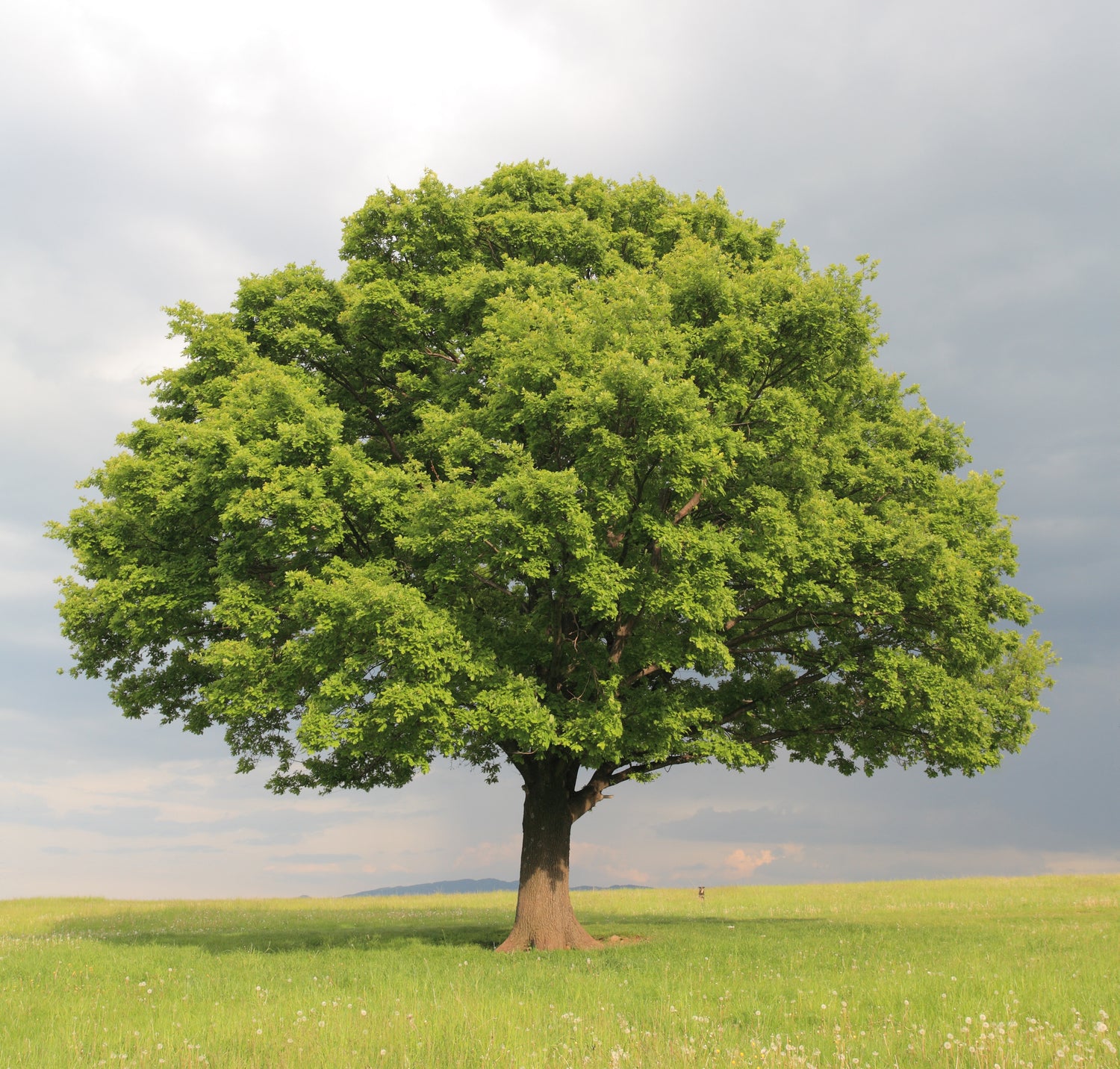
Oak trees are the most ecologically important trees you can plant in a Midwest landscape. A single mature oak supports more wildlife — more caterpillar species, more bird species, more insects — than almost any other tree genus. They're also among the longest-lived trees in North America, with some individuals living 500–1,000 years. Pair them with the right ornamental shrubs and you have a landscape that's beautiful, wildlife-rich, and built to last for generations. You can find more about trees and shrubs that support wildlife in the Midwest in our article on trees and shrubs for Midwest wildlife. For detailed selections of ornamental shrubs to complement your oaks, see our guide to ornamental shrubs that thrive in the Midwest.
This guide covers the best oak trees and ornamental shrubs for the Midwest — from towering red oaks to compact potentillas and hydrangeas. Every plant ships directly from our nursery.
Oak Trees for the Midwest
Oaks (Quercus) are the single most wildlife-valuable tree genus in North America. A single oak supports over 500 caterpillar species — more than any other tree — making them the foundation of the food web for nesting birds. They also produce acorns that feed deer, turkeys, squirrels, blue jays, and wood ducks. Plant an oak and you're investing in your local ecosystem for centuries.
Northern Red Oak — The Fastest-Growing Oak

Northern Red Oak is the fastest-growing oak available for the Midwest — growing 2–3 feet per year and reaching 60–75 feet tall at maturity. The large, deeply lobed leaves turn a brilliant red to russet-red in fall, and the tree produces abundant acorns that feed wildlife through fall and winter. It's also one of the most adaptable oaks, tolerating clay soil, urban conditions, and a wide range of sites. Hardy in Zones 3–8.

Our Northern Red Oak Tree is the fastest-growing oak for Midwest landscapes — brilliant fall color and exceptional wildlife value.
Pin Oak — The Most Popular Landscape Oak

Pin Oak is the most widely planted landscape oak in the Midwest — its naturally pyramidal form, fast growth (2–3 feet per year), and tolerance of wet clay soils make it one of the most versatile large trees available. The deeply cut leaves turn a rich bronze-red in fall and often persist on the tree through winter, providing visual interest and cover for birds. It produces abundant small acorns that are a critical food source for wood ducks, mallards, and other waterfowl. Grows 60–70 feet tall. Hardy in Zones 4–8.

Our Pin Oak Tree is the most popular landscape oak — pyramidal form, fast growth, and tolerates wet clay soil.
Shumard Oak — The Best Oak for Fall Color

Shumard Oak produces some of the most brilliant fall color of any oak — the deeply lobed leaves turn a vivid scarlet-red in October that rivals the best maples. It grows 40–60 feet tall with a broad, spreading canopy and is one of the most drought-tolerant oaks available once established. The acorns feed deer, turkeys, and squirrels. Hardy in Zones 5–9.

Our Shumard Oak Tree is the best oak for fall color — vivid scarlet-red that rivals the best maples.
Willow Oak — The Most Elegant Oak

Willow Oak is the most elegant and refined of all the oaks — narrow, willow-like leaves give it a fine, delicate texture unlike any other oak. The result is a large, graceful tree with a rounded canopy and a soft, airy appearance. It grows 40–60 feet tall, tolerates wet soils, and produces abundant small acorns for wildlife. Hardy in Zones 5–9.

Our Willow Oak Tree is the most elegant oak — fine willow-like leaves and a graceful, rounded canopy.
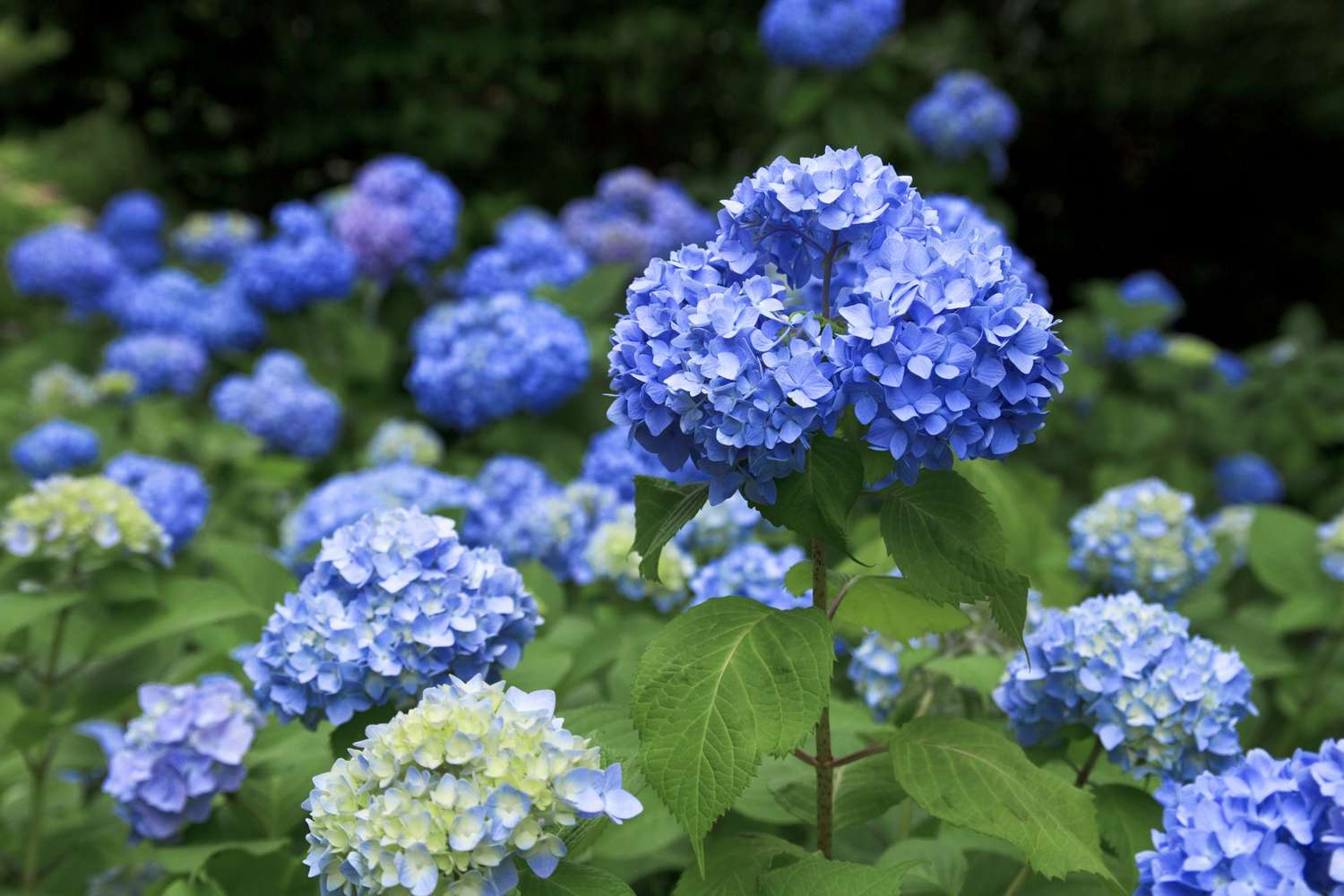
Hydrangeas — The Best Summer-Blooming Shrubs
Hydrangea 'Tardiva' — The Most Elegant Panicle Hydrangea

Tardiva produces long, graceful, cone-shaped flower panicles in late summer (August–September) that open white and gradually age to pink and parchment-tan through fall. Grows 6–10 feet tall. Hardy in Zones 3–8.

Our Hydrangea 'Tardiva' is the most elegant panicle hydrangea — graceful late-summer blooms that age beautifully through fall.
Hydrangea 'Pee Gee' — The Classic Large Hydrangea

Pee Gee produces enormous, football-sized white flower panicles in August that age to pink and russet-tan through fall. Can be trained as a shrub or small tree, reaching 10–15 feet tall. Hardy in Zones 3–8.

Our Hydrangea 'Pee Gee' is the classic large hydrangea — enormous flower panicles, cold-hardy to Zone 3, beautiful through winter.
Ornamental Shrubs for the Midwest
Red Twig Dogwood — The Best Winter Interest Shrub

Red Twig Dogwood delivers brilliant scarlet-red stems that glow against snow all winter long. Spring brings white flowers for pollinators and white berries for birds. Grows 6–8 feet tall, excellent for wet sites. Hardy in Zones 2–8.

Our Red Twig Dogwood is the best winter interest shrub — brilliant red stems that glow against snow all winter long.
Dwarf Burning Bush — The Most Vivid Fall Color Shrub

Dwarf Burning Bush turns a uniform, blazing scarlet-red in October — the most vivid fall color of any shrub. Compact form grows 4–5 feet tall and wide. Hardy in Zones 4–8.

Our Dwarf Burning Bush is the most vivid fall color shrub — blazing scarlet-red that stops traffic every October.
Ninebark 'Crimson' — Deep Purple Foliage All Season

Ninebark 'Crimson' holds deep burgundy-purple foliage all season long, with white-pink spring flowers for native bees and exfoliating bark for winter interest. Grows 6–8 feet tall. Hardy in Zones 2–7.

Our Ninebark 'Crimson' is the most dramatic purple-foliage shrub for Midwest landscapes.
Spirea 'Gold Mound' — Golden Foliage with Pink Summer Flowers

Spirea 'Gold Mound' delivers bright golden-yellow foliage all season plus flat-topped pink flower clusters in early summer that attract butterflies and bees. Compact mounded form, just 2–3 feet tall and wide. Hardy in Zones 3–8.

Our Spirea 'Gold Mound' is the best compact golden-foliage shrub — vivid color all season with pink summer flowers.
Pragense Viburnum — Fragrant Spring Flowers & Bold Foliage

Pragense Viburnum produces large, sweetly fragrant white flower clusters in May and bold, deeply veined semi-evergreen leaves that often persist through winter. Grows 8–10 feet tall. Hardy in Zones 5–8.

Our Pragense Viburnum is the most fragrant spring-blooming shrub — sweetly scented white flowers and bold semi-evergreen foliage.
Rose of Sharon — The Best Late-Season Flowering Shrub

Rose of Sharon blooms July through September with large hibiscus-like flowers in white, pink, and purple — a critical late-season nectar source for hummingbirds and butterflies. Grows 8–12 feet tall. Hardy in Zones 5–8.

Our Rose of Sharon is the best late-season flowering shrub — blooms July through September when everything else has stopped.
Potentilla — The Toughest Long-Blooming Shrub
Potentilla blooms June through September — one of the longest bloom seasons of any shrub — and tolerates clay, drought, and Zone 2 cold that would kill most flowering shrubs. Available in yellow, pink, and red.
Yellow Potentilla

Bright cheerful yellow flowers from June through September. Compact mounded form, 2–3 feet tall. Hardy in Zones 2–7. Our Yellow Potentilla is the toughest long-blooming yellow shrub for Midwest landscapes.
Pink Potentilla

Soft warm pink flowers all summer, same toughness as yellow potentilla. Grows 2–3 feet tall. Hardy in Zones 2–7. Our Pink Potentilla is the best soft-pink long-blooming shrub for Midwest borders.
Potentilla 'Red Joker'

Striking red-orange flowers — a rare color in cold-hardy shrubs — blooming June through September. Grows 2–3 feet tall. Hardy in Zones 2–7. Our Potentilla 'Red Joker' is the most vivid red-orange long-blooming shrub for Midwest landscapes.
Oak Tree Quick-Reference Guide
- Fastest growing: Northern Red Oak, Pin Oak (2–3 ft/year)
- Best fall color: Shumard Oak (scarlet), Northern Red Oak (red), Pin Oak (bronze-red)
- Wet clay soil: Pin Oak, Willow Oak, Northern Red Oak
- Drought tolerant: Shumard Oak, Northern Red Oak
- Most elegant form: Willow Oak (fine-textured, rounded canopy)
- Best for wildlife: All oaks — 500+ caterpillar species, abundant acorns
Planting Tips for Oaks & Ornamental Shrubs
- Oaks are slow to establish but long-lived. Water consistently for the first 2–3 years. Once established, oaks are extremely drought-tolerant.
- Plant oaks away from structures. Large oaks need room — plant at least 30–40 feet from buildings and power lines.
- Prune hydrangeas correctly. Panicle hydrangeas (Tardiva, Pee Gee) bloom on new wood — prune in late winter or early spring. Never prune in fall.
- Rejuvenate Red Twig Dogwood annually. Cut one-third of the oldest stems to the ground each spring for the brightest new red stems.
- Mulch generously. A 3–4 inch ring of mulch dramatically improves establishment. Read our guide on proper mulching technique.
🌳 Ready to plant trees and shrubs that last for generations?
Every oak tree and ornamental shrub in this guide ships directly to your door. Browse our full collection and start building your landscape today.
Shop Trees & Shrubs →