Native plants are having a moment — and for good reason. These are the plants that evolved in the Midwest over thousands of years, perfectly adapted to local soils, rainfall patterns, temperature extremes, and the insects, birds, and animals that depend on them. They're not just beautiful — they're ecologically essential in a way that non-native ornamentals simply can't match.
But native plants aren't just for naturalists and wildlife enthusiasts. They're also some of the most practical, low-maintenance, and beautiful plants you can grow. Once established, they largely take care of themselves — no irrigation systems, no fertilizer programs, no constant spraying. They belong here, and it shows.
This guide covers the best native plants for the Midwest — trees, shrubs, and perennials that support wildlife, thrive without chemicals, and look genuinely beautiful in the landscape. Every plant ships directly from our nursery.
Why Native Plants Matter
The case for native plants goes far beyond aesthetics. Here's why they matter ecologically:
- They support native insects. Research by entomologist Doug Tallamy has shown that native oaks support over 500 species of caterpillars. Non-native ornamentals like Bradford Pear support fewer than 5. Native insects are the foundation of the food web — without them, birds can't raise their young, and the entire ecosystem unravels.
- They feed birds. Native plants produce the berries, seeds, and insects that native birds evolved to eat. A yard full of native plants can support dramatically more bird species and individuals than a yard full of non-native ornamentals.
- They support pollinators. Native bees evolved alongside native plants and are far more effective at pollinating them than non-native plants. Many native bee species can only use pollen from specific native plant families.
- They require less maintenance. Native plants are adapted to local rainfall, soil, and climate. Once established, most need no irrigation, no fertilizer, and minimal pest management.
- They're adapted to extremes. Midwest native plants handle the full range of Midwest conditions — brutal winters, summer drought, clay soil, flooding — because they evolved here.
Best Native Trees for the Midwest
Hackberry — The Most Wildlife-Valuable Native Tree

Hackberry is one of the most ecologically valuable native trees in the Midwest — and one of the most underplanted. It supports over 40 bird species with its small purple berries, serves as a larval host plant for several native butterfly species including the Hackberry Emperor and Question Mark butterflies, and provides nesting habitat for a wide range of birds. It's also one of the toughest trees in the Midwest, handling compacted clay, drought, flooding, and urban pollution without complaint. For an in-depth look at trees and shrubs that nourish birds, bees, and butterflies in the Midwest, see our detailed trees and shrubs for wildlife in the Midwest.
Grows 40–60 feet tall with a broad, beautiful canopy. Hardy in Zones 2–9. Our Hackberry Tree is the most wildlife-valuable native tree we carry.
Northern Red Oak — The King of Native Wildlife Trees

If you plant only one native tree in your lifetime, plant an oak. Oaks support more wildlife than any other tree genus in North America — Northern Red Oak alone supports over 500 species of caterpillars (which are the primary food source for nesting birds), produces enormous acorn crops that feed deer, turkeys, squirrels, and dozens of other species, and provides nesting and roosting habitat for a wide range of birds.
Northern Red Oak is the fastest-growing of the large oaks — 2 feet per year — and delivers rich red fall color on a tree that will live for centuries. Grows 60–75 feet tall. Hardy in Zones 3–8. Our Northern Red Oak Tree is the single highest-impact native tree you can plant.
Eastern Redbud — Native Spring Showstopper

Eastern Redbud is one of the most beautiful native trees in the Midwest — and one of the most ecologically important spring-blooming trees. It blooms in April before most other plants have leafed out, providing critical early nectar for queen bumblebees emerging from hibernation and dozens of native bee species. It's also a larval host plant for several native butterfly species.
The magenta-pink flowers cover every branch before the leaves emerge, creating one of the most spectacular spring displays of any native tree. Heart-shaped leaves provide attractive summer foliage, and golden fall color rounds out a three-season tree. Grows 20–30 feet tall. Hardy in Zones 4–9. Our Redbud Tree is the most beautiful native small tree for spring color and pollinator support.
River Birch — Native Beauty for Wet Sites

River Birch is a native Midwest tree that grows naturally along riverbanks and in floodplains — making it perfectly adapted to the wet, clay-heavy soils that challenge many other trees. It produces thousands of tiny seeds that feed finches and other small birds, supports dozens of native caterpillar species, and provides nesting habitat for a range of birds. The stunning peeling cinnamon bark and graceful form make it one of the most ornamentally beautiful native trees available.
Grows 2–3 feet per year, reaching 40–70 feet tall. Hardy in Zones 4–9. Our River Birch Tree is a native beauty that thrives in wet and clay sites.
Eastern Red Cedar — The Native Evergreen Workhorse

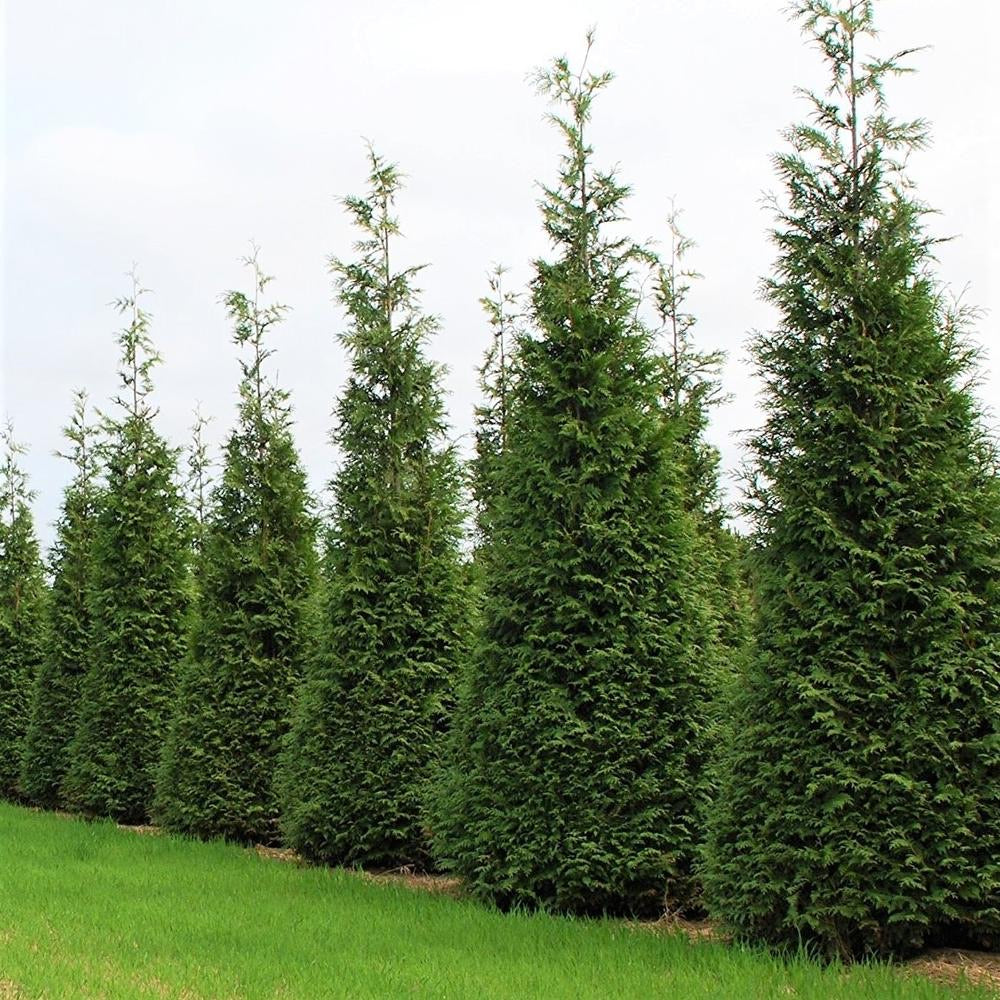
Eastern Red Cedar is the native Midwest evergreen — and one of the most wildlife-valuable trees you can plant. The blue berries are a critical winter food source for cedar waxwings, bluebirds, robins, and over 50 other bird species. The dense evergreen foliage provides nesting habitat and winter shelter for a wide range of birds. It's also one of the toughest native trees available, handling drought, clay soil, rocky ground, and extreme cold without complaint.
Grows 30–40 feet tall, dense and columnar. Hardy in Zones 2–9. Our Eastern Red Cedar is the most wildlife-valuable native evergreen in the Midwest.
Best Native Shrubs for the Midwest
American Elderberry — The Native Shrub That Does Everything

American Elderberry is one of the most ecologically productive native shrubs in the Midwest. The massive white flower clusters in early summer are a pollinator magnet — attracting native bees, bumblebees, beetles, flies, and butterflies simultaneously. The dark purple berries that follow feed over 50 bird species and are prized by humans for elderberry syrup, wine, and immune-boosting remedies. It's also a larval host plant for several native moth species.
Elderberry grows fast — 6–10 feet in just a few years — tolerates wet soils and partial shade, and produces its first meaningful berry crop in year two. Hardy in Zones 3–9. Our American Elderberry is the highest-impact native shrub you can plant for wildlife and human use.
Serviceberry — Native Four-Season Beauty

Serviceberry is a native Midwest tree-shrub that delivers four seasons of beauty and ecological value: white spring flowers that provide critical early nectar, sweet summer berries that birds love (and humans can eat), brilliant orange-red fall color, and attractive gray bark in winter. It's one of the most complete native plants available — beautiful, productive, and ecologically valuable in every season.
Grows 15–25 feet tall. Hardy in Zones 3–9. Our Serviceberry is the best native four-season plant for beauty and wildlife value.
Ninebark — Native Shrub for Every Condition

Ninebark is one of the most adaptable native shrubs in the Midwest — it grows naturally on stream banks, rocky slopes, and woodland edges across the region, handling wet clay, dry rocky soil, shade, and full sun with equal ease. The clusters of white-pink flowers in late spring attract native bees and beneficial insects. The seed clusters feed birds through fall and winter. The exfoliating bark provides winter interest.
Grows 6–8 feet tall. Hardy to Zone 2. Our Ninebark is the most adaptable native shrub for difficult Midwest conditions.
Witch Hazel — Native Shrub That Blooms in Winter

Witch Hazel is one of the most unique native plants in the Midwest — it blooms in late fall and early winter with spidery yellow flowers on bare branches when everything else is dormant. It's the last flower of the season and the first of the next, providing nectar for any pollinators active during warm winter spells. The golden fall color and interesting branching structure add to its year-round appeal.
Grows 10–15 feet tall. Hardy in Zones 3–8. Our Witch Hazel is the most unique native shrub — it blooms when nothing else does.
Best Native Perennials for the Midwest
Black-Eyed Susan — The Native Prairie Classic

Black-Eyed Susan is a native Midwest prairie plant that evolved in the heavy clay soils and extreme weather of the region — it's perfectly adapted to conditions that challenge most perennials. It blooms from mid-summer through fall with bright golden-yellow flowers that attract native bees, butterflies, and beneficial insects. The seed heads feed goldfinches through fall and winter, and native bees overwinter in the hollow stems.
It spreads naturally over time to fill in bare spots, creating a self-sustaining native planting that gets better every year. Hardy in Zones 3–9. Our Black-Eyed Susan is the most essential native perennial for Midwest gardens.
How to Garden with Native Plants
Transitioning to a more native-focused landscape doesn't have to happen all at once. Here are some practical approaches:
- Start with one area. Convert one bed, one border, or one corner of your yard to native plants. See how it performs and expand from there.
- Replace problem plants first. If you have plants that are struggling, dying, or requiring constant maintenance, replace them with natives suited to that spot.
- Layer your plantings. Native ecosystems have layers — canopy trees, understory trees, shrubs, perennials, and ground covers. Mimicking this layered structure creates the most ecologically productive and visually interesting native gardens.
- Leave the leaves. Many native insects overwinter in fallen leaves. Leave leaf litter under your trees and shrubs rather than raking it all away. This simple step dramatically increases the wildlife value of your yard.
- Leave standing stems through winter. Native bees overwinter in hollow plant stems. Don't cut back your native perennials in fall — wait until late spring when temperatures have warmed and the bees have emerged.
- Eliminate pesticides. Native plants are adapted to native insects, including the ones that eat them. A little leaf damage is normal and healthy — it means your native plants are supporting the food web. Pesticides kill the beneficial insects along with the pests.
- Be patient. Native plants establish more slowly than many non-native ornamentals because they're investing in deep root systems. The first year they sleep, the second year they creep, the third year they leap — and after that, they largely take care of themselves.
The Keystone Native Plants Principle
Entomologist Doug Tallamy's research identified "keystone" native plants — species that support a disproportionately large number of wildlife species. In the Midwest, the top keystone native plants include:
- Oaks (Quercus) — support 500+ caterpillar species
- Native cherries and plums (Prunus) — support 400+ caterpillar species
- Willows (Salix) — support 400+ caterpillar species
- Birches (Betula) — support 400+ caterpillar species
- Maples (Acer) — support 300+ caterpillar species
- Hackberry (Celtis) — support 40+ bird species directly with fruit
If you want to maximize the ecological impact of your native plantings, prioritize these keystone genera. Every oak, birch, and maple you plant is a wildlife powerhouse that will support hundreds of species for decades to come.
🌱 Ready to go native?
Every native plant in this guide ships directly to your door — ready to plant and start supporting your local ecosystem. Browse our full collection and start building a yard that belongs here.
Shop Native Plants →