Growing your own fruit is one of the most rewarding things you can do in a Midwest yard. There's nothing quite like walking out in August and picking a perfectly ripe apple, pear, or persimmon that you grew yourself. Home-grown fruit — picked at true peak ripeness — tastes dramatically better than anything you'll find in a grocery store.
The Midwest is excellent fruit tree territory. The cold winters provide the dormancy and chill hours that most fruit trees need to fruit reliably. The warm summers ripen fruit fully and develop complex flavors. And the wide range of varieties available means there's a fruit tree for virtually every Midwest yard, soil type, and taste preference.
This guide covers the best fruit trees for the Midwest — organized by type, with variety recommendations, planting tips, and what to expect from your harvest. Every tree ships directly from our nursery.
Apple Trees for the Midwest
Apples are the most popular home fruit tree in the Midwest — and for good reason. They're cold-hardy, productive, and available in an enormous range of flavors, textures, and ripening times. With the right variety selection, you can have fresh apples from August through November. Here are the varieties we carry: For those eager to dive into growing apples, our guide on how to grow apple trees in the Midwest provides detailed how to grow apple trees in the Midwest.
Apple Tree 'Winesap' — The Classic Heirloom Keeper

Winesap is one of the most beloved heirloom apple varieties in American history — a late-season apple with deep red skin, firm yellow flesh, and a rich, spicy-sweet flavor with a hint of wine that gives it its name. It ripens in October and stores exceptionally well — keeping in a cool cellar through January or February. Winesap is also one of the most disease-resistant apple varieties, making it an excellent low-spray choice for home orchards. Hardy in Zones 5–8.
✅ In stock and ready to ship. Our Apple Tree 'Winesap' is the best late-season keeper apple for Midwest home orchards.
Apple Tree 'Jonathon' — The Midwest Classic

Jonathan apple was developed in the Midwest and has been a regional favorite for nearly 200 years. The medium-sized, bright red apples have a crisp texture and a classic sweet-tart flavor that's excellent for fresh eating, baking, and cider. It ripens in mid-season (September in the Midwest) and is one of the most cold-hardy apple varieties available. Hardy in Zones 4–8.
✅ In stock and ready to ship. Our Apple Tree 'Jonathon' is the classic Midwest apple — cold-hardy, productive, and delicious.
Apple Tree 'Honeycrisp' — The Most Popular Apple in America

Honeycrisp was developed at the University of Minnesota specifically for cold-climate performance — making it an excellent choice for the Midwest. The exceptionally crisp, juicy flesh and balanced sweet-tart flavor made it the most popular apple variety in America within a decade of its release. It ripens in September and stores well. Hardy in Zones 3–8. See our Apple Tree 'Honeycrisp' for details.
Apple Tree 'Liberty' — The Best Disease-Resistant Apple
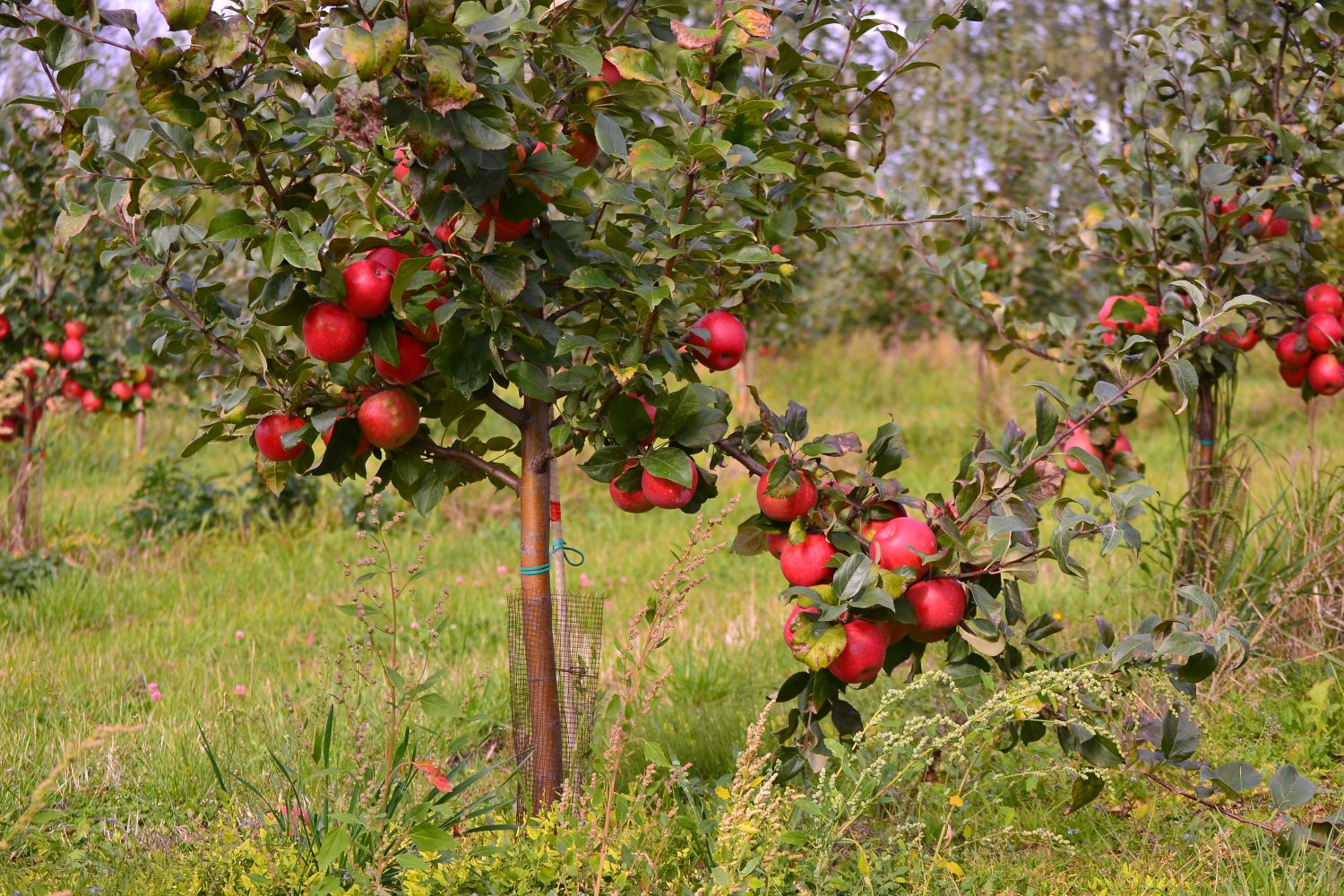
Liberty is the top choice for organic and low-spray home orchards — it has excellent resistance to apple scab, cedar apple rust, fire blight, and powdery mildew, the four most common apple diseases in the Midwest. The medium-sized, dark red apples have a rich, complex flavor that improves in storage. Ripens in late September. Hardy in Zones 4–7. See our Apple Tree 'Liberty' for details.
Apple Tree 'Fuji' — Exceptionally Sweet Late-Season Apple

Fuji is one of the sweetest apple varieties available — the high sugar content and dense, crisp flesh make it exceptional for fresh eating. It ripens late (October in the Midwest) and stores extremely well, maintaining quality for months in cold storage. Hardy in Zones 6–8 — best suited to the southern half of the Midwest. See our Apple Tree 'Fuji' for details.
Apple Tree 'Golden Delicious' — The All-Purpose Yellow Apple

Golden Delicious is one of the most versatile apple varieties — excellent for fresh eating, baking, applesauce, and cider. The mild, sweet flavor and tender flesh make it a family favorite. It's also one of the best pollinators for other apple varieties, making it a valuable addition to any home orchard. Ripens in September–October. Hardy in Zones 4–8. See our Apple Tree 'Golden Delicious' for details.
Apple Tree 'Red Delicious' — The Iconic American Apple

Red Delicious is the most recognizable apple in America — the classic deep red, elongated apple with a mild, sweet flavor. Home-grown Red Delicious picked at true peak ripeness is dramatically better than the store-bought version. Ripens in September–October. Hardy in Zones 5–8. See our Apple Tree 'Red Delicious' for details.
Apple Tree 'Granny Smith' — The Classic Tart Green Apple

Granny Smith is the gold standard for tart apples — the bright green skin and intensely tart, crisp flesh make it the top choice for baking, pies, and anyone who prefers a sharp, refreshing apple flavor. It's a late-season variety that needs a long growing season to ripen fully — best suited to Zone 6 and warmer in the Midwest. See our Apple Tree 'Granny Smith' for details.
Apple Tree 'Ambrosia' — Exceptionally Sweet Low-Acid Apple

Ambrosia is one of the sweetest, most aromatic apple varieties available — the low-acid, honey-sweet flesh is exceptional for fresh eating and appeals especially to those who find most apples too tart. The beautiful pink-blushed skin and slow-browning flesh (great for salads and charcuterie boards) make it a standout variety. Ripens in September–October. See our Apple Tree 'Ambrosia' for details.
Apple Tree 'Arkansas Black' — The Darkest, Longest-Keeping Apple

Arkansas Black is one of the most striking apple varieties — the skin turns nearly black-red at full ripeness, making it one of the most visually dramatic apples you can grow. The firm, dense flesh has a complex, spicy flavor that improves dramatically in storage — it's best eaten 1–2 months after harvest when the flavor fully develops. An excellent long-keeper for winter eating. See our Apple Tree 'Arkansas Black' for details.
Apple Tree 'Frost Bite' — Ultra Cold-Hardy Northern Apple

Frost Bite is one of the most cold-hardy apple varieties available — developed in Minnesota and hardy to Zone 3. The small, intensely sweet apples have a concentrated, almost candy-like flavor that's exceptional for fresh eating and cider. If you're in the northern Midwest and have struggled with apple hardiness, Frost Bite is your answer. See our Apple Tree 'Frost Bite' for details.
The Most Important Thing About Growing Apples: Cross-Pollination
Most apple varieties require cross-pollination from a second apple variety to produce fruit. Plant at least two different apple varieties that bloom at the same time for reliable crops. Most of the varieties above are compatible pollinators for each other. A single apple tree will produce little to no fruit without a pollinator nearby.
Pear Trees for the Midwest
Pear Tree 'Moonglow' — The Best Early-Season Pear

Moonglow is one of the best pear varieties for the Midwest — it ripens early (August), has excellent fire blight resistance (the most serious pear disease in the Midwest), and produces large, beautiful pears with a mild, sweet flavor and smooth, nearly grit-free flesh. It's also a reliable annual producer that begins bearing fruit at a young age. Hardy in Zones 5–8.
✅ In stock and ready to ship. Our Pear Tree 'Moonglow' is the best early-season pear for Midwest home orchards.
Pear Tree 'Kieffer' — The Toughest Midwest Pear

Kieffer is the most cold-hardy and disease-resistant pear variety available — it handles Midwest conditions that would devastate more refined European pear varieties. The large, yellow pears are firm and gritty when fresh but excellent for canning, preserving, and cooking. Kieffer is also partially self-fertile, meaning it can produce some fruit without a pollinator (though yields are better with one). Hardy in Zones 4–9. See our Pear Tree 'Kieffer' for details.
Pear Tree 'Anjou' — The Classic Grocery Store Pear

Anjou is one of the most popular pear varieties in America — the classic egg-shaped green (or red) pear with smooth, juicy flesh and a mild, sweet flavor. It's an excellent all-purpose pear for fresh eating, baking, and preserving. Anjou is also a good pollinator for other pear varieties. Hardy in Zones 5–8. See our Pear Tree 'Anjou' for details.
Pear Tree 'Ayers' — Sweet Southern Midwest Pear

Ayers is a Southern heirloom pear variety with excellent fire blight resistance and a sweet, aromatic flavor. The medium-sized, yellow-blushed pears ripen in August and are excellent for fresh eating and preserving. Hardy in Zones 5–8. See our Pear Tree 'Ayers' for details.
Pear Tree 'Orient' — High-Yield Disease-Resistant Pear

Orient is a high-yielding, fire blight-resistant pear variety that produces large crops of firm, round pears excellent for canning and cooking. It's one of the most productive pear varieties available and a reliable annual bearer. Hardy in Zones 5–8. See our Pear Tree 'Orient' for details.
Pear Tree 'Comice' — The World's Best Fresh-Eating Pear

Comice is widely considered the finest fresh-eating pear in the world — the buttery, melting flesh and intensely sweet, aromatic flavor are unmatched by any other variety. It's the pear in those famous Harry & David gift boxes. Comice requires a longer growing season and is best suited to Zone 6 and warmer in the Midwest. See our Pear Tree 'Comice' for details.
Cherry Trees for the Midwest
Black Cherry Tree — The Native Wildlife Cherry

Black Cherry is a native Midwest tree that produces small, dark purple-black cherries in late summer that are intensely flavored — rich, slightly bitter, and excellent for jams, jellies, wine, and cherry liqueur. The fruit is also one of the most important wildlife foods in the Midwest, feeding over 40 bird species including cedar waxwings, robins, and thrushes. It's also a larval host plant for over 400 caterpillar species — making it one of the most ecologically valuable trees you can plant.
Black Cherry grows 50–80 feet tall with attractive dark, scaly bark and excellent fall color. It's a fast-growing native tree that handles a wide range of soil conditions. Hardy in Zones 3–9.
✅ In stock and ready to ship. Our Black Cherry Tree is the most wildlife-valuable native fruit tree we carry.
Persimmon — The Native Midwest Superfruit
American Persimmon — Sweet Native Fruit for Wildlife and People

American Persimmon is a native Midwest tree that produces small, orange fruits in fall that are intensely sweet — but only after frost softens them and converts the astringent tannins to sugar. A fully ripe American persimmon is one of the sweetest, most complex-flavored fruits you can grow — rich, honey-sweet, with notes of brown sugar and spice. They're also one of the most important fall and winter wildlife foods in the Midwest, feeding deer, raccoons, opossums, foxes, and dozens of bird species.
American Persimmon grows 35–60 feet tall with attractive dark, blocky bark and excellent orange-red fall color. It's extremely cold-hardy and adaptable to a wide range of soils. Hardy in Zones 4–9.
✅ In stock and ready to ship. Our American Persimmon Tree is a native Midwest fruit tree that feeds both people and wildlife.
Fruit Tree Planting Tips for the Midwest
- Full sun is non-negotiable. All fruit trees need at least 6–8 hours of direct sun for good fruit production. Less sun means fewer fruits, more disease, and poor flavor development.
- Plant two varieties for cross-pollination. Most apples and pears require cross-pollination from a second variety. Plant at least two different varieties that bloom at the same time.
- Well-drained soil is essential. Fruit trees don't tolerate waterlogged soil. If your site stays wet after rain, plant on a slight slope or in a raised area.
- Dig wide, not deep. The planting hole should be 2–3 times wider than the root ball but no deeper. Set the graft union 2–3 inches above the soil line. Read our full tree planting guide.
- Mulch generously. A wide ring of mulch (3–4 inches deep, kept away from the trunk) dramatically improves establishment and reduces competition from grass and weeds. Read our guide on proper mulching technique.
- Water consistently the first two seasons. Newly planted fruit trees need regular deep watering while establishing their root systems.
- Prune annually. Unlike most shade trees, fruit trees benefit from annual pruning to maintain an open canopy, remove crossing branches, and encourage fruiting wood. Prune in late winter while trees are still dormant.
Your Midwest Fruit Tree Harvest Calendar
- August: Pear 'Moonglow', Pear 'Ayers' — first pears of the season
- September: Apple 'Jonathon', Apple 'Honeycrisp', Apple 'Liberty', Apple 'Golden Delicious', Apple 'Red Delicious', Black Cherry
- October: Apple 'Winesap', Apple 'Fuji', Apple 'Ambrosia', Apple 'Arkansas Black', Apple 'Granny Smith', Pear 'Anjou', Pear 'Orient', Pear 'Kieffer', Pear 'Comice'
- After first frost: American Persimmon — sweetest after frost softens the fruit
Plant a mix of early, mid, and late-season varieties and you'll have fresh fruit from August through November — four full months of homegrown harvest.
🍎 Ready to plant your fruit trees?
Every fruit tree in this guide ships directly to your door — ready to plant and start producing. Browse our full fruit tree collection and start building your home orchard today.
Shop Fruit Trees →