Deciduous trees are beautiful — but they're bare for five months of the year. If you want your yard to look alive and full in January, February, and March when everything else is gray and dormant, you need evergreens. And in the Midwest, where winters are long and winds are brutal, evergreens do more than just look good — they block wind, provide wildlife shelter, and give your landscape the structure and backbone it needs year-round. This article further explores the essential role that evergreens play throughout the seasons in the Midwest, and offers detailed evergreens' year-round role in the Midwest landscape.
This guide covers the best evergreen trees and shrubs for the Midwest — plants that stay green through the coldest winters, provide privacy and windbreak, and look great in every season. Every plant on this list ships directly from our nursery.
Why Evergreens Are Essential in a Midwest Landscape
Beyond aesthetics, evergreens serve several critical functions in a Midwest yard:
- Windbreaks — A row of evergreens on the north or west side of your property can reduce wind speed by 50–70%, which makes a real difference in how comfortable your yard feels in winter and how much you spend heating your home.
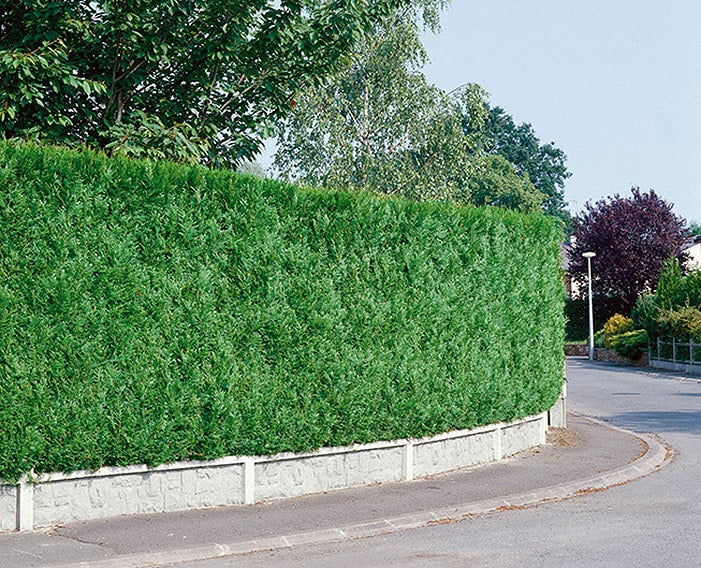
- Privacy year-round — Deciduous privacy screens are great in summer but useless in winter. Evergreens block the view 12 months a year.
- Wildlife shelter — Dense evergreen branches provide critical winter roosting and nesting habitat for birds when deciduous trees are bare.
- Year-round structure — Evergreens anchor a landscape and give it form and presence even when nothing else is growing.
Green Giant Arborvitae — The Fastest Evergreen You Can Plant

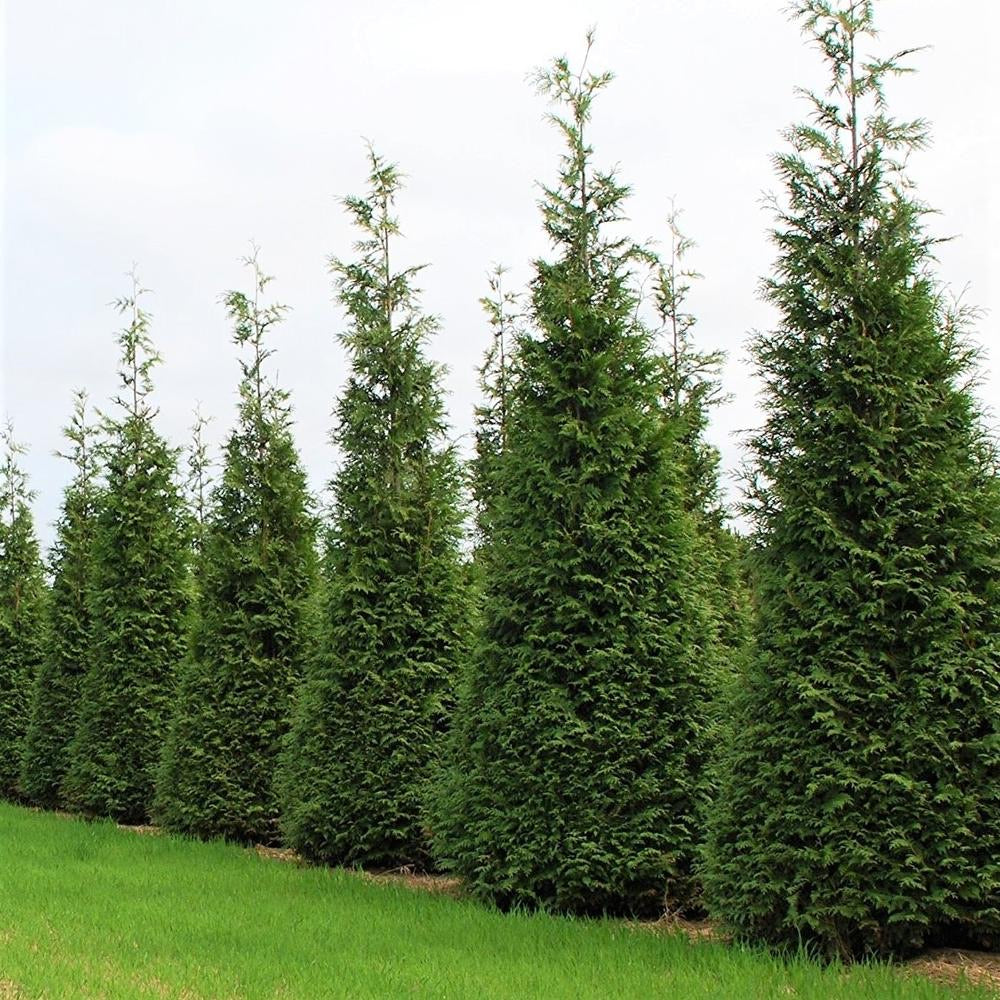
If speed is your priority, Green Giant Arborvitae is in a class of its own. It grows 3–5 feet per year — making it one of the fastest-growing evergreens available anywhere — and stays dense, dark green, and beautiful year-round. In just 5–7 years you can have a 20–30 foot wall of solid evergreen privacy that blocks wind, noise, and sight lines completely. To fully understand how to plant, space, and care for this impressive tree, refer to our detailed Green Giant Arborvitae complete growing guide.
Green Giant eventually reaches 50–60 feet tall with a naturally pyramidal shape that never needs pruning to maintain. It's highly resistant to deer, disease, and drought once established, and it handles Midwest winters without the winter burn that plagues many other arborvitae varieties. Hardy in Zones 5–8.
Space them 5–6 feet apart for a solid privacy hedge, or 8–10 feet apart for individual specimen trees. Our Green Giant Arborvitae is the go-to choice for anyone who needs serious evergreen privacy fast — nothing else comes close for sheer speed and density.
Emerald Green Arborvitae — The Classic Compact Privacy Screen

Emerald Green Arborvitae is the most popular privacy plant in America — and it's earned that reputation. It stays a tight, narrow column of dense, rich green year-round, grows to about 12–15 feet tall, and never needs pruning to keep its perfect shape. It's the definition of low-maintenance evergreen privacy.
Where Green Giant is the choice for large properties needing tall screens, Emerald Green is perfect for smaller yards, foundation plantings, and spots where you need privacy without a 50-foot tree. Plant them 3–4 feet apart for a solid wall of green. Hardy in Zones 3–8, they handle Midwest winters without winter burn issues.
Our Emerald Green Arborvitae is one of our top sellers every season. If you want a classic, no-fuss evergreen privacy screen that stays manageable, this is your plant.
Norway Spruce — The Toughest Evergreen Windbreak in the Midwest

If you're in the northern Midwest and need a windbreak or privacy screen that can handle the most brutal winters, Norway Spruce is your answer. It's one of the hardiest evergreens available — rated to Zone 2 — and it grows fast for a spruce, putting on 1–2 feet per year. At maturity it reaches 40–60 feet tall with a broad, sweeping pyramidal shape and graceful drooping branches that are beautiful in every season.
Norway Spruce is one of the best windbreak trees you can plant in the Midwest. The dense branching and year-round foliage create an effective barrier against cold north winds that can make a real difference in how comfortable your yard feels in winter — and how much you spend on heating. Plant in a staggered double row for maximum wind protection.
It also provides outstanding wildlife habitat — the dense branches shelter birds through the coldest nights, and the cones feed squirrels, crossbills, and other wildlife through winter. Our Norway Spruce Tree is a cold-climate workhorse that gets more beautiful and more valuable every year.
Eastern Red Cedar — The Native Evergreen That Thrives Anywhere

The Eastern Red Cedar is the most underrated evergreen in the Midwest. It's a native tree that grows naturally across the region, which means it's perfectly adapted to Midwest soils, rainfall patterns, and temperature swings. It handles drought, clay soil, rocky ground, poor fertility, and full sun without complaint — conditions that would stress or kill most other evergreens.
It grows 1–2 feet per year and reaches 30–40 feet tall with a dense, columnar to pyramidal shape. The blue-green foliage is attractive year-round, and the small blue berries it produces are a critical food source for cedar waxwings and over 50 other bird species. It's also the larval host plant for the Juniper Hairstreak butterfly. If you want a native, wildlife-friendly evergreen that basically takes care of itself, Eastern Red Cedar is the top choice.
Our Eastern Red Cedar is tough, native, and beautiful — an evergreen that gives back to the ecosystem while looking great year-round.
Hicks Yew — The Best Evergreen for Shade

Most evergreens need full sun. Hicks Yew is the exception — and it's a game-changer for shady yards. This dense, upright evergreen thrives in partial to full shade, making it the go-to choice for privacy screens along north-facing fences, under tree canopies, or in spots where other evergreens simply won't grow.
Hicks Yew grows slowly but steadily, reaching 10–12 feet tall with a naturally narrow, columnar form that rarely needs pruning. The dark green needles stay rich and vibrant year-round, and the red berries it produces in fall add a nice seasonal touch. It's also one of the most deer-resistant evergreens available — an important consideration in many Midwest yards. Hardy in Zones 4–7.
Our Hicks Yew is the solution for shady privacy problems that other evergreens can't solve. If you have a north-facing fence or a shady side yard that needs year-round screening, this is your plant.
Choosing the Right Evergreen for Your Situation
Here's a quick guide to matching the right evergreen to your specific need:
- Need fast privacy on a large property? Green Giant Arborvitae — 3–5 feet per year, 50–60 feet at maturity.
- Need a compact, tidy privacy screen for a smaller yard? Emerald Green Arborvitae — stays 12–15 feet, perfect shape, no pruning needed.
- Need a windbreak for a cold, exposed northern property? Norway Spruce — hardy to Zone 2, grows fast, massive and beautiful at maturity.
- Want a native evergreen that thrives in tough conditions and supports wildlife? Eastern Red Cedar — drought-tolerant, native, feeds 50+ bird species.
- Have a shady spot that needs year-round screening? Hicks Yew — the only evergreen on this list that thrives in shade.
Tips for Planting Evergreens in the Midwest
- Plant in fall or early spring. Fall planting gives evergreens time to establish roots before winter without the stress of summer heat. Early spring planting gives them a full growing season to get established.
- Water deeply through the first fall. Evergreens lose moisture through their foliage all winter, even when the ground is frozen. Good soil moisture going into winter is critical for preventing winter burn.
- Mulch around the base. A 2–3 inch ring of mulch retains moisture and moderates soil temperature. Keep it away from the trunk — read our guide on why mulch volcanoes kill trees.
- Don't plant too close together. Evergreens planted too close compete for light and water, leading to browning on the interior branches. Follow spacing recommendations for each variety.
- Be patient the first year. Evergreens often look like they're doing nothing in year one while they establish their root systems. Year two and three is when they really take off.
Browse our full Evergreens collection, our Privacy & Screening Plants collection, and all available plants to find the perfect evergreen for your Midwest yard.