Evergreens are the workhorses of the Midwest landscape. While deciduous trees and shrubs go dormant and bare for five or six months of the year, evergreens hold their color, structure, and presence through every season — providing privacy, windbreaks, wildlife shelter, and visual interest even in the depths of a gray Midwest winter. A landscape without evergreens is a landscape that disappears for half the year.
This guide covers the best evergreen trees and shrubs for the Midwest — from towering privacy screens to compact foundation plants — with everything you need to know to choose, plant, and care for them. Every plant ships directly from our nursery.
Why Every Midwest Yard Needs Evergreens
- Year-round privacy. Deciduous hedges are bare and transparent for 5–6 months. Evergreen screens provide privacy 365 days a year.
- Winter windbreaks. A row of evergreens on the north or west side of your property can reduce heating costs and protect other plants from desiccating winter winds.
- Wildlife shelter. Dense evergreen foliage provides critical winter roosting and shelter habitat for birds when deciduous trees are bare.
- Year-round structure. Evergreens anchor the landscape visually through every season, providing a backdrop for flowering plants and preventing the bare winter look.
- Low maintenance. Most evergreens require little to no pruning, fertilizing, or spraying once established.
Arborvitae — The Midwest Privacy Screen Standard
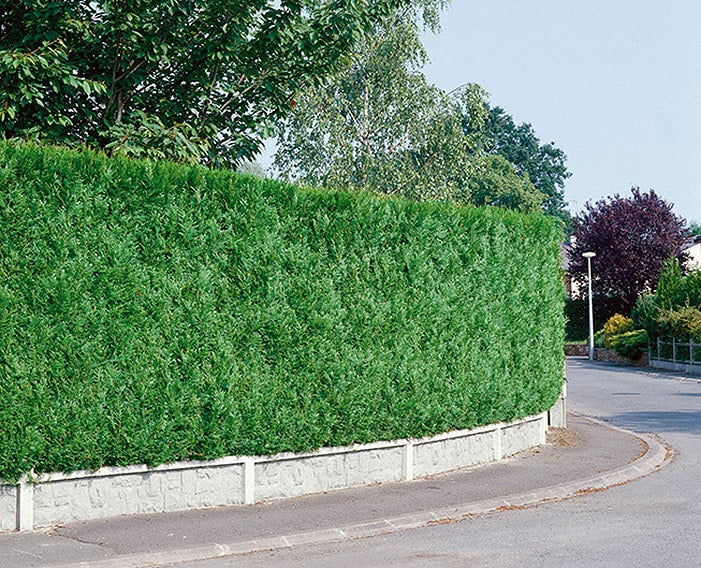
Arborvitae (Thuja) are the most popular evergreen for Midwest privacy screens and hedges — fast-growing, cold-hardy, and available in a range of sizes from compact globes to towering columns. If you're deciding on the right variety for your landscape, this guide to which arborvitae to plant breaks down the key differences and uses for each which arborvitae to plant.
Arborvitae 'Green Giant' — The Fastest Privacy Screen Available

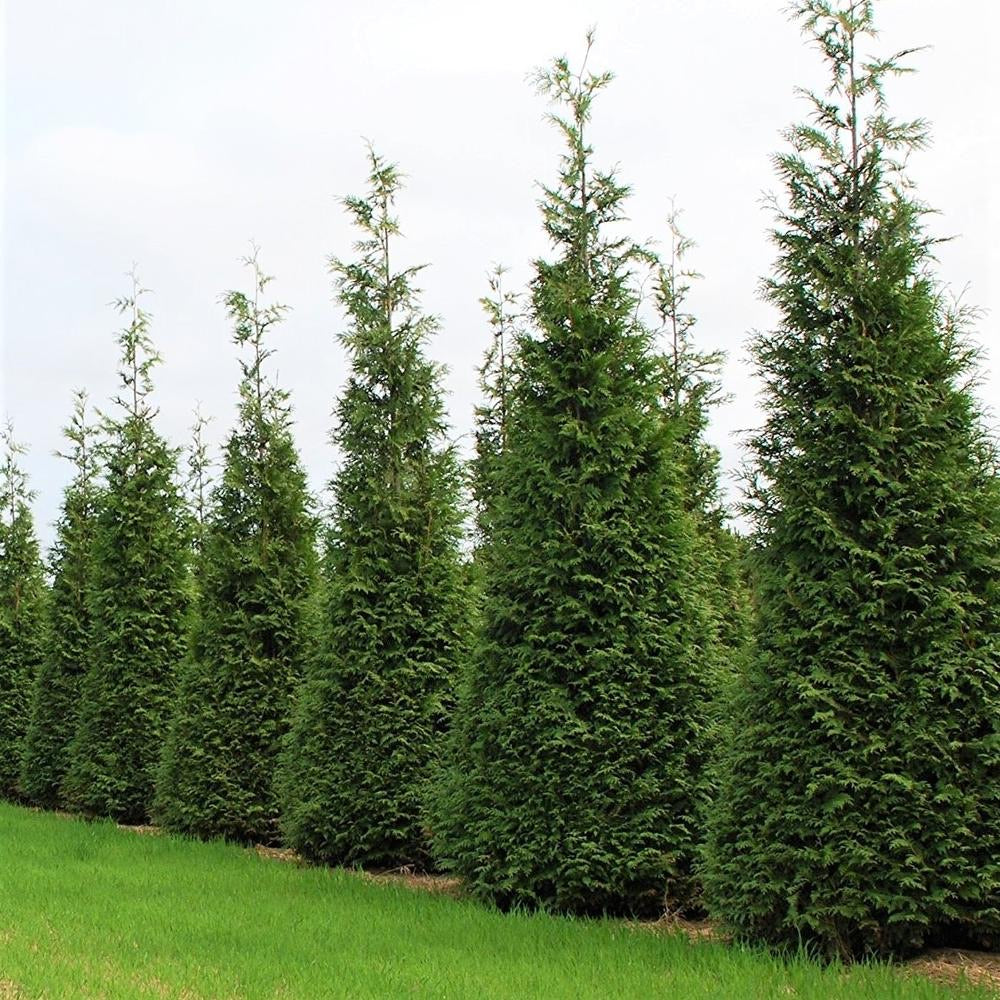
Green Giant Arborvitae is the gold standard for fast privacy screens in the Midwest. It grows 3–5 feet per year — faster than any other cold-hardy evergreen — and reaches 30–40 feet tall and 12–18 feet wide at maturity, creating a dense, impenetrable privacy wall. The rich, dark green foliage holds its color beautifully through winter without the bronzing that affects many other arborvitae varieties.

Green Giant is also highly resistant to deer browsing. Plant 5–6 feet apart for a solid privacy screen. Hardy in Zones 5–8. Our Arborvitae 'Green Giant' is the fastest and most effective privacy screen we carry.
Arborvitae 'Emerald Green' — The Classic Narrow Privacy Column

Emerald Green Arborvitae is the most popular arborvitae variety in America — a narrow, tightly columnar form that grows 12–15 feet tall and only 3–4 feet wide. Perfect for tight spaces, narrow side yards, and anywhere you need a privacy screen without sacrificing too much width. The bright emerald green foliage holds its color exceptionally well through winter.

Plant 3–4 feet apart for a solid screen. Hardy in Zones 3–8. Our Arborvitae 'Emerald Green' is the best narrow privacy screen for tight spaces.
Arborvitae 'Elegantissima' — The Tall, Elegant Privacy Column

Elegantissima grows 20–25 feet tall with a refined, elegant columnar form. The foliage has a distinctive golden-tipped appearance in spring and summer that transitions to rich green in fall and winter — an excellent choice for taller privacy screens where you need more height than Emerald Green but a narrower form than Green Giant. Hardy in Zones 4–8.

Our Arborvitae 'Elegantissima' is a refined, tall privacy screen with distinctive golden-tipped foliage.
Arborvitae 'Golden Globe' — Compact Golden Accent Shrub

Golden Globe is a compact, globe-shaped arborvitae that grows just 3–4 feet tall and wide — perfect for foundation plantings, borders, and accent spots where you want year-round color without a large plant. Bright golden-yellow foliage most intense in spring and summer, transitioning to warm golden-bronze in winter. No pruning needed to maintain its naturally rounded form.

Hardy in Zones 3–7. Our Arborvitae 'Golden Globe' is the best compact golden evergreen for foundation plantings and borders.
Evergreen Trees for the Midwest
Yew 'Hicks' — The Most Versatile Evergreen Shrub

Hicks Yew grows in a naturally upright, columnar form — reaching 10–12 feet tall and 3–4 feet wide — making it excellent for narrow hedges, foundation plantings, and formal screens. Dark green needles hold their color beautifully through winter, and the plant tolerates heavy pruning. One of the most shade-tolerant evergreens available — Hicks Yew performs well in full shade where most evergreens struggle.

Hardy in Zones 4–7. Important: Yew berries and foliage are toxic to humans and animals — plant away from areas where children and pets play. Our Yew 'Hicks' is the most versatile evergreen shrub for shade and formal hedges.
Norway Spruce — The Fastest-Growing Evergreen Tree

Norway Spruce grows 2–3 feet per year and reaches 40–60 feet tall at maturity. The graceful, drooping branchlets and dark green needles create a beautiful, classic Christmas tree form year-round. One of the most cold-hardy large evergreens available, handling the most brutal Midwest winters without damage. Excellent for windbreaks, wildlife habitat, and large specimen plantings.

Hardy in Zones 2–7. Our Norway Spruce Tree is the fastest-growing large evergreen for Midwest windbreaks and wildlife habitat.
Boxwood 'Green Mountain' — The Classic Formal Evergreen

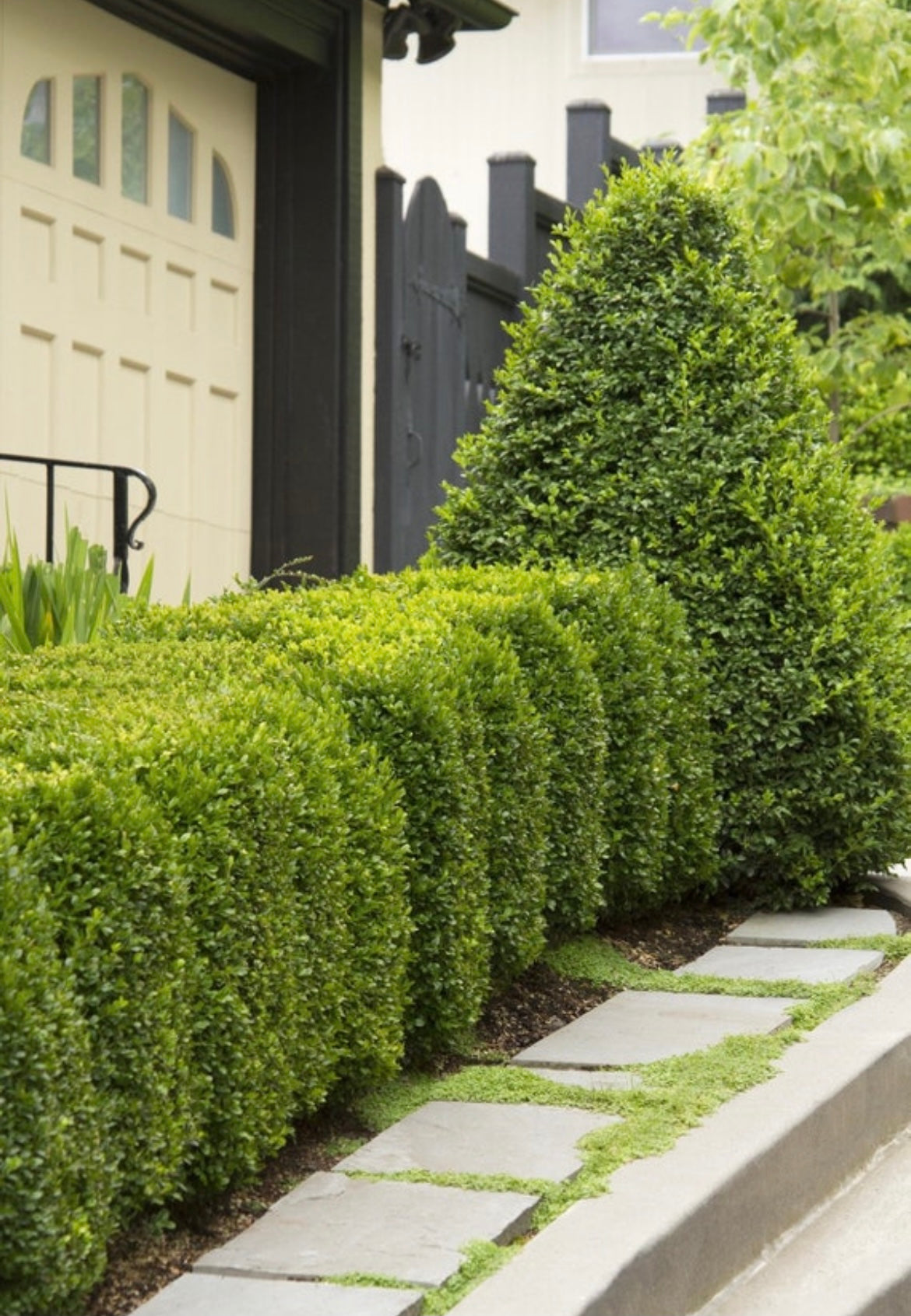
Green Mountain Boxwood is one of the most cold-hardy boxwood varieties available — critical in the Midwest where many boxwood varieties suffer winter burn or dieback. It grows in a naturally upright, oval form reaching 3–5 feet tall and 2–3 feet wide, with dense, small dark green leaves that hold their color well through winter. Responds beautifully to shearing — the top choice for formal hedges, topiaries, and structured foundation plantings.

Hardy in Zones 4–8. Our Boxwood 'Green Mountain' is the most cold-hardy boxwood for Midwest formal gardens and foundation plantings.
Eastern Red Cedar — The Native Evergreen Wildlife Magnet

Eastern Red Cedar is the native Midwest evergreen — and one of the most wildlife-valuable trees you can plant. The blue berries are a critical winter food source for cedar waxwings (named for this tree), bluebirds, robins, and over 50 other bird species. Dense evergreen foliage provides nesting habitat in spring and critical winter shelter when deciduous trees are bare. Handles drought, clay soil, rocky ground, and extreme cold without complaint.

Grows 30–40 feet tall, dense and columnar. Hardy in Zones 2–9. Our Eastern Red Cedar is the most wildlife-valuable native evergreen in the Midwest.
Euonymus 'Manhattan' — Tough Broadleaf Evergreen for Any Condition

Manhattan Euonymus handles clay soil, drought, shade, and urban pollution that would stress most other evergreens. The large, glossy dark green leaves hold their color through winter, providing a bold, lush evergreen presence even in challenging conditions. Grows 4–6 feet tall in an upright, rounded form — excellent as a specimen, hedge, or foundation plant.

Hardy in Zones 4–8. Our Euonymus 'Manhattan' is the toughest broadleaf evergreen for difficult Midwest conditions.
Bald Cypress — The Deciduous Conifer for Wet Sites

Bald Cypress is technically a deciduous conifer — it drops its feathery needles in fall after turning a beautiful russet-orange. But it earns its place here because it fills a unique niche: the best large conifer for wet, waterlogged sites where true evergreens struggle. Premier choice for pond edges, rain gardens, and low-lying areas.

Grows 40–70 feet tall. Hardy in Zones 4–9. Our Bald Cypress Tree is the best large conifer for wet sites and pond edges.
Choosing the Right Evergreen for Your Needs
- Fast privacy screen (large): Arborvitae 'Green Giant' — 3–5 ft/year, 30–40 ft tall
- Narrow privacy screen: Arborvitae 'Emerald Green' — 12–15 ft tall, only 3–4 ft wide
- Tall elegant screen: Arborvitae 'Elegantissima' — 20–25 ft tall, golden-tipped
- Compact golden accent: Arborvitae 'Golden Globe' — 3–4 ft globe, no pruning needed
- Large windbreak tree: Norway Spruce — 2–3 ft/year, 40–60 ft tall
- Native wildlife evergreen: Eastern Red Cedar — feeds 50+ bird species
- Wet site conifer: Bald Cypress — handles flooding and clay
- Shade-tolerant hedge: Yew 'Hicks' — thrives in full shade
- Formal hedge or topiary: Boxwood 'Green Mountain' — most cold-hardy boxwood
- Tough broadleaf evergreen: Euonymus 'Manhattan' — handles any condition
Evergreen Planting Tips for the Midwest
- Plant in fall or early spring. Evergreens establish best in cool weather. Fall planting (September–October) gives roots time to establish before winter. Spring planting (April–May) is also excellent.
- Protect from winter wind and sun. Newly planted broadleaf evergreens like boxwood and euonymus can suffer winter burn. Wrap with burlap or apply anti-desiccant spray in late fall for the first 1–2 winters.
- Mulch generously. A 3–4 inch ring of mulch around the base dramatically improves establishment and protects roots from freeze-thaw cycles. Read our guide on proper mulching technique.
- Water through fall until freeze-up. Evergreens continue to lose moisture through their foliage in winter. Water deeply in late fall before the ground freezes.
- Dig wide, not deep. Read our full tree planting guide for step-by-step instructions.
🌲 Ready to add year-round structure to your yard?
Every evergreen in this guide ships directly to your door — ready to plant and start growing. Browse our full collection and find the right evergreen for your space.
Shop Evergreens →