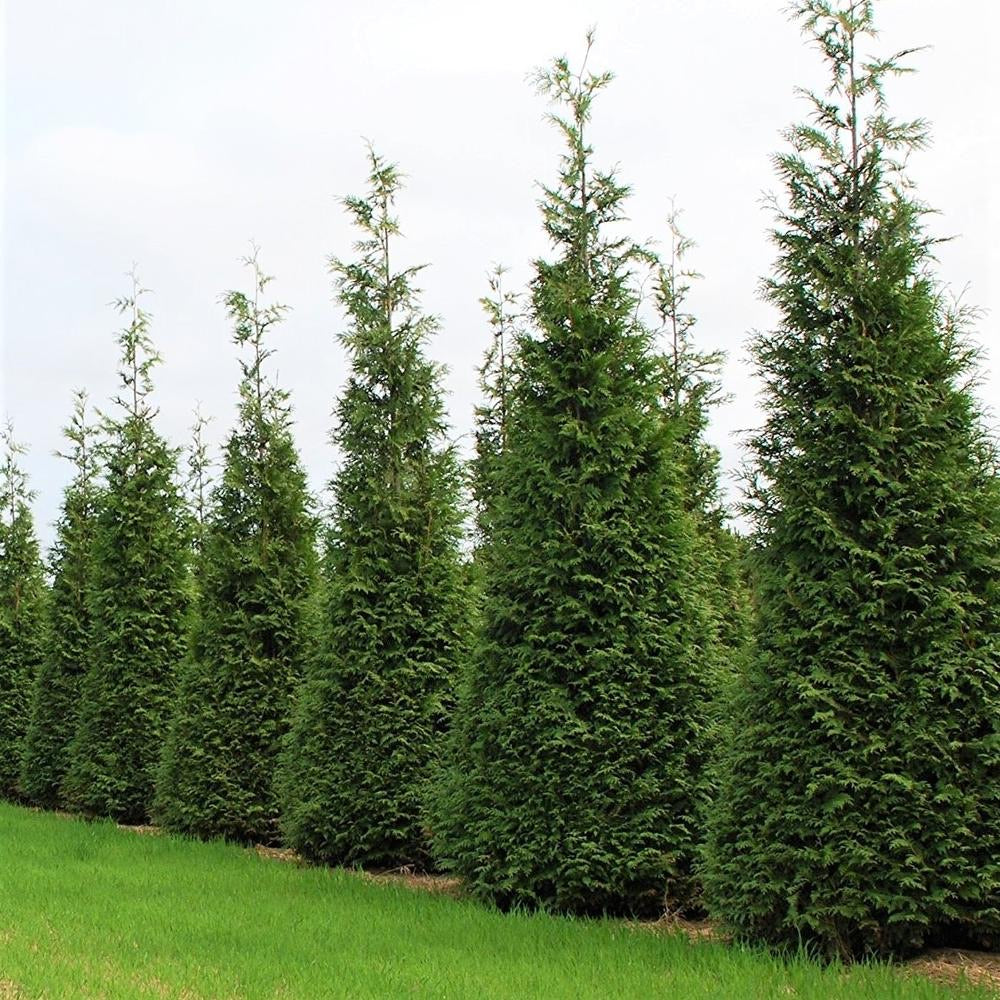
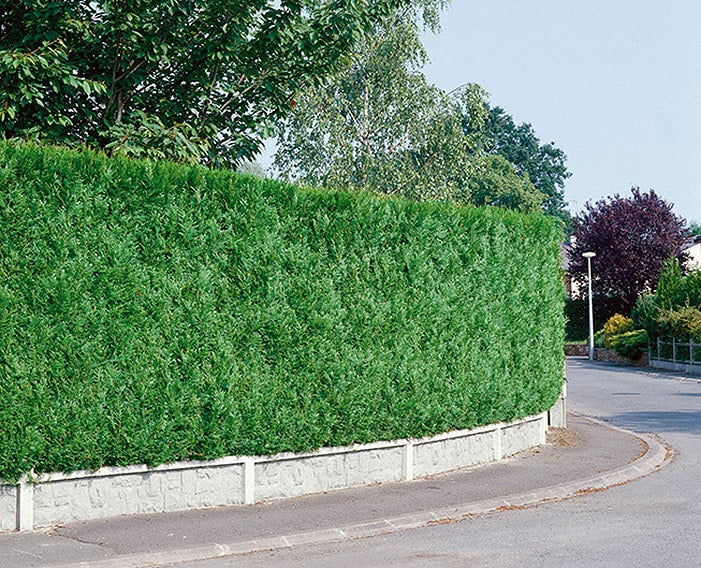
If you need a fast-growing privacy screen, there is no better plant than Green Giant Arborvitae. It grows 3–5 feet per year, reaches 40–60 feet at maturity, stays dense and green year-round, and requires almost no maintenance once established. It’s the most popular privacy tree in North America for good reason — and this guide covers everything you need to know to plant it successfully and get the fastest possible results.
Green Giant Arborvitae at a Glance

| Feature | Details |
|---|---|
| Botanical Name | Thuja standishii × plicata |
| Mature Height | 40–60 feet |
| Mature Width | 12–20 feet |
| Growth Rate | Fast — 3 to 5 feet per year |
| Hardiness Zones | Zones 5–8 |
| Sunlight | Full sun to partial shade |
| Soil | Adaptable; well-drained preferred |
| Deer Resistance | Excellent |
| Best Use | Privacy screen, windbreak, tall hedge |
Why Green Giant Is the #1 Privacy Tree

Green Giant Arborvitae has dominated the privacy tree market for decades because it solves every problem homeowners face with other privacy plants:
- Speed: 3–5 feet of growth per year — you can have a 10-foot screen in 2–3 years from a 3-foot plant
- Density: The foliage is so thick and overlapping that it creates a solid visual barrier from ground to tip, with no gaps
- Year-round coverage: Stays fully green through winter — no bare branches, no seasonal gaps in privacy
- Deer resistance: Unlike Emerald Green Arborvitae, Green Giant is rarely browsed by deer — a critical advantage in rural and suburban areas
- Disease resistance: Highly resistant to bagworms, spider mites, and the diseases that plague other arborvitae varieties
- Low maintenance: No pruning required to maintain its natural pyramidal shape; no special soil preparation needed
- Adaptability: Grows in clay, loam, and sandy soils; tolerates wet and dry conditions better than most evergreens
How Fast Does Green Giant Arborvitae Grow?

Green Giant is one of the fastest-growing evergreen trees available — adding 3 to 5 feet per year under good conditions. Here’s a realistic growth timeline from a typical 2–3 foot nursery plant: For detailed annual growth rates by different types of arborvitae, consider this growth rates by arborvitae variety.
| Year | Approximate Height | Privacy Level |
|---|---|---|
| Plant (year 0) | 2–3 ft | Establishing |
| Year 1 | 4–6 ft | Low |
| Year 2 | 7–10 ft | Moderate |
| Year 3 | 10–14 ft | Good |
| Year 5 | 18–25 ft | Excellent |
| Year 10 | 35–45 ft | Complete |
Important note: Growth rate slows slightly in the first year as the plant establishes its root system. Year 2 and beyond is when you’ll see the most dramatic annual growth. Proper planting, watering, and fertilizing in year 1 pays dividends for years to come.
How to Plant Green Giant Arborvitae
Choosing the Right Location
- Sun: Full sun (6+ hours) produces the fastest growth and densest foliage. Green Giant tolerates partial shade but growth rate slows noticeably below 4 hours of direct sun.
- Soil: Adaptable to most soils — clay, loam, sandy. Prefers well-drained soil but tolerates occasional wet conditions better than most arborvitae. Avoid permanently waterlogged sites.
- Space: Plan for the mature width of 12–20 feet. Don’t plant too close to structures, fences, or utilities. For a hedge, see spacing recommendations below.
- Wind: Green Giant is an excellent windbreak plant — its dense foliage and strong root system handle wind well. Plant on the windward side of the area you want to protect.
How Far Apart to Plant Green Giant Arborvitae

Spacing is the most important decision you’ll make when planting a Green Giant hedge. Here’s the breakdown:
- 5–6 feet apart: Creates a tight, solid hedge quickly — trees will touch and merge within 2–3 years. Best for maximum privacy as fast as possible. Trees will eventually crowd each other at maturity but can be maintained with light pruning.
- 8 feet apart: The most popular spacing — fast privacy without overcrowding. Trees fill in within 3–4 years and maintain good health long-term.
- 10–12 feet apart: Best for long-term health and natural form. Takes 4–5 years to fill in but trees never crowd each other. Ideal if you’re not in a rush.
- 15–20 feet apart: For specimen trees or loose screens where you want individual trees to show their natural pyramidal form.
Our recommendation: 8 feet apart for most privacy hedges — the sweet spot between speed and long-term health.
Optimizing Green Giant Arborvitae Spacing for Your Privacy Screen
Proper spacing is crucial to achieving a healthy and effective Green Giant Arborvitae hedge. Planting them 8 feet apart strikes the ideal balance between fast privacy and long-term health, allowing trees to fill in fully within 3–4 years without overcrowding. For quicker coverage, 5–6 feet spacing creates a tight hedge that merges in 2–3 years but requires occasional pruning to maintain. Wider spacing of 10–12 feet promotes natural form and health over time, filling in after 4–5 years. Always consider mature width of 12–20 feet to avoid crowding near structures or utilities.
Planting Steps
- Dig the hole 2–3 times wider than the root ball, no deeper than the root ball height.
- Set the plant so the root flare (where the trunk meets the roots) sits at or just above soil level. Never bury the trunk.
- Backfill with the original soil — no amendments needed in average soil.
- Water thoroughly immediately after planting — fill the hole with water and let it drain completely.
- Mulch with 3–4 inches of wood chips or shredded bark in a 3-foot circle around the base. Keep mulch 2–3 inches away from the trunk to prevent rot.
- Stake only if the site is very windy and the tree is tall — most Green Giants don’t need staking.
Green Giant Arborvitae Care
Watering

Consistent watering in the first 1–2 years is the single most important factor in Green Giant establishment and growth rate. A well-watered first-year tree will grow significantly faster than a stressed one.
- First year: Water deeply 2–3 times per week during dry periods. Each watering should soak the root zone — a slow trickle for 20–30 minutes is better than a quick spray. Mulching dramatically reduces watering frequency.
- Year 2: Water once or twice per week during dry spells. The root system is expanding and the tree is becoming more self-sufficient.
- Year 3+: Established Green Giants are quite drought-tolerant. Water during extended dry periods (2+ weeks without rain) but otherwise they’re largely self-sufficient.
Fertilizing
Green Giant responds well to fertilizing, especially in the first few years when you want to maximize growth rate. Apply a balanced slow-release fertilizer (10-10-10 or similar) in early spring as new growth begins. Use about 1 lb of fertilizer per inch of trunk diameter, spread evenly under the canopy. Do not fertilize after August — late-season fertilizing stimulates new growth that won’t harden off before winter.
Pruning
Green Giant naturally maintains a beautiful pyramidal shape and requires no pruning to look good. If you want to maintain a specific height or shape for a formal hedge, prune in late spring after the first flush of new growth, or in late summer. Never remove more than one-third of the foliage at once. Avoid pruning into old brown wood — Green Giant does not regenerate from bare wood the way some shrubs do.
Pests and Diseases
Green Giant is one of the most pest and disease resistant arborvitae varieties available. Unlike Emerald Green Arborvitae, it is rarely affected by spider mites or bagworms. The main issues to watch for:
- Bagworms: Occasional in the Midwest. Hand-pick bags in fall and winter; apply Bt (Bacillus thuringiensis) in late spring when larvae are small.
- Root rot: Only in permanently waterlogged soil. Avoid planting in low spots that stay wet.
- Winter burn: Browning of foliage on the south and west sides in late winter. More common in exposed sites. Burlap wrapping in the first 1–2 winters helps in harsh climates.
Green Giant vs. Emerald Green Arborvitae

The two most popular arborvitae varieties are often compared — here’s how they differ:
| Feature | Green Giant | Emerald Green |
|---|---|---|
| Mature Height | 40–60 ft | 10–15 ft |
| Growth Rate | 3–5 ft/year | 6–12 in/year |
| Deer Resistance | Excellent | Poor — frequently browsed |
| Hardiness Zone | Zones 5–8 | Zones 3–8 |
| Best Use | Tall privacy screen, windbreak | Shorter hedge, foundation, border |
| Space Required | Large — 12–20 ft wide | Small — 3–4 ft wide |
Bottom line: Choose Green Giant if you need a tall, fast privacy screen and have the space. Choose Emerald Green if you want a shorter, more manageable hedge or have deer pressure. Many homeowners plant both — Green Giant for the back property line, Emerald Green for foundation plantings and shorter borders.
✅ Shop Emerald Green Arborvitae →
Frequently Asked Questions
How tall does Green Giant Arborvitae get?
Green Giant reaches 40–60 feet tall at full maturity with a spread of 12–20 feet. In most residential settings it’s maintained at 20–30 feet with occasional pruning, but left unpruned it will continue growing for decades.
Is Green Giant Arborvitae deer resistant?
Yes — Green Giant is one of the most deer-resistant arborvitae varieties available. Unlike Emerald Green Arborvitae, which deer browse heavily, Green Giant is rarely damaged by deer. This makes it the preferred choice in rural and suburban areas with significant deer pressure.
Can Green Giant Arborvitae grow in clay soil?
Yes — Green Giant is more tolerant of clay soil than most arborvitae varieties. It can handle occasional wet conditions and compacted soils that would stress other evergreens. For best results in heavy clay, plant slightly high (root ball 1–2 inches above grade) to improve drainage around the root zone.
How much sun does Green Giant Arborvitae need?
Green Giant grows best in full sun (6+ hours of direct sunlight per day). It tolerates partial shade but growth rate slows and foliage becomes less dense in shadier conditions. For a privacy screen, plant in the sunniest available location.
When is the best time to plant Green Giant Arborvitae?
Spring and fall are the best planting times. Spring planting gives the tree a full growing season to establish before winter. Fall planting (6+ weeks before hard frost) allows root establishment without the stress of summer heat. Container-grown plants can be planted any time the ground isn’t frozen, including summer with adequate watering.
Do I need to fertilize Green Giant Arborvitae?
Fertilizing is optional but beneficial, especially in the first 3–5 years when you want to maximize growth rate. Apply a balanced slow-release fertilizer in early spring. In average garden soil, established Green Giants often grow well without supplemental fertilizer.
🌲 Ready to plant your privacy screen?
Green Giant Arborvitae ships directly to your door from our family farm. Plant this season and watch your privacy screen take shape by next year.
Shop Green Giant Arborvitae →