There's nothing quite like the feeling of being in your own backyard without feeling like you're on display. Whether you're blocking a neighbor's view, screening an ugly fence, creating a windbreak, or simply carving out a private outdoor living space, the right trees and shrubs can transform your yard into a genuine sanctuary.
The good news: the Midwest is excellent territory for privacy plantings. The combination of cold winters, warm summers, and reliable rainfall produces fast, dense growth in the right plants. And unlike fences — which rot, blow over, and look the same every year — living privacy screens get better every season, provide wildlife habitat, and add real value to your property.
This guide covers the best privacy trees and shrubs for the Midwest, organized by size, growth rate, and use. Every plant ships directly from our nursery.
Planning Your Privacy Screen: Key Questions to Answer First
Before choosing plants, answer these questions to narrow down your options:
- How tall does the screen need to be? Blocking a neighbor's second-story window requires a different plant than screening a ground-level view. Know your target height.
- How wide is the area? Measure the length of the area you want to screen. This determines how many plants you need and what spacing to use.
- Do you need year-round privacy? Evergreens provide privacy 12 months a year. Deciduous shrubs lose their leaves in winter — fine if you only need summer privacy, but not ideal if you need year-round screening.
- How fast do you need results? Some plants provide meaningful screening in 2–3 years. Others take 5–7 years to fill in. If you need privacy fast, prioritize fast-growing varieties.
- What's the sun exposure? Most privacy plants need full sun. If your screening area is shaded, your options are more limited.
- What's the soil like? Clay, sandy, wet, or dry — different plants handle different conditions. Match the plant to your soil.
Evergreen Privacy Trees — Year-Round Screening
Green Giant Arborvitae — The Fastest Privacy Tree Available

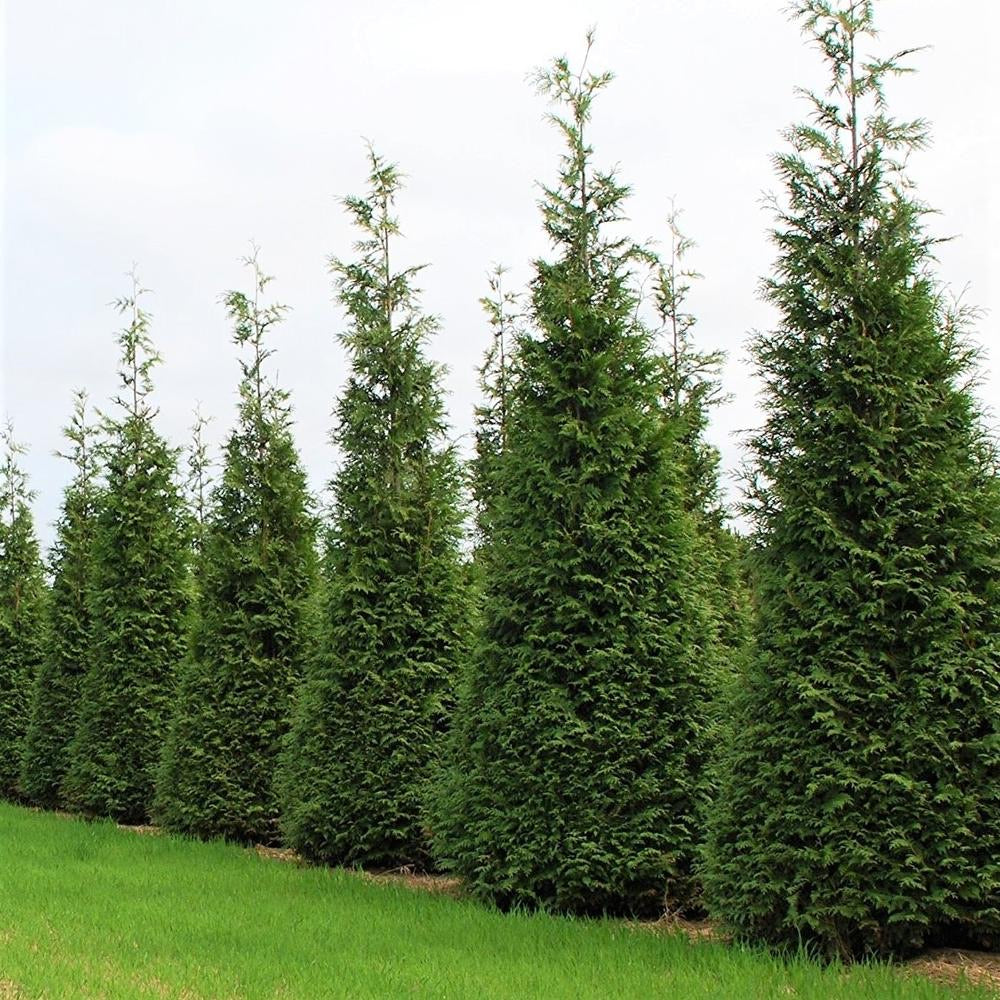
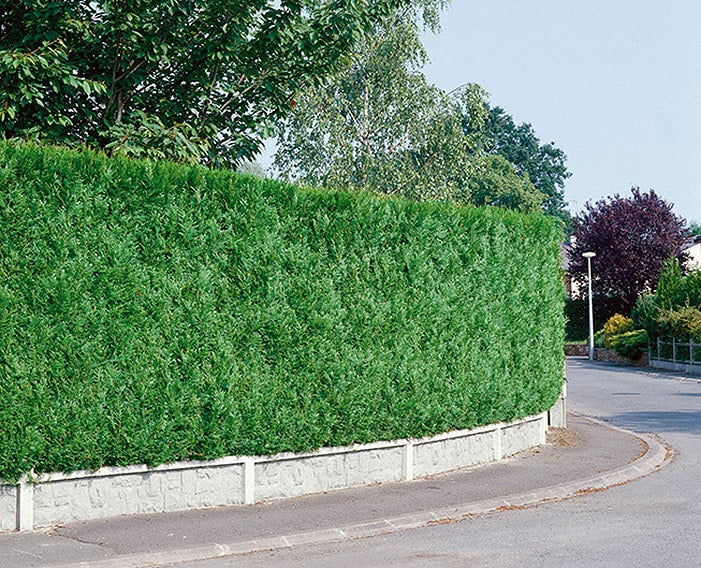
If you need privacy fast, Green Giant Arborvitae is the answer. It grows 3–5 feet per year — faster than virtually any other privacy tree — and eventually reaches 40–60 feet tall with a dense, pyramidal form that provides solid screening from ground to top. The rich, dark green foliage stays attractive year-round and the natural pyramidal shape requires no pruning to maintain.
Green Giant is also significantly more disease and pest resistant than Emerald Green Arborvitae, and it's more tolerant of heat, humidity, and a range of soil conditions. It's the top choice for large properties needing tall, fast privacy screens. Hardy in Zones 5–8. Plant 5–6 feet apart for a solid screen. Our Green Giant Arborvitae is the fastest privacy tree we carry.
Emerald Green Arborvitae — The Classic Compact Privacy Tree

Emerald Green Arborvitae is the most popular privacy tree in America — and for good reason. The tight, narrow columnar form (12–15 feet tall, just 3–4 feet wide) makes it perfect for smaller yards and tight spaces where Green Giant would be too large. The rich emerald-green foliage holds its color beautifully through Midwest winters without bronzing.
Plant 3–4 feet apart for a solid, formal-looking privacy screen that stays tidy without pruning. It grows about 6–9 inches per year — slower than Green Giant, but the compact size means it's the right choice for most suburban yards. Hardy in Zones 3–8. Our Emerald Green Arborvitae is the top pick for smaller yards and tight spaces.
Arborvitae 'Elegantissima' — The Most Beautiful Privacy Tree

If you want a privacy screen that's also a genuine landscape feature, Elegantissima is the arborvitae to choose. The golden-tipped foliage creates a stunning two-tone effect — bright yellow tips on new growth against deep green interior foliage — that makes it far more visually interesting than standard green arborvitae. In winter, the golden tips glow in low-angle sunlight in a way that's genuinely beautiful.
Grows 15–25 feet tall at a moderate rate, dense and columnar. Hardy in Zones 4–8. Plant 4–5 feet apart for a solid screen. Our Arborvitae 'Elegantissima' is the most ornamentally beautiful privacy tree we carry — limited stock available.
Norway Spruce — The Massive Windbreak Evergreen

Norway Spruce is the go-to choice for large windbreaks and tall privacy screens on rural properties and large lots. It grows 1–2 feet per year and eventually reaches 40–60 feet tall with a sweeping, graceful pyramidal form and dramatic drooping branchlets that become more beautiful with age. The dense evergreen foliage provides excellent wind protection and year-round privacy.
Norway Spruce is also significantly more deer-resistant than arborvitae — the stiff, sharp needles are uncomfortable for deer to browse. Hardy to Zone 2, making it one of the most cold-hardy privacy trees available. Plant 10–15 feet apart for a windbreak, 6–8 feet apart for a denser privacy screen. Our Norway Spruce Tree is the best large-scale windbreak tree we carry.
Eastern Red Cedar — The Native Deer-Resistant Evergreen

Eastern Red Cedar is the native Midwest evergreen that thrives where other privacy trees struggle. It handles clay soil, rocky ground, drought, extreme cold, and high deer pressure without complaint — deer almost never browse it due to the aromatic, resinous foliage. It grows 30–40 feet tall with a dense, columnar to pyramidal form that provides solid year-round screening.
It's also one of the most wildlife-valuable trees you can plant — the blue berries feed cedar waxwings and 50+ other bird species, and the dense foliage provides nesting and roosting habitat for a wide range of birds. Hardy in Zones 2–9. Our Eastern Red Cedar is the toughest, most deer-resistant privacy tree we carry.
Hicks Yew — The Best Evergreen for Shade

Most privacy trees need full sun — Hicks Yew is the exception. It's one of the few evergreens that thrives in partial to full shade, making it the top choice for screening in shaded areas under large trees or on the north side of buildings. It grows 10–12 feet tall in a dense, narrow column, stays rich dark green year-round, and is highly deer-resistant due to its toxicity.
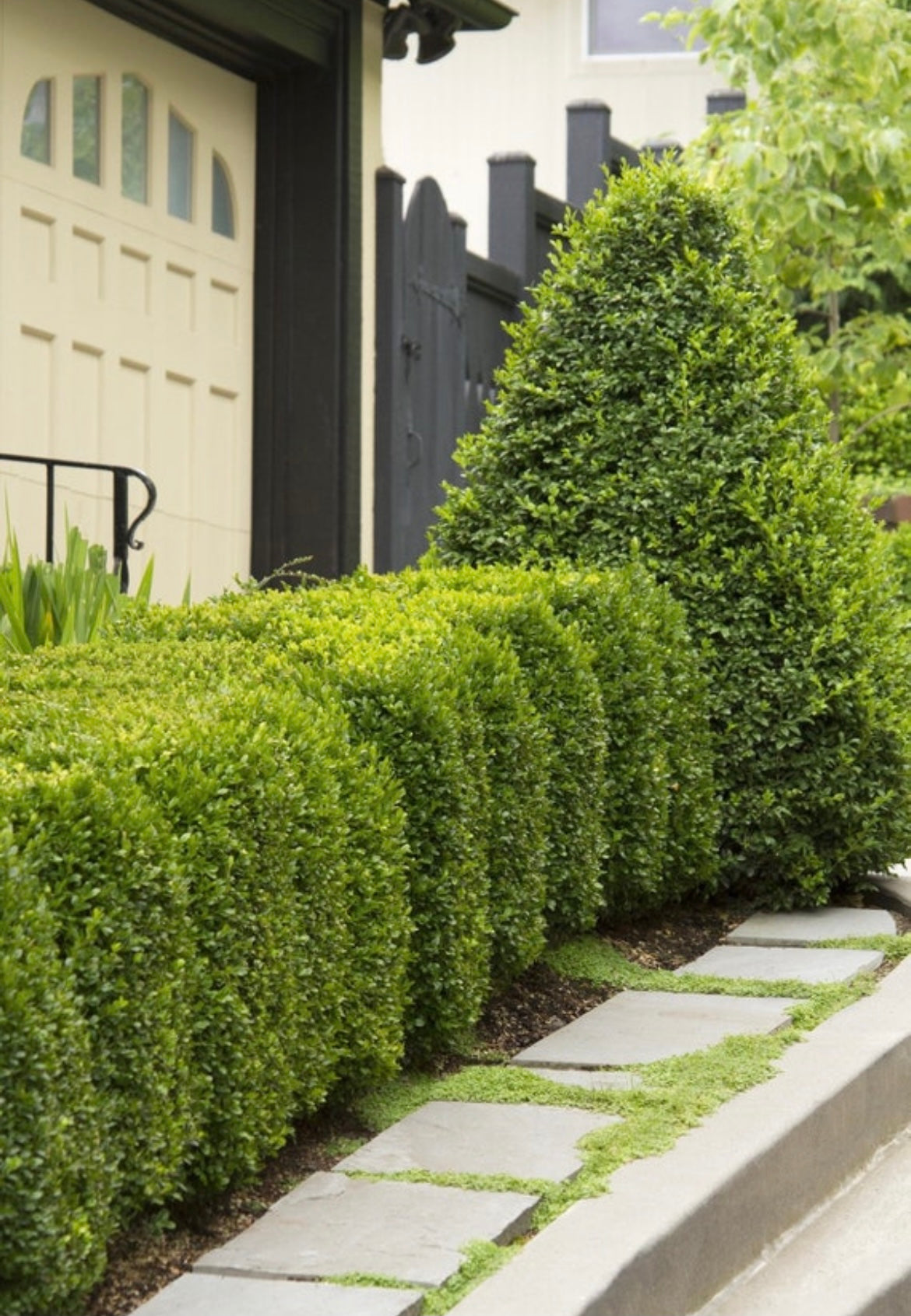
Hicks Yew also tolerates heavy pruning, making it excellent for formal hedges that need to be maintained at a specific height. Hardy in Zones 4–7. Plant 3–4 feet apart for a solid hedge. Our Hicks Yew is the best evergreen privacy plant for shady spots.
Deciduous Privacy Shrubs — Summer Screening with Seasonal Interest
Ninebark 'Crimson' — The Most Beautiful Privacy Shrub

If you want a privacy shrub that's also a stunning landscape feature, Crimson Ninebark delivers. The deep burgundy-purple foliage holds its color all season, clusters of white-pink flowers attract pollinators in late spring, and the exfoliating bark provides winter interest. It grows 6–8 feet tall and wide — large enough to provide meaningful privacy screening — and it's virtually indestructible in Midwest conditions.
Plant 4–5 feet apart for a dense informal hedge. Hardy to Zone 2. Our Crimson Ninebark is the most ornamentally beautiful privacy shrub we carry.
Ninebark — Native Toughness, Fast Growth

Standard Ninebark is one of the fastest-growing native shrubs in the Midwest, reaching 6–8 feet tall in just a few seasons. It handles clay soil, wet conditions, drought, and extreme cold with equal ease — making it one of the most adaptable privacy shrubs available. White-pink flower clusters in late spring attract pollinators, and the exfoliating bark provides winter interest. Hardy to Zone 2. Our Ninebark is a fast, tough native privacy shrub that thrives in difficult conditions.
Dappled Willow — Colorful Screen for Wet Areas

For wet, low-lying areas where most privacy plants struggle, Dappled Willow is the answer. It grows 4–8 feet tall and thrives in moist to wet soils that would rot the roots of arborvitae or spruce. The stunning variegated foliage — pink, white, and green all season — makes it one of the most colorful privacy shrubs available. Cut it back hard each spring for the most vibrant new growth. Hardy in Zones 4–9. Our Dappled Willow brings color and privacy to wet spots where other plants can't survive.
Forsythia — Fast-Growing Spring Showstopper

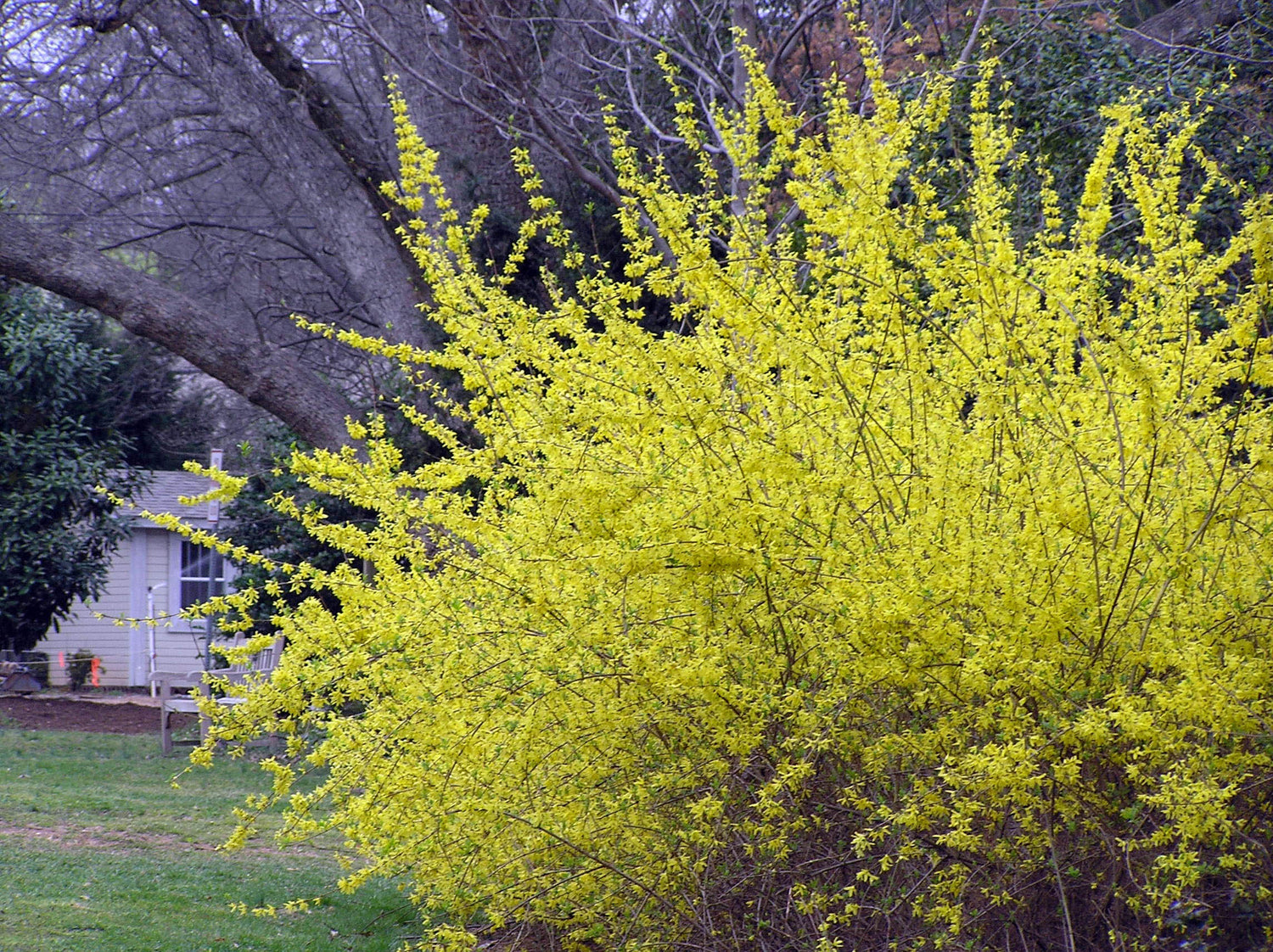
Forsythia is one of the fastest-growing privacy shrubs available — it can put on 2–3 feet of growth per year and quickly forms a dense, arching thicket 6–10 feet tall and wide. In early spring it explodes with bright yellow flowers before the leaves emerge — one of the most spectacular spring displays of any shrub. The dense summer foliage provides solid privacy screening from late spring through fall.
Forsythia is virtually indestructible — it handles clay soil, drought, shade, and neglect without complaint. It can be cut back hard every few years to rejuvenate it. Hardy in Zones 4–8. Plant 4–5 feet apart for a fast, informal privacy hedge. Our Forsythia is the fastest-growing deciduous privacy shrub we carry.
How to Space Privacy Plants for Maximum Effect
Spacing is one of the most important decisions in a privacy planting. Here's a quick reference:
- Green Giant Arborvitae: 5–6 feet apart for a solid screen; 8–10 feet apart for a more open windbreak
- Emerald Green Arborvitae: 3–4 feet apart for a tight formal hedge
- Arborvitae Elegantissima: 4–5 feet apart for a solid screen
- Norway Spruce: 6–8 feet apart for privacy; 10–15 feet apart for windbreak
- Eastern Red Cedar: 6–8 feet apart for privacy; 10–12 feet apart for windbreak
- Hicks Yew: 3–4 feet apart for a formal hedge
- Ninebark (all varieties): 4–5 feet apart for an informal hedge
- Dappled Willow: 3–4 feet apart for a dense screen
- Forsythia: 4–5 feet apart for a fast informal hedge
Pro tip: When in doubt, plant closer rather than farther apart. You can always thin plants later if they get too crowded — but you can't speed up a screen that's too sparse.
Evergreen vs. Deciduous: Which Is Right for You?
- Choose evergreen if: You need year-round privacy, you want to block wind in winter, or you want a screen that looks the same in January as it does in July.
- Choose deciduous if: You only need summer privacy, you want seasonal interest (spring flowers, fall color), you're screening a wet or shady area where evergreens struggle, or you want faster initial growth.
- Consider both: Many of the best privacy plantings combine evergreens for year-round structure with deciduous shrubs for seasonal color and interest. A row of Emerald Green Arborvitae backed by Crimson Ninebark, for example, gives you year-round privacy plus stunning burgundy foliage and spring flowers.
Privacy Planting Tips for the Midwest
- Plant in fall or early spring. Both are excellent times for establishing privacy plantings. Fall planting allows root development before winter. Spring planting gives plants a full growing season to establish.
- Water consistently the first two seasons. Privacy plantings fail most often due to inconsistent watering during establishment. Water deeply once or twice a week during dry spells in years one and two.
- Mulch the entire planting bed. A 3–4 inch layer of mulch across the entire planting area retains moisture, suppresses weeds, and dramatically improves establishment. This is especially important for large privacy plantings where hand-watering every plant is impractical.
- Don't plant too close to property lines. Check local ordinances for setback requirements. Most municipalities require trees and large shrubs to be planted a certain distance from property lines, sidewalks, and utilities.
- Be patient. Even fast-growing privacy plants take 3–5 years to provide meaningful screening. Plant as early as possible and let time do the work.
🌲 Ready to create your privacy screen?
Every plant in this guide ships directly to your door — ready to plant and start growing. Browse our full privacy plants collection and start building your living screen today.
Shop Privacy Plants →