Growing your own fruit trees is one of the most rewarding things you can do in a Midwest yard. A well-chosen apple or pear tree will produce hundreds of pounds of fresh fruit every year for decades — fruit that tastes dramatically better than anything from a grocery store, picked at peak ripeness and eaten the same day. The key is choosing varieties that are cold-hardy enough for Midwest winters and disease-resistant enough to thrive without constant spraying. This guide complements detailed recommendations on apple, pear, cherry, and other fruit trees perfectly suited for similar Midwest conditions, so be sure to consider fruit trees for the Midwest varieties.
This guide covers the best apple trees, pear trees, and other fruit trees for the Midwest — with everything you need to know to choose, plant, and care for them. Every tree ships directly from our nursery.
Apple Trees for the Midwest
Apples are the most popular home fruit tree in the Midwest — cold-hardy, productive, and available in dozens of varieties covering every flavor profile from sweet to tart. Plant at least two different apple varieties for cross-pollination and best yields. Most apple varieties are not self-fertile and need a second variety blooming at the same time nearby. For full details on how to grow and care for apple trees in Midwest conditions, see our comprehensive grow apple trees in the Midwest guide.
Apple Tree 'Honeycrisp' — America's Favorite Apple

Honeycrisp is the most popular apple variety in America — and for good reason. The large, crisp, juicy apples have an exceptional sweet-tart balance and an explosive crunch that no other variety matches. Honeycrisp was developed at the University of Minnesota specifically for cold-climate performance, making it one of the best apple varieties for the Midwest. Ripens in September. Hardy in Zones 3–8.

Our Apple Tree 'Honeycrisp' is America's favorite apple — explosive crunch, sweet-tart flavor, cold-hardy to Zone 3.
Apple Tree 'Fuji' — The Sweetest Apple You Can Grow

Fuji is the sweetest apple variety widely available — the dense, crisp flesh has a honey-sweet flavor with very low acidity that makes it irresistible for fresh eating. It's also one of the best-keeping apples, storing well in the refrigerator for months after harvest. Ripens in October — one of the latest-ripening varieties, extending your harvest season. Hardy in Zones 5–8.

Our Apple Tree 'Fuji' is the sweetest apple you can grow — honey-sweet, dense, and stores for months.
Apple Tree 'Liberty' — The Best Disease-Resistant Apple
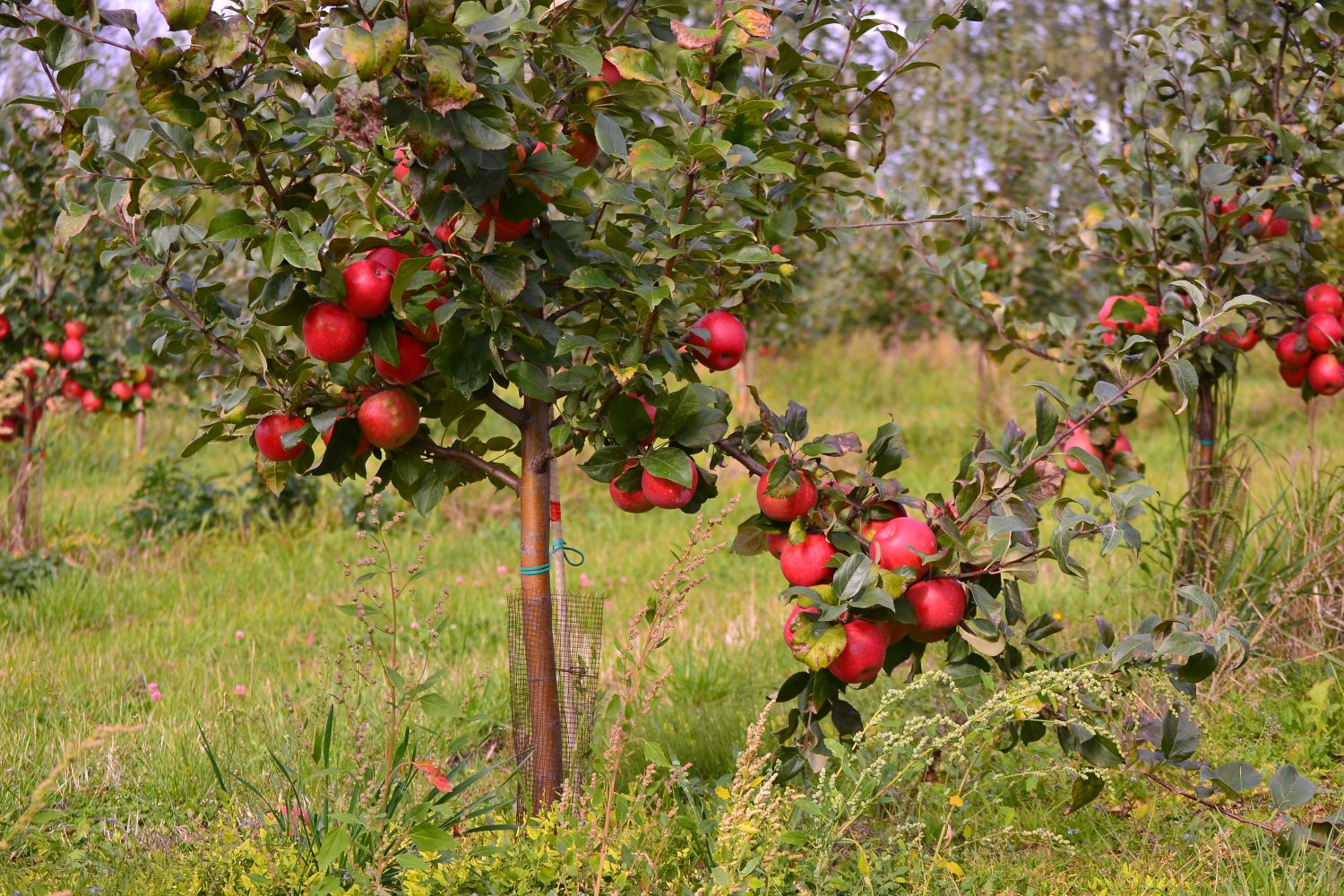
Liberty is the best disease-resistant apple variety for Midwest home orchards. It has strong resistance to apple scab, cedar-apple rust, fire blight, and powdery mildew — the four most common apple diseases in the Midwest — meaning you can grow beautiful, healthy apples with minimal or no spraying. The medium-sized red apples have a sweet-tart flavor excellent for fresh eating and cider. Ripens in September. Hardy in Zones 4–8.

Our Apple Tree 'Liberty' is the best disease-resistant apple for low-spray Midwest home orchards.
Apple Tree 'Winesap' — The Classic Cider & Cooking Apple

Winesap is one of the oldest and most beloved American apple varieties — a deep red, aromatic apple with a spicy, wine-like flavor that's excellent for fresh eating, cider, and cooking. It's also one of the best-keeping apples, storing well through winter. Ripens in October. Hardy in Zones 5–8. Our Apple Tree 'Winesap' is the classic American cider and cooking apple with a distinctive spicy-wine flavor.
Apple Tree 'Jonathon' — The Classic Midwest Heirloom

Jonathan is one of the most beloved heirloom apple varieties in the Midwest — a medium-sized, bright red apple with a tangy, spicy flavor that's excellent for fresh eating, pies, and applesauce. It's been grown in Midwest orchards for over 150 years and remains one of the most reliable and productive varieties for the region. Ripens in September. Hardy in Zones 4–8.

Our Apple Tree 'Jonathon' is the classic Midwest heirloom apple — tangy, spicy, and excellent for pies.
Apple Tree 'Golden Delicious' — The Best All-Purpose Yellow Apple

Golden Delicious is the most versatile all-purpose apple variety — sweet, mild, and excellent for fresh eating, baking, applesauce, and cider. It's also one of the best pollinator varieties, with a long bloom period that overlaps with most other apple varieties. Ripens in September–October. Hardy in Zones 4–8. Our Apple Tree 'Golden Delicious' is the best all-purpose yellow apple and an excellent cross-pollinator.
Apple Tree 'Red Delicious' — The Classic American Apple

Red Delicious is the most recognizable apple in America — the classic deep red, elongated apple with a mild, sweet flavor. Home-grown Red Delicious tastes dramatically better than store-bought because it's picked at true ripeness rather than weeks early for shipping. Ripens in September. Hardy in Zones 4–8. Our Apple Tree 'Red Delicious' is the classic American apple — far better home-grown than store-bought.
Apple Tree 'Ambrosia' — Exceptionally Sweet Low-Acid Apple

Ambrosia is one of the most exceptional fresh-eating apples available — the large, pink-red apples have an extraordinarily sweet, honey-like flavor with very low acidity and a fine-grained, crisp texture. It's a natural mutation discovered in a Canadian orchard and has become one of the most sought-after premium apple varieties. Ripens in September–October. Hardy in Zones 5–8. Our Apple Tree 'Ambrosia' is one of the sweetest and most exceptional fresh-eating apples available.
Apple Tree 'Arkansas Black' — The Darkest, Most Unique Apple

Arkansas Black is one of the most unique apple varieties available — the apples ripen to an almost black, deep burgundy-red color that's unlike any other apple. The flavor is firm and tart when first picked, but mellows and sweetens dramatically after a few months of storage, making it one of the best keeping apples available. Ripens in October. Hardy in Zones 5–8. Our Apple Tree 'Arkansas Black' is the most unique apple variety — almost black skin and exceptional storage life.
Apple Tree 'Granny Smith' — The Best Tart Baking Apple

Granny Smith is the most popular tart apple in the world — the bright green, firm, intensely tart apples are the gold standard for apple pies, tarts, and baking. The tartness holds up beautifully through cooking, and the firm texture doesn't turn mushy. Also excellent for fresh eating for those who prefer tart over sweet. Ripens in October. Hardy in Zones 5–8. Our Apple Tree 'Granny Smith' is the best tart baking apple — the gold standard for pies and tarts.
Apple Tree 'Frost Bite' — The Most Cold-Hardy Apple

Frost Bite is one of the most cold-hardy apple varieties available — developed in Minnesota to survive Zone 3 winters that would kill most apple varieties. The small, intensely sweet apples have a concentrated, almost candy-like sweetness that develops best after a light frost. An excellent choice for northern Midwest gardeners in Zones 3–4 where other varieties struggle. Hardy in Zones 3–6. Our Apple Tree 'Frost Bite' is the most cold-hardy apple for northern Midwest gardeners.
Pear Trees for the Midwest
Pears are an excellent fruit tree choice for the Midwest — generally easier to grow than apples, more tolerant of wet clay soils, and producing abundantly once established. Plant two varieties for cross-pollination.
Pear Tree 'Moonglow' — The Best Early-Season Pear

Moonglow is one of the best early-season pear varieties for the Midwest — large, yellow pears with a mild, sweet flavor and smooth, nearly grit-free flesh that ripens in August, earlier than most pear varieties. It also has good fire blight resistance, one of the most important disease considerations for Midwest pear growers. Excellent pollinator for most other pear varieties. Hardy in Zones 5–8.

Our Pear Tree 'Moonglow' is the best early-season pear — large, sweet, and fire blight resistant.
Pear Tree 'Kieffer' — The Toughest Pear for the Midwest

Kieffer is the toughest and most adaptable pear variety for the Midwest — it has exceptional fire blight resistance, tolerates clay soil and drought better than most pears, and produces large, yellow pears reliably even in difficult conditions. The firm, gritty flesh is best for canning, preserves, and cooking rather than fresh eating. Ripens in September–October. Hardy in Zones 4–9.

Our Pear Tree 'Kieffer' is the toughest pear for difficult Midwest conditions — excellent for canning and preserves.
Pear Tree 'Ayers' — Sweet Southern-Style Pear for the Midwest

Ayers is a sweet, smooth-fleshed pear with excellent fresh-eating quality — the medium-sized, yellow-red pears have a buttery, sweet flavor with minimal grittiness. It has good fire blight resistance and ripens in August, making it one of the earliest pear varieties. Hardy in Zones 5–8. Our Pear Tree 'Ayers' is a sweet, early-ripening pear with excellent fresh-eating quality.
Pear Tree 'Anjou' — The Classic Winter Pear

Anjou is the classic winter pear — the large, egg-shaped green pears with sweet, juicy flesh that stores exceptionally well through winter. It's one of the most widely grown commercial pear varieties and one of the best for home orchards. Ripens in September–October but improves significantly after a few weeks of cold storage. Hardy in Zones 5–8. Our Pear Tree 'Anjou' is the classic winter pear — sweet, juicy, and stores beautifully.
Pear Tree 'Orient' — The Most Disease-Resistant Pear

Orient is one of the most disease-resistant pear varieties available — with exceptional fire blight resistance that makes it an excellent choice for Midwest gardeners who want low-maintenance fruit production. The large, round pears have a mild, sweet flavor and firm texture excellent for canning and fresh eating. Ripens in August–September. Hardy in Zones 4–9. Our Pear Tree 'Orient' is the most disease-resistant pear for low-maintenance Midwest orchards.
Pear Tree 'Comice' — The World's Finest Dessert Pear

Comice is widely considered the finest dessert pear in the world — the large, round pears have an extraordinarily buttery, melting flesh with a rich, sweet, complex flavor that's in a class of its own. It's the pear used in premium gift boxes and gourmet food shops. Ripens in October. Hardy in Zones 5–8. Our Pear Tree 'Comice' is the world's finest dessert pear — buttery, rich, and extraordinary.
Other Fruit Trees for the Midwest
American Persimmon — The Native Midwest Superfruit

American Persimmon is a native Midwest fruit tree that produces small, intensely sweet orange fruits after the first frost — the flavor is like a cross between honey, brown sugar, and apricot. It's one of the most wildlife-valuable fruit trees available, with the fruits feeding deer, foxes, raccoons, opossums, and over 30 bird species through fall and winter. It's also extraordinarily tough — handling drought, clay soil, and extreme cold without complaint. Grows 30–60 feet tall. Hardy in Zones 4–9.

Our American Persimmon is the most wildlife-valuable native fruit tree — honey-sweet fruits that feed wildlife through winter.
Black Cherry Tree — The Native Wildlife Fruit Tree

Black Cherry is one of the most ecologically important native trees in the Midwest — it supports more caterpillar species than almost any other native tree (over 450 species), making it a critical food source for nesting birds. The small, dark purple cherries ripen in late summer and are eagerly consumed by over 70 bird species including cedar waxwings, robins, and thrushes. The cherries are also used for jelly, wine, and flavoring. Grows 50–80 feet tall. Hardy in Zones 3–9.

Our Black Cherry Tree is the most ecologically important native fruit tree — supporting 450+ caterpillar species and 70+ bird species.
Black Walnut Tree — The Native Nut Tree That Pays for Itself

Black Walnut is one of the most valuable native trees in North America — the wood is prized for furniture and gunstocks, and the nuts have an intense, distinctive flavor prized for baking and cooking. A mature Black Walnut can produce hundreds of pounds of nuts per year, feeding squirrels, deer, and turkeys through fall and winter. It grows into a magnificent shade tree reaching 50–75 feet tall. Note: Black Walnut produces juglone, which is toxic to some plants — don't plant tomatoes, apples, or blueberries within 50 feet. Hardy in Zones 4–9.

Our Black Walnut Tree is a magnificent native shade tree with the most valuable wood and most intensely flavored nuts in North America.
Apple Variety Quick-Reference Guide
- Best for fresh eating: Honeycrisp, Fuji, Ambrosia, Jonathon
- Best for pies & baking: Granny Smith, Jonathon, Winesap, Golden Delicious
- Best for cider: Winesap, Liberty, Jonathon, Arkansas Black
- Best disease resistance: Liberty (scab, rust, fire blight, mildew resistant)
- Best cold hardiness: Frost Bite (Zone 3), Honeycrisp (Zone 3), Jonathon (Zone 4)
- Best keeper/storage: Arkansas Black, Fuji, Winesap, Anjou Pear
- Best pollinator variety: Golden Delicious (long bloom, pollinates most varieties)
Fruit Tree Planting Tips for the Midwest
- Plant two varieties for cross-pollination. Most apples and pears need a second variety blooming at the same time for best fruit set. Plant at least two different varieties within 50 feet of each other.
- Full sun is essential. Fruit trees need at least 6–8 hours of direct sun for good fruit production. Shaded trees produce less fruit and are more disease-prone.
- Well-drained soil. Most fruit trees don't tolerate waterlogged soil. Plant on a slight slope or raised area if your soil stays wet. Kieffer and Orient pears are the most tolerant of wet conditions.
- Prune annually. Annual pruning in late winter is essential for fruit tree health and productivity. Remove crossing branches, water sprouts, and maintain an open canopy for air circulation.
- Mulch generously. A 3–4 inch ring of mulch dramatically improves establishment. Read our guide on proper mulching technique.
🍎 Ready to grow your own fruit trees?
Every fruit tree in this guide ships directly to your door — ready to plant and start producing. Browse our full collection today.
Shop Fruit Trees →