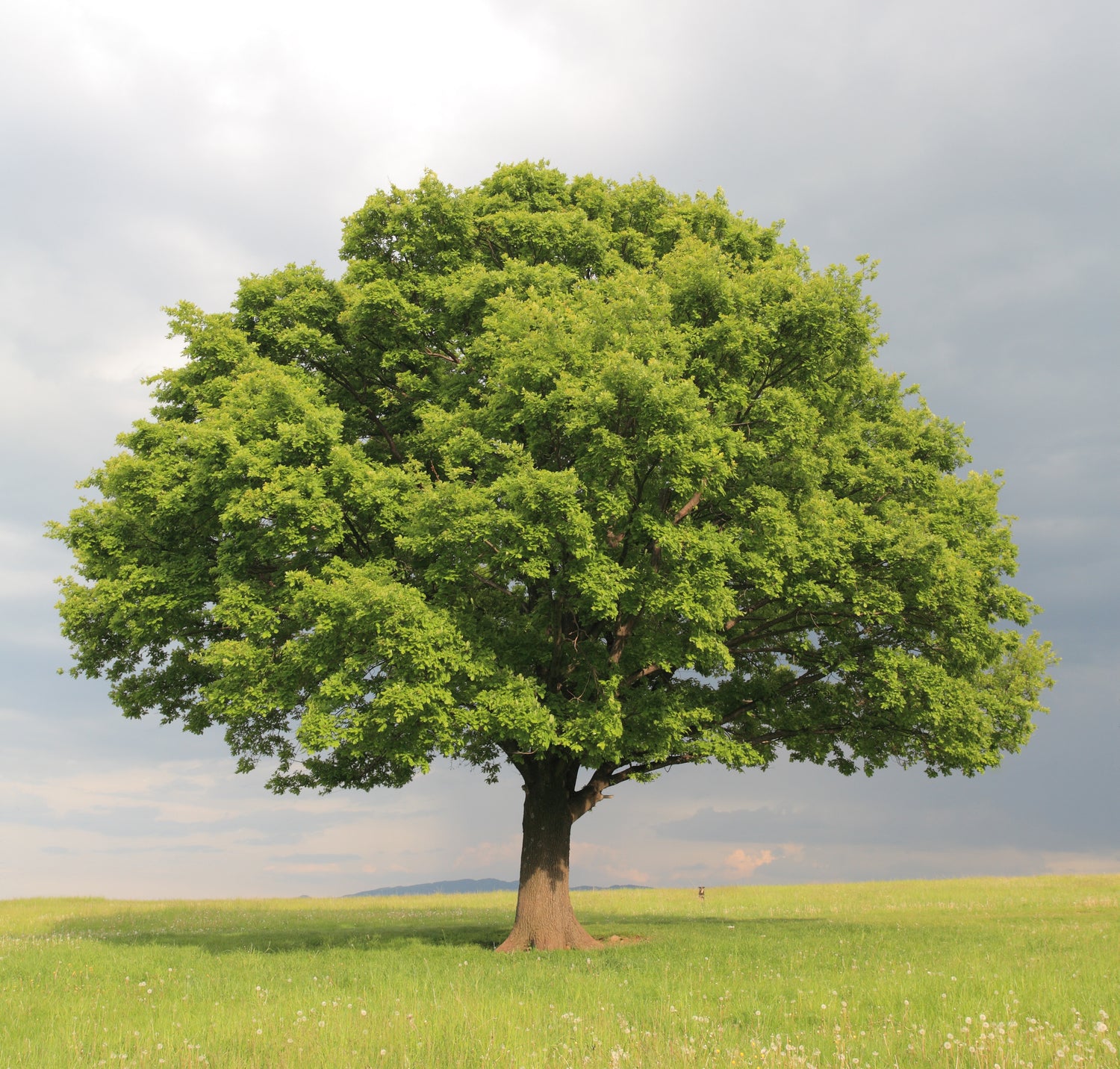
Most trees do one thing well. The Black Walnut does three things exceptionally: it produces some of the richest, most flavorful nuts in North America, it grows into one of the most valuable timber trees on the continent, and it supports an enormous range of wildlife along the way. There is no other single tree you can plant in the Midwest that delivers this combination of food, value, and ecological impact.
If you have the space and the patience, planting a Black Walnut is one of the best decisions you can make for your property — and for the generations that come after you.
The Black Walnut at a Glance

- Botanical name: Juglans nigra
- Mature height: 50–75 feet
- Spread: 40–60 feet
- Growth rate: Medium — 1–2 feet per year
- Hardiness zones: 4–9
- Sun: Full sun
- Soil: Deep, well-drained; adaptable to a range of types
- Native: Yes — native throughout the Midwest and eastern North America
- Wildlife value: Exceptional
- Timber value: Among the highest of any North American hardwood
A Brief History of the Black Walnut in America
The Black Walnut (Juglans nigra) is one of the most historically significant trees in North America. Native Americans used every part of the tree — the nuts for food and oil, the husks for dye and medicine, the wood for tools and structures. Early European settlers quickly recognized the value of Black Walnut timber and began harvesting it extensively, which is why truly ancient Black Walnut trees are relatively rare today despite the species being widespread.
By the 19th century, Black Walnut had become one of the most prized cabinet woods in America and Europe. Victorian-era furniture makers used it extensively for its rich color, fine grain, and workability. Today, a single high-quality Black Walnut log can sell for thousands of dollars at timber auctions — and the demand for Black Walnut wood shows no signs of slowing.
Despite centuries of harvesting, the Black Walnut remains one of the most common native trees in the Midwest, growing naturally in rich bottomlands, hillsides, and forest edges from the Great Plains to the Appalachians. It's a tree that has fed, sheltered, and enriched people for thousands of years — and it will continue to do so for thousands more.
The Nuts: Rich, Bold, and Worth Every Bit of Effort
Black Walnut nuts are not English walnuts. They're something entirely different — more intense, more complex, more distinctly flavored. If you've only ever eaten English walnuts from the grocery store, your first taste of a fresh Black Walnut will be a revelation. The flavor is rich, earthy, and bold in a way that makes English walnuts taste bland by comparison.
Black Walnuts are self-fertile, meaning a single tree will produce nuts without a second tree nearby — though production improves with a pollinator. A mature tree can drop hundreds of pounds of nuts in a good year. The nuts fall in their green husks in September and October.
How to Harvest and Process Black Walnuts
Processing Black Walnuts takes some effort, but it's straightforward once you know the steps:
- Collect the nuts as soon as they fall. Don't let them sit on the ground too long — the husks will rot and the nuts inside can be affected.
- Remove the husks. Wear gloves — the juice from the husks stains everything permanently and is nearly impossible to remove from skin or clothing. You can drive over the nuts with a car to crack the husks, or use a husking tool. Some people use a concrete block to roll the husks off.
- Rinse the nuts thoroughly with water to remove husk residue.
- Cure the nuts by spreading them in a single layer in a cool, dry, well-ventilated area for 2–4 weeks. This allows the nutmeat to dry and develop its full flavor.
- Crack and shell. Black Walnut shells are thick and hard — a dedicated nut cracker or a hammer and a hard surface work best. The nutmeat comes out in pieces rather than halves, which is fine for most uses.
The nutmeat can be stored in the refrigerator for several months or frozen for up to a year. Many people find that the effort of processing Black Walnuts becomes a satisfying fall ritual — and the flavor of fresh, home-processed Black Walnuts is dramatically better than anything you can buy in a store.
What to Make with Black Walnuts
Black Walnut's bold, distinctive flavor shines in recipes where it's the star rather than a background ingredient:
- Black Walnut ice cream — The classic. The intense flavor pairs perfectly with cream and sugar. Once you've had real Black Walnut ice cream, the store-bought version is a disappointment.
- Black Walnut cake and cookies — The bold flavor holds up beautifully in baked goods. Black Walnut brownies, pound cake, and chocolate chip cookies with Black Walnuts are all exceptional.
- Black Walnut fudge — A traditional Appalachian and Midwest treat that showcases the nut's flavor perfectly.
- Salads and grain bowls — Toasted Black Walnuts add incredible depth to salads, especially with bitter greens, blue cheese, and fruit.
- Pesto and sauces — Substitute Black Walnuts for pine nuts in pesto for a dramatically more complex flavor.
- Selling the harvest — Black Walnuts fetch good prices at farmers markets and from specialty food buyers. Hammons Products Company operates a nationwide Black Walnut buying program — you can drop off hulled nuts at collection points across the Midwest and get paid by the pound.
The Timber: One of the Most Valuable Woods in North America
Black Walnut wood is among the most valuable of any North American hardwood. The dark, rich, chocolate-brown heartwood is prized by furniture makers, gunstock manufacturers, instrument makers, and woodworkers for its beauty, workability, and durability. It machines cleanly, takes finish beautifully, and has a natural luster that deepens with age.
A single mature Black Walnut tree can be worth thousands of dollars as timber — sometimes tens of thousands for an exceptionally large, well-formed specimen. Veneer-quality Black Walnut logs — those with straight grain, large diameter, and minimal defects — command the highest prices and are actively sought by timber buyers throughout the Midwest.
Black Walnut Timber Value by the Numbers
To give you a sense of the financial potential: a Black Walnut tree with a trunk diameter of 18 inches or more and a straight, clear trunk of 8–10 feet can be worth $500–$2,000 or more as standing timber. Trees with 24+ inch diameters and excellent form can be worth $5,000–$20,000 or more to the right buyer. These values increase every year as the tree grows.
This means that planting a Black Walnut today is a genuine long-term financial investment. The tree grows in value every year as it adds girth and height. Many landowners plant Black Walnuts specifically as a timber investment, knowing that the trees they plant will be worth far more to their heirs than what they paid for them. It's one of the few plants you can buy for under $50 that could be worth thousands of dollars in 30–40 years.
The Wildlife Value: A Native Ecosystem in One Tree
Black Walnut is a native Midwest tree, and native wildlife has co-evolved with it for thousands of years. Here's what a mature Black Walnut supports:
- Squirrels — Black Walnuts are one of the most important food sources for squirrels, who cache the nuts in fall and rely on them through winter. Squirrels are also the primary dispersers of Black Walnut seeds — the tree and the squirrel have a mutually beneficial relationship that's been going on for millions of years.
- Wild turkeys and wood ducks — Both species eat Black Walnuts when available, and both are attracted to properties with mature nut-producing trees.
- Deer — Deer browse the foliage and eat fallen nuts, making Black Walnut a valuable addition to any property managed for deer habitat.
- Over 100 species of native caterpillars and moths — Black Walnut is a significant larval host plant, supporting the insect food web that songbirds depend on. Those caterpillars are what baby birds eat — almost exclusively — making Black Walnut an indirect but critical support for songbird populations.
- Nesting birds — The large, spreading canopy provides excellent nesting habitat for a wide range of songbirds and raptors, including red-tailed hawks, great horned owls, and dozens of songbird species.
- Pollinators — Black Walnut produces pollen that supports native bees and other pollinators in spring.
The Juglone Question: What You Need to Know
Black Walnut produces a natural chemical called juglone that inhibits the growth of some plants in the root zone. This is the most common concern people have about planting Black Walnut, and it's worth understanding clearly rather than letting it scare you off a genuinely exceptional tree.
How Juglone Works
Juglone is produced in the roots, leaves, and husks of Black Walnut trees. It leaches into the soil within the root zone — roughly the area under and slightly beyond the canopy drip line — where it can inhibit the growth of sensitive plants by interfering with their ability to absorb water and nutrients.
What Plants Are Sensitive to Juglone?
The list of truly sensitive plants is shorter than most people think. The most commonly affected include:
- Tomatoes, peppers, and eggplant
- Apples and crabapples
- Blueberries
- Rhododendrons and azaleas
- Lilacs
- White pines
- Alfalfa
What Plants Are NOT Affected by Juglone?
The vast majority of common landscape plants are unaffected by juglone, including most grasses, most oaks, maples, elms, most shrubs, most perennials, and most vegetables other than those listed above. Corn, beans, squash, carrots, beets, and most other common vegetables grow fine near Black Walnut.
The Simple Solution
Site your Black Walnut away from vegetable gardens and the specific sensitive plants listed above. On a large yard or rural property, this is rarely a significant constraint. Millions of Black Walnut trees grow in Midwest landscapes without causing problems for the surrounding plants — as long as they're sited thoughtfully.
How to Plant and Establish a Black Walnut Tree
Site Selection
Choose a spot with full sun and deep, well-drained soil. Black Walnut develops a deep taproot and doesn't like waterlogged conditions. Give it plenty of room — at least 30–40 feet from structures, other trees, and sensitive plants. The more open space it has, the better it will grow and the more nuts it will produce.
Black Walnut grows best in deep, fertile, well-drained loam or clay-loam soils with a pH of 6.0–7.0. It naturally grows in rich bottomlands and on well-drained hillsides throughout the Midwest — if you have that kind of soil, you have ideal Black Walnut conditions.
Planting Step by Step
- Dig a hole 2–3 times wider than the root ball but no deeper than the root ball height.
- Set the tree so the root flare (where the trunk widens at the base) is at or slightly above the surrounding soil grade. Never bury the root flare.
- Backfill with native soil — no amendments needed.
- Water thoroughly to settle the soil and eliminate air pockets.
- Apply a 3–4 inch ring of mulch extending several feet from the trunk, keeping mulch away from the trunk itself. Read our guide on why mulch volcanoes kill trees.
Watering
Water deeply once or twice a week during the first growing season. Once established (after 1–2 seasons), Black Walnut is quite drought-tolerant and requires minimal supplemental watering except during extended dry spells.
Fertilizing
Black Walnut growing in decent soil generally doesn't need fertilization. If growth seems slow or the leaves are pale, a light application of balanced fertilizer in early spring can help. Avoid heavy nitrogen fertilization, which promotes excessive leafy growth at the expense of nut production.
When Will It Start Producing Nuts?
Black Walnut trees typically begin producing their first nuts at 4–7 years of age, with meaningful production starting around year 7–10 and full production kicking in around year 10–15. The timber value builds continuously from the day you plant. Think of it as a savings account that pays dividends in nuts every fall and grows in value every year.
Black Walnut vs. Other Nut Trees: How Does It Compare?
If you're deciding between nut tree options for your Midwest property, here's how Black Walnut stacks up:
- Black Walnut vs. Pecan: Pecan produces more nuts per tree and the nuts are easier to process, but Pecan needs Zone 5 or warmer and a longer growing season. Black Walnut is hardier (Zone 4) and has significantly higher timber value. If you're in Zone 5+, plant both. If you're in Zone 4, Black Walnut is the safer bet.
- Black Walnut vs. English Walnut: English Walnut produces easier-to-crack nuts with milder flavor, but it's less cold-hardy and has far lower timber value. Black Walnut is the better choice for most Midwest growers.
- Black Walnut vs. Hickory: Hickory nuts are excellent and the timber is also valuable, but hickory trees are slower to produce and harder to find as nursery stock. Black Walnut is more readily available and faster to begin producing.
Is a Black Walnut Right for Your Property?
Black Walnut is the right choice if:
- You have a large yard, rural property, or acreage with open space in full sun
- You want a native tree that produces food, supports wildlife, and builds long-term financial value
- You're thinking generationally — planting something that will outlast you and benefit your heirs
- You can site it away from vegetable gardens and sensitive ornamentals
- You appreciate bold, distinctive flavor and want to grow something you genuinely can't buy at the grocery store
- You want a tree that gets more valuable every single year
If you have a small urban lot or need to plant near a vegetable garden, Black Walnut may not be the right fit — but for anyone with space and a long-term mindset, it's one of the best trees you can put in the ground.
🌰 Ready to plant your Black Walnut?
Ships directly to your door — a native powerhouse that produces rich nuts, builds timber value, and supports wildlife for generations. Limited stock available.
Order Black Walnut Tree →Explore More Food-Producing Trees & Plants
Love the idea of a productive edible landscape? Browse these collections to find more food-producing trees, nut trees, and berry plants for your Midwest yard: