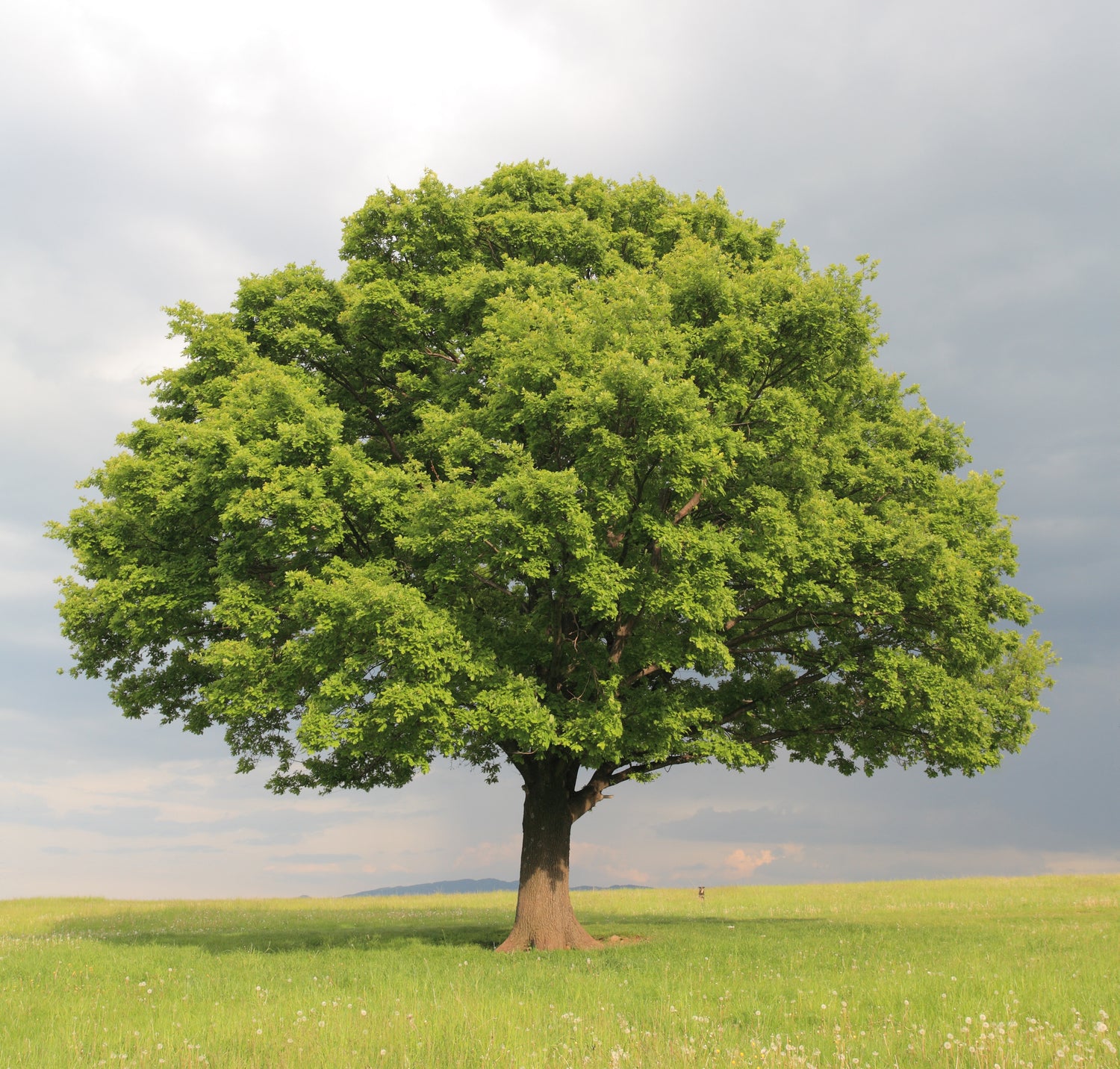
Most trees do one thing well. The Black Walnut does three things exceptionally: it produces some of the richest, most flavorful nuts in North America, it grows into one of the most valuable timber trees on the continent, and it supports an enormous range of wildlife along the way. There is no other single tree you can plant in the Midwest that delivers this combination of food, value, and ecological impact. If you're interested in other nut trees suited for the region, this guide covers the best nut trees for the Midwest and complements everything the Black Walnut offers perfectly with best nut trees for the Midwest.
If you have the space and the patience, planting a Black Walnut is one of the best decisions you can make for your property — and for the generations that come after you.
The Black Walnut at a Glance

- Mature height: 50–75 feet
- Spread: 40–60 feet
- Growth rate: Medium — 1–2 feet per year
- Hardiness zones: 4–9
- Sun: Full sun
- Soil: Deep, well-drained; adaptable to a range of types
- Native: Yes — native throughout the Midwest and eastern North America
- Wildlife value: Exceptional
- Timber value: Among the highest of any North American hardwood
The Nuts: Rich, Bold, and Worth Every Bit of Effort
Black Walnut nuts are not English walnuts. They're something entirely different — more intense, more complex, more distinctly flavored. If you've only ever eaten English walnuts from the grocery store, your first taste of a fresh Black Walnut will be a revelation. The flavor is rich, earthy, and bold in a way that makes English walnuts taste bland by comparison.
Black Walnuts are self-fertile, meaning a single tree will produce nuts without a second tree nearby — though production improves with a pollinator. A mature tree can drop hundreds of pounds of nuts in a good year. The nuts fall in their green husks in September and October, and processing them is a bit of work — the husks need to be removed (wear gloves — the juice stains everything permanently), and the shells are thick and hard. But the nutmeat inside is worth it.
Black Walnut nutmeat is prized by bakers and cooks who know what they're doing. It's the key ingredient in authentic Black Walnut ice cream, Black Walnut cake, and dozens of other recipes where the bold flavor is the whole point. You can also sell the nuts — Black Walnuts fetch good prices at farmers markets and specialty food buyers.
The Timber: One of the Most Valuable Woods in North America
Black Walnut wood is among the most valuable of any North American hardwood. The dark, rich, chocolate-brown heartwood is prized by furniture makers, gunstock manufacturers, and woodworkers for its beauty, workability, and durability. A single mature Black Walnut tree can be worth thousands of dollars as timber — sometimes tens of thousands for an exceptionally large, well-formed specimen.
This means that planting a Black Walnut today is a genuine long-term financial investment. The tree grows in value every year as it adds girth and height. Many landowners plant Black Walnuts specifically as a timber investment, knowing that the trees they plant will be worth far more to their heirs than what they paid for them.
Even if you never harvest the timber, knowing that your tree is building value year after year is a satisfying thing.
The Wildlife Value: A Native Ecosystem in One Tree
Black Walnut is a native Midwest tree, and native wildlife has co-evolved with it for thousands of years. Here's what a mature Black Walnut supports:
This native aspect is key, as detailed in our guide to oak trees and ornamental shrubs for the Midwest to maximize your landscape's ecological benefits.- Squirrels — Black Walnuts are one of the most important food sources for squirrels, who cache the nuts in fall and rely on them through winter.
- Wild turkeys and wood ducks — Both species eat Black Walnuts when available.
- Over 100 species of native caterpillars and moths — Black Walnut is a significant larval host plant, supporting the insect food web that songbirds depend on.
- Nesting birds — The large, spreading canopy provides excellent nesting habitat for a wide range of songbirds and raptors.
If you care about supporting local wildlife and native ecosystems, Black Walnut is one of the highest-impact trees you can plant.
The Juglone Question: What You Need to Know
Black Walnut produces a natural chemical called juglone that inhibits the growth of some plants in the root zone. This is the most common concern people have about planting Black Walnut, and it's worth understanding clearly:
- The affected zone is roughly equal to the drip line of the tree — the area directly under and slightly beyond the canopy. Juglone concentration is highest within this zone.
- Many plants are completely unaffected by juglone, including most grasses, many trees, and a wide range of shrubs and perennials.
- Sensitive plants include tomatoes, peppers, apples, blueberries, rhododendrons, and a handful of others. Keep vegetable gardens and these specific plants outside the drip line.
- The solution is simple: site your Black Walnut away from vegetable gardens and sensitive ornamentals. In a large yard or on a rural property, this is rarely a significant constraint.
The juglone concern is real but manageable. Millions of Black Walnut trees grow in Midwest landscapes without causing problems for the surrounding plants — as long as they're sited thoughtfully.
How to Plant and Establish a Black Walnut Tree
Site Selection
Choose a spot with full sun and deep, well-drained soil. Black Walnut develops a deep taproot and doesn't like waterlogged conditions. Give it plenty of room — at least 30–40 feet from structures, other trees, and sensitive plants. The more open space it has, the better it will grow and the more nuts it will produce.
Planting
Plant in spring or fall. Dig a hole wide enough to accommodate the root system without crowding. Set the tree at the same depth it was growing in the container — don't bury the root flare. Backfill with native soil, water thoroughly, and mulch around the base (keeping mulch away from the trunk).
Watering
Water deeply once or twice a week during the first growing season. Once established, Black Walnut is quite drought-tolerant and requires minimal supplemental watering.
Patience
Black Walnut trees typically begin producing nuts at 4–7 years of age, with full production kicking in around 10–15 years. The timber value builds continuously from the day you plant. Think of it as a savings account that pays dividends in nuts every fall and grows in value every year.
Is a Black Walnut Right for Your Property?
Black Walnut is the right choice if:
- You have a large yard, rural property, or acreage with open space in full sun
- You want a native tree that produces food, supports wildlife, and builds long-term value
- You're thinking generationally — planting something that will outlast you and benefit your heirs
- You can site it away from vegetable gardens and sensitive ornamentals
- You appreciate bold, distinctive flavor and want to grow something you genuinely can't buy at the grocery store
If you have a small urban lot or need to plant near a vegetable garden, Black Walnut may not be the right fit — but for anyone with space and a long-term mindset, it's one of the best trees you can put in the ground.
🌰 Ready to plant your Black Walnut?
Ships directly to your door — a native powerhouse that produces nuts, builds timber value, and supports wildlife for generations.
Order Black Walnut Tree →Explore More Food-Producing Trees & Plants
Love the idea of a productive edible landscape? Browse these collections to find more food-producing trees, nut trees, and berry plants for your Midwest yard: