One of the interesting things about growing and selling trees here at our family nursery in Missouri is that there is always something new to learn. We recently came across a discussion among fruit tree growers about the difference between summer pruning and winter pruning, and it brought up a fascinating point that deserves more attention.
Most people know that pruning a tree can change its shape. What many people don't realize is that the time of year you prune a tree can influence how much new growth develops afterward.
Pruning during the dormant season often encourages vigorous new shoots, while carefully timed summer pruning can help manage unwanted growth. This applies to many deciduous trees, not just apple trees, although there are some important exceptions.
Understanding the difference could save you years of unnecessary pruning, especially if you have a tree that seems determined to grow right back every time you cut it.
Summer vs Winter Tree Pruning at a Glance
Neither summer nor winter pruning is automatically better. It really depends on what you want your tree to do afterward, what kind of tree you have, and how healthy it is.
| Pruning Goal | Generally Preferred Timing |
|---|---|
| Encourage vigorous new shoots | Late winter |
| Develop a strong branch structure | Late winter |
| Manage excessive shoot growth | Selective summer pruning |
| Improve sunlight reaching fruit | Selective summer pruning |
| Preserve spring flowers | Shortly after flowering |
| Remove hazardous broken branches | Whenever necessary |
| Restore a severely overgrown tree | Gradual pruning over multiple years |
These are general guidelines for healthy, established trees. Certain species, regional diseases, weather conditions, and the age of the tree can change the recommendations considerably.
Why Winter Pruning Encourages New Growth
When a deciduous tree loses its leaves in the fall, it might appear as though everything has shut down. The tree looks bare, nothing is growing, and it can be easy to forget just how much is happening inside that seemingly lifeless plant.
During dormancy, the tree has stored carbohydrates in its roots, trunk, and woody branches. Those reserves help support the development of leaves, flowers, and new shoots when warmer weather returns.
Now imagine removing several branches from that tree before spring arrives.
The remaining tree still has much of its established root system and stored resources, but it has fewer growing points competing for them. As the buds begin opening in spring, the remaining shoots may develop more vigorously than they otherwise would have.
This is one reason a heavily pruned tree can produce surprisingly long new branches the following year.
The University of New Hampshire's research-based pruning guidance explains how removing dormant buds changes the distribution of stored resources and influences the vigor of developing shoots.

Does Winter Pruning Actually Make a Tree Grow Faster?
Here is where things get a little more interesting. A tree can produce longer individual shoots after pruning without becoming larger overall than an identical tree that was never pruned.
Imagine two healthy young trees growing next to each other. One is left alone, while several branches are removed from the other during late winter.
By midsummer, the pruned tree might have several impressively long new shoots. Meanwhile, the untouched tree might have shorter individual shoots but considerably more branches and leaves overall.
Which tree actually grew more?
It depends on whether you are measuring individual shoot length or the growth of the entire tree. Those are two different things.
Genetics, soil conditions, sunlight, water, and root development remain extremely important. We explain more about these differences in our guide to how quickly different trees actually grow.
Why Summer Pruning Can Help Control Tree Growth
Summer pruning changes the situation because you are removing branches while the tree is actively using its leaves to produce carbohydrates through photosynthesis.
Think of each healthy leaf as a tiny solar panel helping power the tree. Removing a living branch in summer temporarily reduces the amount of leaf surface available to capture sunlight.
Once the main seasonal growth period has slowed, selective pruning may also result in less immediate replacement growth than a similar cut made during dormancy.
That is why summer pruning is sometimes used in orchards, particularly where growers need to limit excessive upright growth or improve the amount of sunlight reaching developing fruit.
Instead of waiting until winter and repeatedly removing large amounts of unwanted growth, carefully removing selected young shoots during the growing season can sometimes make maintenance easier.
Will Branches Removed During Summer Never Grow Back?
We wouldn't want anyone reading this to walk away believing that summer pruning permanently prevents new branches from developing.
Unfortunately, trees aren't quite that predictable.
A branch removed completely will not simply reattach itself, regardless of the season. However, dormant or newly activated buds near the pruning wound can produce replacement shoots.
Some trees respond particularly vigorously to cutting, and pruning early in summer can leave plenty of growing season remaining for new shoots to develop.
Summer pruning is a tool for managing growth, not a guarantee that growth will stop.
Why Your Tree Keeps Growing Back After You Prune It
Have you ever seen a tree that was cut back considerably, only to develop a ridiculous number of straight-up branches the following year?
It almost looks as though the tree is getting even with whoever was holding the pruning saw.
These vigorous shoots are often called water sprouts when they emerge from established branches or the trunk. Shoots coming from the roots or base of the tree are commonly called suckers.
Heavy pruning, changes in light exposure, and certain forms of tree stress can all contribute to their development.
The Pruning Cycle You Want to Avoid
Consider a homeowner with an apple tree that has become taller than they would like.
- They cut several large branches back during winter.
- The tree produces numerous vigorous upright shoots in spring.
- Those shoots grow several feet during the growing season.
- The homeowner removes most of that growth the following winter.
- The tree responds with another round of vigorous shoots.
Before long, the homeowner is spending more time pruning than enjoying the tree.
In this situation, a combination of less severe dormant pruning, better branch selection, and appropriate summer maintenance may help break the cycle.
The important part is identifying why the unwanted growth is happening instead of simply cutting everything back harder next time.
The Type of Pruning Cut Matters Just as Much as the Season
Knowing when to prune is only part of the equation. Where you make the cut can dramatically influence the appearance and growth of the tree afterward.
Heading Cuts Often Encourage Branching
A heading cut removes part of a branch rather than removing the entire branch at its attachment point or reducing it to a suitable lateral branch.
Removing the growing tip can release buds farther down the branch from hormonal suppression. Several of those buds may then develop into new shoots.
This can be beneficial when training certain young fruit trees, but repeatedly cutting the tips off established landscape trees can create dense, poorly arranged growth.
Thinning Cuts Remove Entire Branches
A thinning cut removes a branch at its point of origin while preserving the branch collar, the slightly swollen area where the branch attaches to the larger limb or trunk.
This type of pruning can improve light penetration, remove crowded growth, and maintain a more natural appearance without creating the same concentrated branching response commonly associated with heading cuts.
Reduction Cuts Help Manage Height and Spread
A reduction cut shortens a branch back to a suitable living side branch that can assume its role.
For established trees, this is generally a better approach to size management than arbitrarily cutting large branches halfway down and leaving stubs.
As explained in the North Carolina State Extension pruning guide, selecting an adequately sized lateral branch is important when shortening larger limbs.
Does Summer vs Winter Pruning Apply to All Trees?
The general difference in seasonal growth response applies to many woody deciduous plants, but we would never recommend treating every tree the same way.
There is a considerable difference between training a young apple tree, maintaining a Japanese maple, and removing large limbs from a mature oak.
Apple and Pear Trees
Apple and pear trees are particularly good examples of how the timing of pruning can influence shoot development.
Dormant pruning is useful for building a productive framework, removing crowded branches, and maintaining overall structure. Selective summer pruning can help manage vigorous upright shoots that shade developing fruit.
However, removing too many healthy leaves can interfere with fruit development and the tree's ability to store energy.
If you are starting a backyard orchard with some of our live apple trees for home growing, consider their mature size and intended training system before deciding how aggressively to prune them.
Rootstock selection and proper spacing are often more effective for managing long-term fruit tree size than repeatedly cutting back an excessively vigorous tree.
Peach Trees
Peach trees require a somewhat different approach because they produce most of their fruit on shoots that grew during the previous growing season.
Encouraging a regular supply of healthy new fruiting wood is important. Excessive pruning intended only to suppress growth could interfere with that goal.
For peaches, pruning is about maintaining a productive balance between new shoot development, sunlight exposure, and fruit production.
Cherry and Plum Trees
Cherry and plum trees benefit from carefully selected pruning, but disease considerations can make timing particularly important.
Depending on the species and local growing conditions, pruning during dry weather in the growing season may be recommended to reduce exposure to certain diseases, including bacterial canker or silver leaf.
We recommend using regional, species-specific guidance rather than automatically following the same pruning schedule you use for apples.
Japanese Maple Trees
Japanese maples are often grown for their natural branching patterns and attractive layered appearance.
Light corrective pruning can help maintain that appearance, but aggressively shortening branches may destroy the delicate structure that makes these trees so appealing in the first place.
For a healthy established Japanese maple, carefully removing a few undesirable branches is generally a better strategy than trying to reshape the entire canopy.
Choosing an appropriately sized variety from our collection of smaller landscape trees can also reduce the need for extensive pruning in the future.
Oak and Other Large Shade Trees
Major structural pruning of deciduous shade trees is generally better suited to the dormant season.
Oak trees deserve special attention because fresh pruning wounds can increase the risk of oak wilt during periods when disease-spreading insects are active.
Local oak wilt recommendations should take priority over general advice about controlling summer growth. The exact high-risk period varies by region.
Large established shade trees should never be treated like small orchard trees. Removing significant limbs can create permanent structural problems and expose previously shaded bark to intense sunlight.
Evergreen Trees
Evergreens are another important exception to broad pruning advice.
Arborvitae, spruce, pine, and other conifers have different growth habits. Many cannot reliably develop replacement branches from older bare wood.
Cutting too deeply into the interior of an evergreen may leave a permanent brown or empty area.
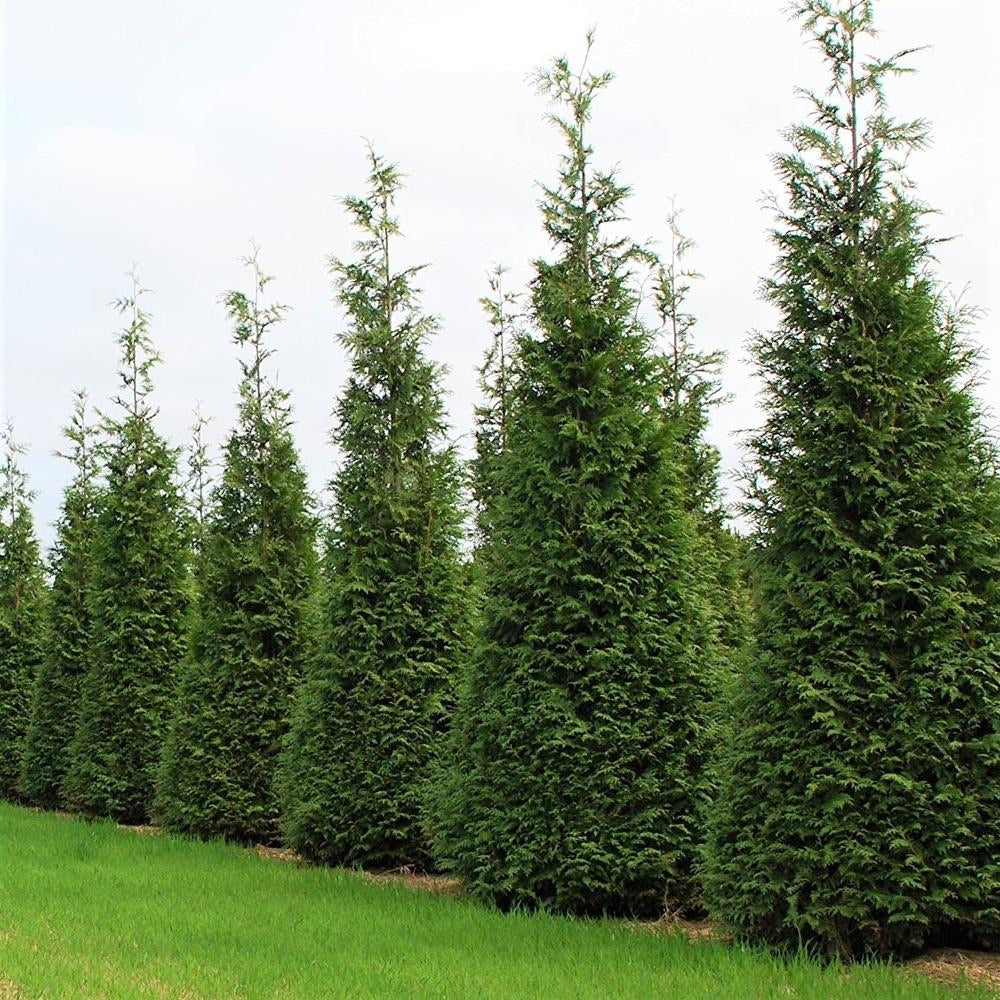
If you are planting trees for year-round privacy, choosing the right plants from the beginning is especially important. Our privacy screening plants include options with different natural growth habits and mature sizes.
Why Flowering Trees Sometimes Stop Blooming After Pruning
Imagine waiting all winter for a beautiful flowering tree to bloom, only to discover that it produces barely any flowers in spring.
One possible explanation is that the flower buds were accidentally removed during winter pruning.
Many spring-flowering trees develop their flower buds during the previous growing season. Those buds remain on the branches throughout winter, waiting for warmer weather.
If you remove those branches before spring arrives, you may also remove much of the upcoming flower display.
Plants That Bloom on Old Wood
Many spring-flowering magnolias, flowering dogwoods, and other early-blooming woody plants are best shaped shortly after flowering when pruning is necessary.
This allows you to enjoy the current year's flowers while giving the plant time to develop buds for the following season.
Plants That Bloom on New Wood
Some woody plants develop flowers on shoots produced during the current growing season.
These plants can often be pruned during late winter or early spring without removing the flower buds that would otherwise bloom later that year.
When exploring our flowering trees and landscape plants, remember that blooming habits are just as important as mature size when planning your maintenance schedule.
When Should You Prune a Tree If You Want It to Stay Small?
This is where we think understanding summer and winter pruning becomes particularly useful for homeowners.
Not everyone has several acres available for planting trees. Sometimes you have a narrow backyard, a small front lawn, or a particular spot beside your house where you want a beautiful tree without constantly worrying about its size.
Selective summer pruning may help manage some types of vigorous trees, especially fruit trees trained for smaller growing spaces.
However, pruning alone cannot change the genetic growth habits of a tree.
A tree naturally capable of reaching 60 feet tall is not necessarily a good choice for a space where you can only accommodate 15 feet of growth.
There is a difference between maintaining a naturally compact tree and spending decades fighting a tree that wants to become enormous.
Our guide to small trees that mature under 25 feet can help you find better options before you start digging planting holes.
Preventing Overgrowth Starts Before Planting
When choosing a tree, think about where its branches will be in ten or twenty years, not just how much room the little tree takes up today.
Consider nearby buildings, sidewalks, overhead power lines, neighboring trees, and the amount of room available for the mature canopy.
Correct spacing makes an enormous difference. We cover this in more detail in our guide to how far apart you should plant trees and other plants.
When We Would Avoid Summer Pruning
Summer pruning isn't something we would recommend doing simply because the calendar says June or July.
Here in Missouri, summer weather can range from comfortable growing conditions to stretches of intense heat and limited rainfall. Those are very different situations for a tree.
During Extreme Heat or Drought
A tree struggling to maintain healthy foliage during hot, dry weather already has enough going on.
Removing substantial amounts of living foliage can add unnecessary stress and suddenly expose sensitive branches or trunk tissue to strong sunlight.
Unless there is a safety issue, significant pruning is generally better postponed until conditions improve.
Immediately After Planting a New Tree
A newly planted tree needs healthy foliage to help establish its root system.
We would generally avoid unnecessary size-control pruning during this important establishment period. Broken or damaged branches can be removed, but extensive shaping should usually wait.
There are exceptions for certain fruit tree training systems where initial pruning is specifically recommended.
If you recently purchased or planted a young tree, our detailed guide to caring for your newly planted tree covers the establishment basics that deserve your attention first.
Too Close to the First Fall Frost
Late-season pruning can sometimes trigger tender new shoots that do not mature sufficiently before freezing temperatures arrive.
This is particularly concerning in colder growing regions where the transition from warm summer weather to freezing fall nights can happen quickly.
We prefer thinking about the tree's actual growth stage and local weather rather than giving everyone in the country the same pruning date.
When a Tree Is Already Struggling
Yellowing leaves, widespread dieback, poor annual growth, and early leaf drop can all indicate underlying problems.
Before removing healthy branches from a struggling tree, investigate whether the issue involves watering, soil drainage, planting depth, root damage, disease, or another environmental stress.
Even something as common as piling mulch too high around a tree trunk can contribute to serious long-term problems that pruning will not solve.
The Best Time to Prune Trees in Missouri and Similar Climates
For many healthy deciduous trees growing in our part of the Midwest, late February through March is a reasonable general window for dormant structural pruning, provided the tree is still dormant and the species does not require different timing.
Summer maintenance pruning can be considered for suitable established trees once vigorous seasonal extension growth has slowed, provided the tree is not experiencing significant heat or drought stress.
The University of Missouri Extension's ornamental tree pruning recommendations provide useful regional guidance, particularly regarding major pruning, flowering habits, and the risks of pruning at unfavorable points in the growing season.
We also encourage growers to look beyond the calendar and observe what their trees are actually doing.
- Are the buds still closed and dormant?
- Has the tree started actively extending new shoots?
- Have the newest leaves reached their mature size?
- Has rapid shoot growth begun to slow?
- Is the tree showing any signs of environmental stress?
These observations help you understand why a pruning date that works well one year might not be appropriate the following year.
How to Tell When a Tree Has Finished Its Main Growth Flush
One useful skill for homeowners is learning to recognize the difference between actively growing shoots and shoots that have slowed their seasonal extension.
Newly developing shoots often have tender green stems, lighter-colored leaves, and a soft growing tip.
As a shoot matures, the stem generally becomes firmer, the leaves finish expanding, and some species develop a noticeable terminal bud at the end of the branch.
These changes can help indicate that the initial rapid growth period has slowed.
They do not necessarily mean the tree is finished growing for the year. Some species produce multiple growth flushes, particularly when weather conditions and soil moisture are favorable.
Still, learning to recognize these stages is more useful than assuming every tree in your yard responds to pruning in exactly the same way on July 1.
How Much of a Tree Should You Prune at One Time?
For established landscape trees, we favor a conservative approach. It is usually better to remove a few carefully selected branches than to dramatically reduce the entire canopy.
Removing around 10 percent or less of the living canopy can be a reasonable conservative starting point for routine maintenance of many healthy established trees, although older, stressed, or sensitive trees may tolerate considerably less.
This is not a universal safe allowance. Tree species, age, condition, branch size, and previous pruning history all matter.
Fruit trees being trained or renovated may require different amounts of pruning under species-specific recommendations.
If a mature tree requires extensive work, especially involving large limbs, we recommend consulting a qualified arborist rather than trying to accomplish several years of maintenance in one afternoon.
A Simple Way to Decide Whether to Prune Now or Wait
Ask Yourself These Five Questions
1. What am I trying to accomplish?
Encouraging new shoots, maintaining size, improving branch structure, and removing damaged wood are different goals.
2. What kind of tree am I pruning?
Identify the species and check for any special disease, flowering, or fruiting considerations.
3. Is the tree healthy enough?
Look for drought stress, recent transplanting, leaf discoloration, or abnormal dieback.
4. How much living foliage or wood will I remove?
A handful of small shoots is very different from removing several major limbs.
5. Where do I want new growth afterward?
Think about the tree's future shape, not just what it will look like immediately after pruning.
Try Observing How Your Own Trees Respond to Pruning
One thing we would love to document more closely in our own growing conditions is how comparable trees respond to pruning at different points throughout the year.
If you have several healthy established trees of the same species and want to learn more about their growth habits, you can make some interesting observations without performing aggressive pruning.
Choose comparable small branches that already need corrective pruning. Photograph their original condition, record when and how they were pruned, and measure any replacement shoots that develop.
Keep track of the following details:
- The tree species and variety.
- The date and type of pruning cut.
- Whether the tree was dormant or actively growing.
- The number of replacement shoots that develop.
- The length of the new shoots later in the season.
- Whether the new growth survives the following winter.
Try to compare similar branches on similar trees. A shaded branch on an older tree is not necessarily comparable to a sunny branch on a vigorous young tree.
Even though a backyard comparison is not a controlled scientific experiment, these observations can teach you a surprising amount about the particular trees growing on your property.
Frequently Asked Questions About Summer and Winter Pruning
Is it better to prune trees in summer or winter?
Late winter is generally preferred for major structural pruning of many deciduous trees. Selective summer pruning can be useful for managing excessive shoots or maintaining certain established trees. The better season depends on the species, growing conditions, and intended result.
Does summer pruning stop trees from growing?
No. Carefully timed summer pruning may reduce immediate replacement growth and help manage shoot vigor, but trees can still develop new branches afterward. Heavy or poorly timed pruning may even encourage unwanted regrowth.
Why do trees grow straight-up branches after pruning?
These vigorous shoots, often called water sprouts, can develop when pruning stimulates dormant buds or changes the balance between the tree's canopy and root system. Heavy dormant pruning is one common reason they appear.
Can you prune a tree while it has leaves?
Yes. Appropriate light pruning can be performed on many trees while they have leaves. However, removing substantial amounts of foliage during heat, drought, or active stress can cause problems.
What happens if you prune a tree too early in spring?
Pruning during rapid spring growth can remove foliage and shoots that the tree has already used stored resources to develop. Depending on the species and the severity of pruning, this may cause stress or encourage unwanted replacement growth.
Does pruning a tree make its trunk thicker?
Not necessarily. Trunk thickening depends partly on healthy foliage, photosynthesis, genetics, and growing conditions. Removing too much living growth can reduce the resources available for trunk development.
Can winter pruning reduce fruit production?
Yes. Excessive winter pruning can remove flower buds or stimulate vegetative growth at the expense of fruit production. Appropriate pruning, however, can improve canopy structure and support productive fruiting wood.
Should you fertilize a tree after pruning it?
Not automatically. Fertilizer intended to stimulate additional growth may work against your goal if you are pruning to manage excessive vigor. Fertilization should be based on the tree's condition, soil fertility, and actual nutrient requirements.
Can you prune trees twice a year?
Some trees benefit from a combination of dormant structural pruning and selective summer maintenance. However, every pruning session removes living material from the tree. Consider the combined amount removed throughout the year rather than treating each pruning session separately.
Do all trees need to be pruned every year?
No. Many healthy ornamental and shade trees can go years without significant pruning once a sound structure has developed. Fruit trees often require more regular attention, depending on the species and growing system. If a tree is healthy, correctly shaped, and growing comfortably within its available space, leaving it alone may be the best maintenance decision you can make.