Why Does an Arborvitae Hedge Go Gappy?
A gappy arborvitae hedge is one of the most frustrating landscaping problems — you planted for privacy, and now you have holes, bare bottoms, or dead sections that defeat the whole purpose. Before you can fix it, you need to know why it happened.
The most common causes:
- Planted too close together. Counterintuitively, the most common cause of gaps is planting too close. Trees compete for light, the interior branches die from shading, and you end up with bare trunks at the bottom and gaps where trees declined.
- Winter burn or disease killed individual trees. One dead tree in a row creates an obvious gap that takes years to fill naturally.
- Deer browse. Heavy deer damage strips the lower branches, leaving bare trunks with foliage only at the top.
- Drought stress in year 1. Trees that didn’t establish properly grow slowly and unevenly, creating thin spots in the hedge.
- Shade from one side. Trees on the shaded end of a row grow slower and thinner than those in full sun, creating an uneven hedge.
Shop Arborvitae to Fill Gaps →
Assess the Damage First

Before buying replacement trees, assess what you’re actually dealing with:
Is the tree dead or just stressed?
Scratch a branch with your fingernail. If the tissue underneath is green, the tree is alive and may recover. If it’s brown and dry all the way through, the branch is dead. Do this on multiple branches at different heights to get a full picture.
Is it a gap or bare bottoms?
- Gap (missing tree): A tree died or was removed, leaving a hole in the row. Fix: plant a new tree in the gap.
- Bare bottoms (living tree, no lower branches): The tree is alive but the lower branches died from shading, deer browse, or disease. Fix: depends on the cause — new lower branches will not regrow on arborvitae once they’re gone.
- Thin/slow section: Trees are alive but sparse. Fix: fertilize, water, and give it time — or plant additional trees to fill in.

↑ Not sure if your tree is dead or just stressed? Read Why Is My Arborvitae Turning Brown? for the full diagnosis guide.
Fix #1: Fill the Gap With a New Tree
If a tree died and left a hole, the fix is straightforward: plant a new tree in the gap. A few things to get right:
Match the variety
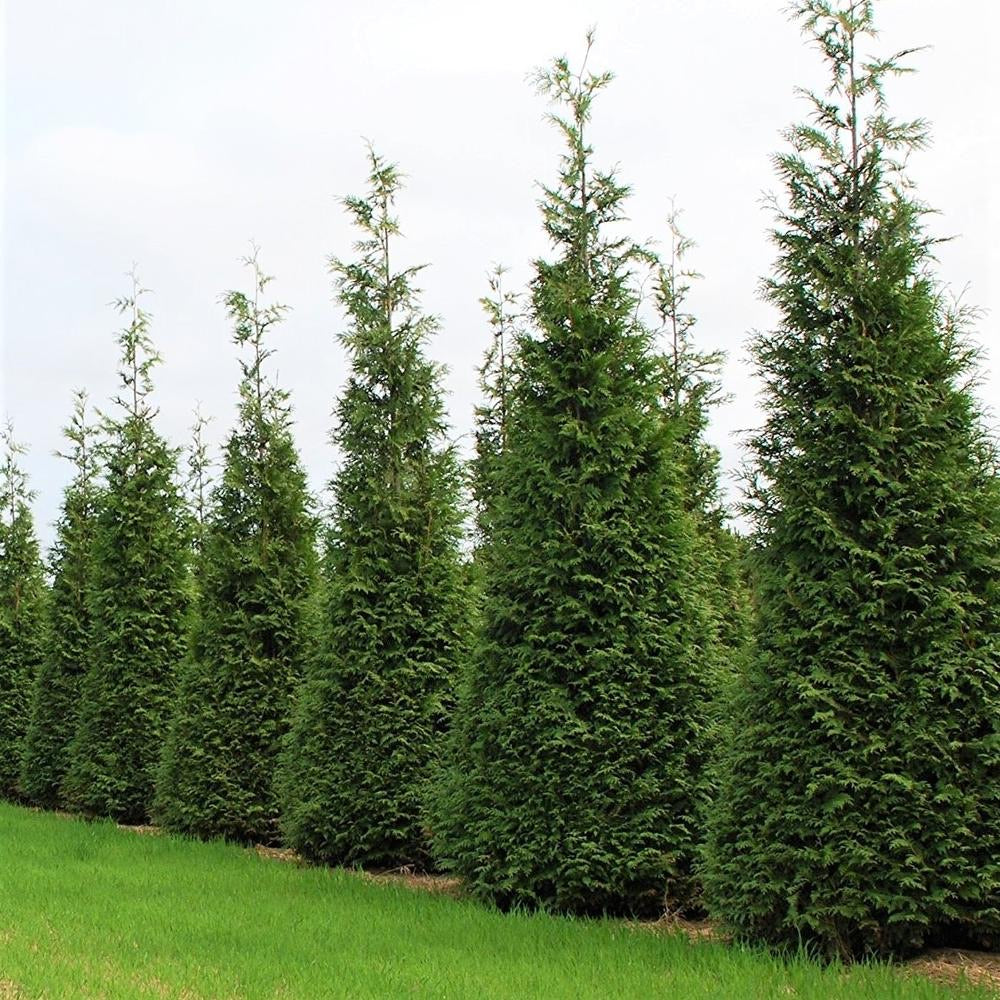
Plant the same variety as the rest of your hedge. Mixing Green Giant and Emerald Green in the same row creates an uneven hedge within a few years — the Green Giants will outgrow the Emerald Greens dramatically.
Size up if you can
If your existing hedge is already 6–8 feet tall, planting a 2-foot transplant will look odd for years. Consider buying a larger specimen (4–6 ft) to match the existing hedge height faster. The trade-off is cost — larger trees cost more but close the gap sooner.
Plant correctly
The most common reason replacement trees fail is planting too deep. The root flare must be at or slightly above grade. In clay soils, plant 1–2 inches above grade.
Our detailed step-by-step arborvitae planting guide explains how to avoid these common planting mistakes.
↑ Planting a replacement tree? Follow our Arborvitae Planting Guide to get it right the first time.
Water aggressively in year 1
A replacement tree planted into an established hedge faces extra competition from the root systems of neighboring trees. Water it more frequently than you would a tree in open ground — every 1–2 days for the first 2 weeks, then every 2–3 days through the first season.
Shop Green Giant — Fastest Gap Filler → Shop Emerald Green →
Fix #2: Bare Bottoms — The Hardest Problem to Fix

Bare bottoms are the most frustrating arborvitae problem because arborvitae will not regrow branches from bare wood. Once a branch dies and the foliage is gone, that section stays bare permanently. You have a few options:
Option A: Plant a low-growing shrub in front
The most practical fix for most homeowners. Plant a row of lower-growing shrubs or ornamental grasses in front of the bare trunks to mask the problem. Golden Globe Arborvitae planted at 3–4 ft spacing in front of a bare-bottomed Green Giant hedge is a classic combination — the globes provide low screening while the Green Giants handle the upper privacy.
Shop Golden Globe — Perfect for Masking Bare Bottoms →
Option B: Plant a second staggered row
Plant a second row of arborvitae 4–6 feet in front of the existing hedge, staggered so the new trees fill the gaps between the old ones. This creates a thicker, denser screen and the new trees’ lower branches cover the bare trunks of the old row.
Option C: Remove and replant
If the hedge is severely bare-bottomed and beyond saving aesthetically, removal and replanting with correct spacing is the nuclear option. It’s expensive and time-consuming, but it’s the only way to get a truly fresh start. This time, use the correct spacing from the beginning.
Fix #3: Thin or Slow Sections
If your hedge has thin spots where trees are alive but sparse, the fix is a combination of:
- Fertilize in early spring — a slow-release 10-10-10 broadcast at the drip line gives thin trees a growth boost
- Water consistently — thin trees are often drought-stressed; deep watering every 1–2 weeks during dry periods makes a significant difference
- Mulch the entire hedge row — 3–4 inches of wood chip mulch retains moisture and reduces competition from grass and weeds
- Add trees between existing ones — if spacing is too wide, plant additional trees between existing ones to fill in faster

↑ Thin or slow-growing trees? Read our Arborvitae Fertilizing Guide — the right fertilizer at the right time makes a real difference.
Which Variety Fills Gaps Fastest?
| Variety | Gap-Filling Speed | Best For |
|---|---|---|
| Green Giant | Fastest — 3–5 ft/yr | Large gaps in tall hedges; fastest to reach matching height |
| Emerald Green | Slow — 6–9 in/yr | Gaps in Emerald Green hedges; match variety for uniformity |
| Elegantissima | Moderate — 12–18 in/yr | Gaps in Elegantissima hedges; good mid-size option |
| Golden Globe | Very slow — 2–4 in/yr | Front-row masking of bare bottoms; not for tall gap filling |
↑ See year-by-year growth timelines for all 4 varieties in our Arborvitae Growth Rate Guide.
How to Prevent Gaps From Happening Again
- Use correct spacing from the start. Green Giant: 5–6 ft. Emerald Green: 2–3 ft. Elegantissima: 3–4 ft. Too close = bare bottoms in 5–7 years.
- Water consistently in year 1. Drought stress in the first season is the leading cause of uneven establishment and thin spots.
- Mulch the entire hedge row. 3 inches of wood chip mulch from trunk to drip line retains moisture and reduces competition.
- Protect from deer in years 1–2. Deer browse on young trees creates bare bottoms that never recover. Wire caging or repellent spray is worth the effort.
- Don’t plant too close to structures. Trees crowded against fences or buildings lose lower branches from shading and restricted airflow.
↑ Starting fresh or adding trees? Get the spacing right with our Arborvitae Spacing Guide.
Frequently Asked Questions
Can arborvitae grow back bare branches at the bottom?
No — arborvitae will not regrow branches from bare wood. Once lower branches die and the foliage is gone, that section stays bare permanently. The fix is to plant something in front to mask the bare trunks, or plant a second staggered row.
How do I fill a gap in my arborvitae hedge?
Plant a new tree of the same variety in the gap. Match the variety for uniformity, plant at the correct depth (root flare at or above grade), water aggressively in year 1, and mulch well. If the existing hedge is tall, buy a larger specimen to close the gap faster.
Why does my arborvitae hedge have gaps at the bottom?
The most common cause is planting too close together — the trees competed for light, the interior branches died from shading, and the bottoms went bare. Deer browse and winter burn are also common causes. Once bare, those branches won’t come back.
What can I plant in front of a bare-bottomed arborvitae hedge?
Golden Globe Arborvitae is the most natural-looking option — it stays 3–5 feet tall, matches the evergreen look of the hedge, and requires zero maintenance. Plant at 3–4 ft spacing in front of the bare trunks for a clean, finished look.
How long does it take to fill a gap in an arborvitae hedge?
With Green Giant, a 3–4 ft transplant will reach 8–10 ft in 2–3 years — fast enough to close most gaps visually within one growing season. Emerald Green takes much longer due to its slow growth rate. If speed matters, Green Giant is the answer even if the rest of your hedge is a different variety (though mixing varieties creates an uneven look long-term).
Shop Arborvitae at Weaver Family Farms
All four varieties grown right here and shipped ready to plant.
Green Giant → Emerald Green → Elegantissima → Golden Globe →
More Arborvitae Resources
Best Arborvitae for Privacy Screens → Arborvitae Spacing Guide → Are Arborvitae Deer Resistant? → Arborvitae Winter Care → Which Arborvitae Should I Plant? →
About the Author
Dax Weaver is the owner of Weaver Family Farms Nursery, a family-run nursery specializing in fruit trees, berry plants, and privacy evergreens shipped direct to homeowners across the US. Dax has spent years growing and studying the plants he sells, with a focus on helping customers choose the right variety for their specific site, zone, and goals. When he’s not in the nursery, he’s writing practical growing guides based on real-world experience — not just what the textbooks say.