Do Arborvitae Need Fertilizer?
Most established arborvitae in decent soil don’t strictly need fertilizer — but fertilizing correctly in the first few years makes a meaningful difference in growth rate and tree health. The key word is correctly. Fertilizing at the wrong time, with the wrong product, or in the wrong amount can burn roots, push weak growth, or make trees more vulnerable to winter damage.
This guide covers exactly what to use, when to apply it, and how — for all four varieties we grow at Weaver Family Farms Nursery.
The Golden Rule: Never Fertilize at Planting

The most common fertilizing mistake is adding fertilizer to the planting hole or applying it right after planting. Freshly cut and disturbed roots are highly sensitive — fertilizer salts burn them and set establishment back significantly.
Year 1 rule: water, mulch, and patience. The tree’s energy in year 1 goes entirely into root establishment. Pushing top growth with fertilizer before the root system is ready creates weak, fast growth that’s more vulnerable to drought, wind, and winter damage.
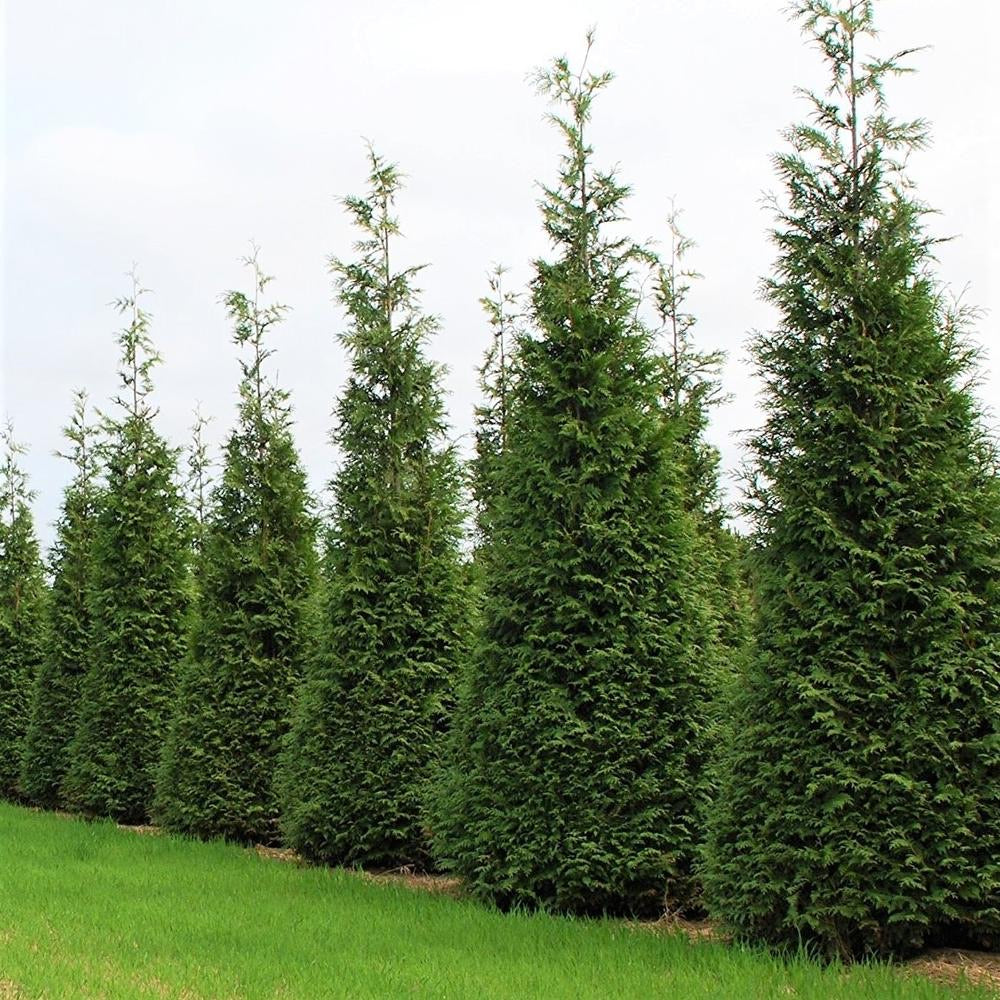
For more about the growth pace and needs of this type, see our detailed Green Giant Arborvitae growth and care.Wait until spring of year 2 before applying any fertilizer.

↑ Read our full Arborvitae Planting Guide — hole depth, backfill, mulch, and first-year watering.
What Type of Fertilizer to Use
Arborvitae are evergreens with specific nutritional needs that differ from flowering plants or lawn grass. Here’s what works:
Best option: Slow-release granular fertilizer
A balanced slow-release granular fertilizer — 10-10-10 or 12-6-6 — is the most practical and forgiving choice. Slow-release formulas feed the tree gradually over 3–6 months, reducing burn risk and providing steady nutrition through the growing season.
Good option: Fertilizer formulated for evergreens
Products labeled for evergreens or conifers often have a slightly higher nitrogen ratio and include micronutrients like iron and manganese that support deep green color. A solid choice if you want to optimize for color and density.
Avoid: High-nitrogen fast-release fertilizers
Lawn fertilizers push rapid, soft top growth that’s more susceptible to winter burn, disease, and drought stress. Keep lawn fertilizer away from arborvitae root zones.
Avoid: Fertilizing in late summer or fall
Late-season fertilizing pushes new growth that won’t harden off before winter. Stop fertilizing by mid-July at the latest.
When to Fertilize: Timing by Season
| Season | Action | Notes |
|---|---|---|
| Early spring (Mar–Apr) | ✅ Best time | Apply as new growth begins; feeds the spring flush |
| Late spring (May–Jun) | ✅ Acceptable | Still effective; avoid if very hot and dry |
| Mid-summer (July) | ⚠️ Last call | Stop by mid-July; late application risks winter damage |
| Late summer (Aug–Sep) | ❌ Do not fertilize | Pushes soft growth that won’t harden before frost |
| Fall (Oct–Nov) | ❌ Do not fertilize | Tree is hardening off; fertilizer disrupts this |
| Winter | ❌ Do not fertilize | Tree is dormant; fertilizer leaches away unused |
How to Apply Fertilizer
- Measure the drip line — the outer edge of the branches. Feeder roots are concentrated here, not at the trunk.
- Broadcast granules evenly from the trunk out to 1–2 feet beyond the drip line. Do not pile fertilizer against the trunk.
- Water in thoroughly immediately after — activates the fertilizer and moves it into the root zone.
- Apply to moist soil — never fertilize drought-stressed trees. Water deeply the day before if soil is dry.
How much to apply:
- Young trees (years 2–3): 1–2 cups per tree broadcast around the drip line
- Established trees (year 4+): Follow package rate based on trunk diameter or canopy spread
- Hedge rows: Broadcast evenly along the entire hedge, not just at individual trunks
Fertilizing by Variety
| Variety | Fertilizer Need | Priority Years | Notes |
|---|---|---|---|
| Green Giant | Moderate | Years 2–4 | Already fast-growing; fertilizer accelerates establishment further |
| Emerald Green | Moderate–High | Years 2–5 | Slow grower benefits most from consistent spring fertilizing |
| Elegantissima | Low–Moderate | Years 2–3 | Drought-tolerant; don’t over-fertilize or push excessive growth |
| Golden Globe | Low | Years 2–3 | Dwarf variety; minimal fertilizer needed to maintain compact form |
Signs Your Arborvitae Needs Fertilizer
- Pale or yellowing foliage — uniform across the tree may indicate nitrogen deficiency
- Slower than expected growth — Green Giant putting on less than 2 ft/year in good sun with adequate water
- Poor color density — foliage looks washed out or thin rather than rich and dense
⚠️ Before assuming it’s a fertilizer issue, rule out drought stress, planting depth, drainage problems, and pest damage — all cause similar symptoms.
↑ Yellowing or browning foliage? Read Why Is My Arborvitae Turning Brown? before reaching for fertilizer.
Soil Testing: The Smartest Move Before Fertilizing
If your arborvitae consistently underperform despite good sun, water, and planting technique, a soil test ($15–25 through your local cooperative extension office) tells you pH, NPK levels, and micronutrient deficiencies. Arborvitae prefer pH 6.0–7.0 — outside this range, nutrients become unavailable even if they’re present in the soil. Lime raises pH; sulfur lowers it.
Fertilizing Timeline: Newly Planted vs. Established

| Stage | Fertilizer? | What to Do |
|---|---|---|
| Planting day | No | Water deeply, mulch 2–3 inches, no fertilizer |
| Year 1 | No | Focus on watering and establishment only |
| Year 2 (spring) | Yes | First application — slow-release 10-10-10 at drip line |
| Years 3–5 | Yes | Annual spring application; most impactful growth years |
| Year 6+ | Optional | Established trees in decent soil often don’t need annual fertilizing |

↑ Heading into fall? Read our Arborvitae Winter Care Guide — stop fertilizing by mid-July and prep your trees for winter.
Frequently Asked Questions
What is the best fertilizer for arborvitae?
A slow-release balanced granular fertilizer — 10-10-10 or a product formulated for evergreens — applied in early spring. Slow-release formulas feed steadily through the growing season without burn risk.
When should I fertilize arborvitae?
Early spring (March–April) as new growth begins is ideal. You can fertilize through June. Stop by mid-July — late-season fertilizing pushes soft growth that won’t harden before winter.
Can I use lawn fertilizer on arborvitae?
No — lawn fertilizers are high in fast-release nitrogen that pushes rapid, soft growth and risks burning roots. Use a balanced slow-release granular or an evergreen-specific product.
How often should I fertilize arborvitae?
Once per year in early spring is sufficient. Established arborvitae in decent soil often don’t need annual fertilizing after year 5–6. Over-fertilizing is more common than under-fertilizing.
Will fertilizer make my arborvitae grow faster?
Yes — especially in years 2–4. Green Giant responds particularly well to spring fertilizing. Emerald Green also benefits, though its growth rate is slower by nature regardless of fertilizer.
↑ Curious how fast your variety should be growing? See our Arborvitae Growth Rate Guide with year-by-year timelines for all 4 varieties.
The Full Arborvitae Care Picture
How to Plant Arborvitae → Arborvitae Winter Care → Arborvitae in Clay Soil → Why Is My Arborvitae Turning Brown? → How Fast Does Arborvitae Grow? →
Shop Arborvitae at Weaver Family Farms
Green Giant → Emerald Green → Elegantissima → Golden Globe →
About the Author
Dax Weaver is the owner of Weaver Family Farms Nursery, a family-run nursery specializing in fruit trees, berry plants, and privacy evergreens shipped direct to homeowners across the US. Dax has spent years growing and studying the plants he sells, with a focus on helping customers choose the right variety for their specific site, zone, and goals. When he’s not in the nursery, he’s writing practical growing guides based on real-world experience — not just what the textbooks say.