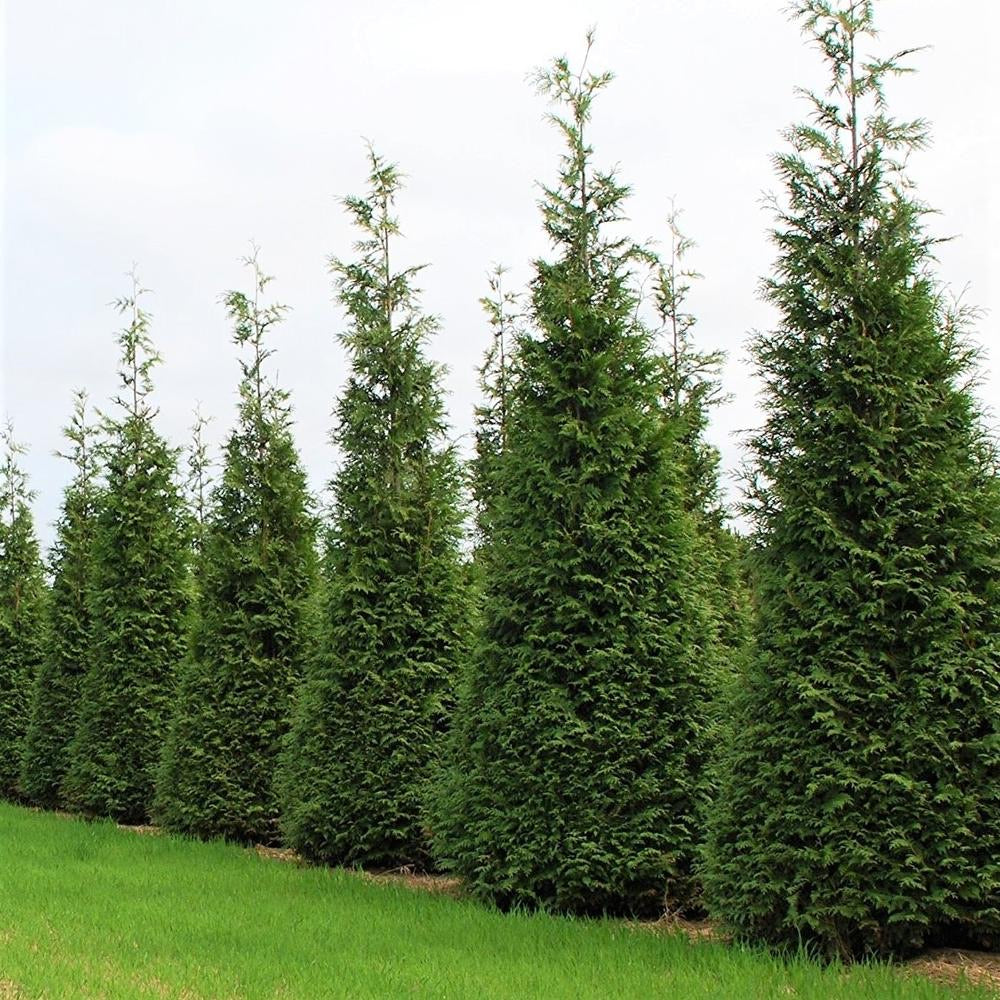
Emerald Green Arborvitae is the most popular compact privacy hedge in North America — and it’s easy to see why. It stays a manageable 10–15 feet tall, holds its rich emerald green color through all four seasons including winter, grows in a naturally tight pyramidal form that never needs pruning, and thrives in Zones 3–8. If you want a clean, formal-looking privacy hedge that won’t outgrow your yard, Emerald Green is the answer.
Emerald Green Arborvitae at a Glance

| Feature | Details |
|---|---|
| Botanical Name | Thuja occidentalis ‘Smaragd’ |
| Mature Height | 10–15 feet |
| Mature Width | 3–4 feet |
| Growth Rate | Moderate — 6 to 12 inches per year |
| Hardiness Zones | Zones 3–8 |
| Sunlight | Full sun to partial shade |
| Soil | Well-drained; adaptable |
| Deer Resistance | Poor — frequently browsed by deer |
| Best Use | Compact privacy hedge, foundation planting, driveway border |
Why Emerald Green Is the Most Popular Compact Arborvitae

Emerald Green (also sold as ‘Smaragd’ — its Danish name) has been the go-to compact privacy hedge for decades. Here’s what makes it stand out:
- Stays manageable: At 10–15 feet tall and only 3–4 feet wide, it fits in spaces where Green Giant would be overwhelming. Perfect for side yards, property lines, and foundation plantings.
- Stunning winter color: Unlike many arborvitae that turn bronze or brown in winter, Emerald Green holds its rich emerald color through the coldest months — one of the best winter-color evergreens available.
- Natural formal shape: The tight, narrow pyramidal form looks clean and formal without any pruning. It’s one of the few plants that looks like it was professionally shaped right out of the box.
- Extremely cold-hardy: Hardy to Zone 3 (-40°F) — one of the most cold-tolerant arborvitae varieties available. Thrives across the entire northern US and Canada.
- Versatile placement: At only 3–4 feet wide, it can be planted close to structures, fences, and property lines where wider plants won’t fit.
- Long-lived: With proper care, Emerald Green lives 50+ years — a true long-term landscape investment.
Emerald Green Arborvitae Growth Rate: What to Expect

Emerald Green grows 6 to 12 inches per year — moderate compared to Green Giant’s 3–5 feet, but steady and reliable. Here’s a realistic growth timeline from a typical 2–3 foot nursery plant:
If you want to compare growth rates in detail, this guide on Green Giant Arborvitae offers a thorough comparison of growth expectations for both varieties, so you can see how each fits your landscape needs with Green Giant Arborvitae growth rates guide.| Year | Approximate Height | Notes |
|---|---|---|
| Plant (year 0) | 2–3 ft | Establishing root system |
| Year 2 | 3–5 ft | Visible growth begins |
| Year 4 | 5–7 ft | Good low-level privacy |
| Year 6 | 7–9 ft | Solid privacy hedge forming |
| Year 10 | 10–12 ft | Near full height; excellent privacy |
| Mature | 12–15 ft | Full height; self-maintaining |
Tip to speed things up: Plant the largest available size, water consistently in years 1–2, and fertilize each spring. Emerald Green planted in full sun grows noticeably faster than in shade.
How to Plant Emerald Green Arborvitae
Choosing the Right Location
- Sun: Full sun (6+ hours) produces the fastest growth and richest color. Tolerates partial shade (4–6 hours) but growth slows and the form becomes slightly looser. Avoid deep shade — less than 4 hours of sun produces thin, open growth.
- Soil: Prefers well-drained soil. Unlike Green Giant, Emerald Green is more sensitive to wet feet — avoid planting in low spots or areas that stay wet after rain. Amend heavy clay with compost before planting.
- Wind exposure: Emerald Green can suffer winter burn (browning of foliage) on exposed, windy sites. Plant on the leeward side of structures or use burlap wrapping in the first 1–2 winters in harsh climates.
- Deer pressure: Emerald Green is frequently browsed by deer, especially in winter when other food sources are scarce. In high-deer areas, consider Green Giant Arborvitae instead, or protect young plants with fencing or deer repellent.
How Far Apart to Plant Emerald Green Arborvitae

Emerald Green’s narrow 3–4 foot mature width makes spacing decisions straightforward:
- 2–3 feet apart: Creates a very tight, formal hedge quickly. Trees will touch within 2–3 years. Best for a solid wall effect. Can cause crowding issues long-term in some climates.
- 3–4 feet apart: The most popular spacing — trees fill in within 3–4 years and maintain good air circulation. Our recommended spacing for most privacy hedges.
- 4–5 feet apart: Takes longer to fill in but trees never crowd each other. Best for long-term health in humid climates where air circulation matters.
- 6+ feet apart: For specimen plantings or loose screens where you want individual trees to show their natural form.
Our recommendation: 3–4 feet apart for a privacy hedge — fast fill-in without overcrowding.
Planting Steps
- Dig the hole 2–3 times wider than the root ball, no deeper than the root ball height.
- If soil is heavy clay, mix in compost at a 1:1 ratio with native soil for the backfill.
- Set the plant so the root flare sits at or just above soil level. Never bury the trunk.
- Backfill and firm gently to eliminate air pockets.
- Water thoroughly immediately after planting.
- Mulch with 3–4 inches of wood chips or shredded bark in a 2–3 foot circle. Keep mulch 2 inches away from the trunk.
Emerald Green Arborvitae Care
Watering

Consistent moisture is critical in the first 1–2 years. Emerald Green is less drought-tolerant than Green Giant and will show stress (browning tips, needle drop) if allowed to dry out repeatedly.
- First year: Water deeply 2–3 times per week during dry periods. Soak the root zone thoroughly each time rather than light, frequent sprinkles.
- Year 2: Water once or twice per week during dry spells as the root system expands.
- Year 3+: Established plants need supplemental watering only during extended dry periods (2+ weeks without significant rain). Mulching dramatically reduces watering needs.
Fertilizing
Apply a balanced slow-release fertilizer (10-10-10 or an evergreen-specific fertilizer) in early spring as new growth begins. Use about ½ to 1 lb per plant for young trees, up to 2 lbs for mature plants. Spread evenly under the canopy and water in well. Do not fertilize after August.
Pruning
Emerald Green requires no pruning to maintain its natural shape — the tight pyramidal form is self-maintaining. If you want to control height or tighten the form, prune lightly in late spring after the first flush of new growth. Shear only the outer tips — never cut back into old brown wood, as Emerald Green will not regenerate from bare wood.
Winter Care
Emerald Green holds its color better in winter than most arborvitae, but it can suffer from two winter issues:
- Winter burn: Browning of foliage on the south and west sides caused by sun and wind desiccation when the ground is frozen. Prevent by wrapping with burlap in the first 1–2 winters in exposed sites, or by applying an anti-desiccant spray in late fall.
- Snow and ice damage: Heavy snow loads can splay the branches outward, distorting the form. Gently brush snow off after storms. Wrapping with twine in a spiral from bottom to top before winter prevents splaying in heavy snow areas.
Pests and Diseases

- Spider mites: The most common pest on Emerald Green, especially in hot, dry summers. Look for fine webbing and stippled, dull foliage. Treat with insecticidal soap or miticide; improve air circulation with proper spacing.
- Bagworms: Occasional in the Midwest. Hand-pick bags in fall and winter; apply Bt in late spring when larvae are small.
- Deer browse: The most serious threat in many areas. Deer will strip foliage from the bottom up, leaving bare brown stems. Protect with fencing, deer repellent spray, or consider Green Giant in high-deer areas.
- Root rot: In poorly drained soil. Ensure good drainage at planting; avoid overwatering established plants.
Best Uses for Emerald Green Arborvitae

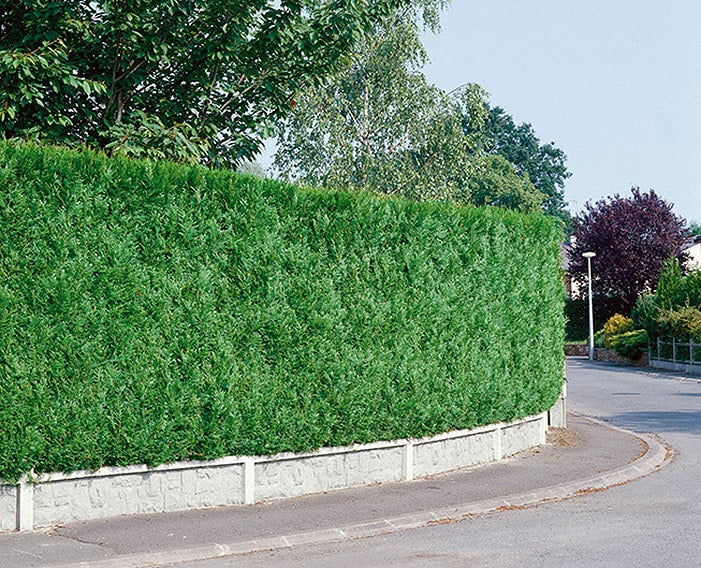
- Privacy hedge: The classic use — plant 3–4 feet apart for a solid green wall that tops out at 12–15 feet. Perfect for blocking neighbors, roads, and unsightly views without overwhelming the yard.
- Driveway border: Plant in a single row along a driveway for a formal, elegant entrance. The narrow width means they won’t encroach on the driveway even at maturity.
- Foundation planting: The narrow form and manageable height make Emerald Green one of the few arborvitae suitable for foundation plantings near the house.
- Property line marker: A row of Emerald Green defines property lines clearly and attractively without the maintenance of a fence.
- Accent or specimen: A single Emerald Green in a corner or at a gate creates a strong vertical accent that looks formal and intentional.
- Container planting: Young Emerald Greens grow well in large containers (25+ gallons) for patio privacy or deck screening.
Emerald Green vs. Green Giant: Which Should You Plant?

| Feature | Emerald Green | Green Giant |
|---|---|---|
| Mature Height | 10–15 ft | 40–60 ft |
| Mature Width | 3–4 ft | 12–20 ft |
| Growth Rate | 6–12 in/year | 3–5 ft/year |
| Cold Hardiness | Zone 3 | Zone 5 |
| Deer Resistance | Poor | Excellent |
| Winter Color | Excellent — stays emerald | Good |
| Best For | Compact hedge, foundation, Zone 3–4 | Tall screen, windbreak, deer country |
Choose Emerald Green if: you want a compact, manageable hedge (under 15 ft), you’re in Zone 3 or 4, you want the best winter color, or you need a narrow plant near structures.
Choose Green Giant if: you need a tall screen fast, you have deer pressure, or you have the space for a larger tree.
✅ Shop Green Giant Arborvitae →
Frequently Asked Questions
How tall does Emerald Green Arborvitae get?
Emerald Green reaches 10–15 feet tall at maturity with a width of just 3–4 feet. It’s one of the most narrow arborvitae varieties available, making it ideal for tight spaces. Growth slows significantly as it approaches its mature height.
Why is my Emerald Green Arborvitae turning brown?
Browning on Emerald Green has several common causes: winter burn (browning on the south/west side in late winter from sun and wind desiccation), drought stress (browning tips from insufficient watering), spider mites (stippled, dull foliage with fine webbing), or deer browse (stripped foliage from the bottom up). Identify which side and pattern the browning follows to diagnose the cause.
How far apart should I plant Emerald Green Arborvitae for a privacy hedge?
Plant 3–4 feet apart for a privacy hedge — this is the sweet spot between fast fill-in and long-term health. Trees will touch and create a solid screen within 3–4 years at this spacing. For a very tight, formal hedge, plant 2–3 feet apart.
Does Emerald Green Arborvitae stay green in winter?
Yes — Emerald Green holds its rich emerald color through winter better than almost any other arborvitae variety. This is one of its most valued traits. Some minor bronzing can occur in very harsh winters or exposed sites, but it greens back up in spring.
Is Emerald Green Arborvitae deer resistant?
No — Emerald Green is frequently browsed by deer, especially in winter. It’s one of the most deer-susceptible arborvitae varieties. In areas with significant deer pressure, protect young plants with fencing or repellent, or consider planting Green Giant Arborvitae instead, which deer rarely touch.
Can Emerald Green Arborvitae grow in Zone 3?
Yes — Emerald Green is hardy to Zone 3 (-40°F), making it one of the most cold-tolerant arborvitae varieties available. It’s an excellent choice for the upper Midwest, northern New England, and Canada where Green Giant (Zone 5) won’t survive reliably.
🌲 Ready to plant your Emerald Green hedge?
Emerald Green Arborvitae ships directly to your door from our family farm. Plant this season and enjoy year-round green privacy for decades to come.
Shop Emerald Green Arborvitae →