Arborvitae vs. Leyland Cypress: The Short Answer
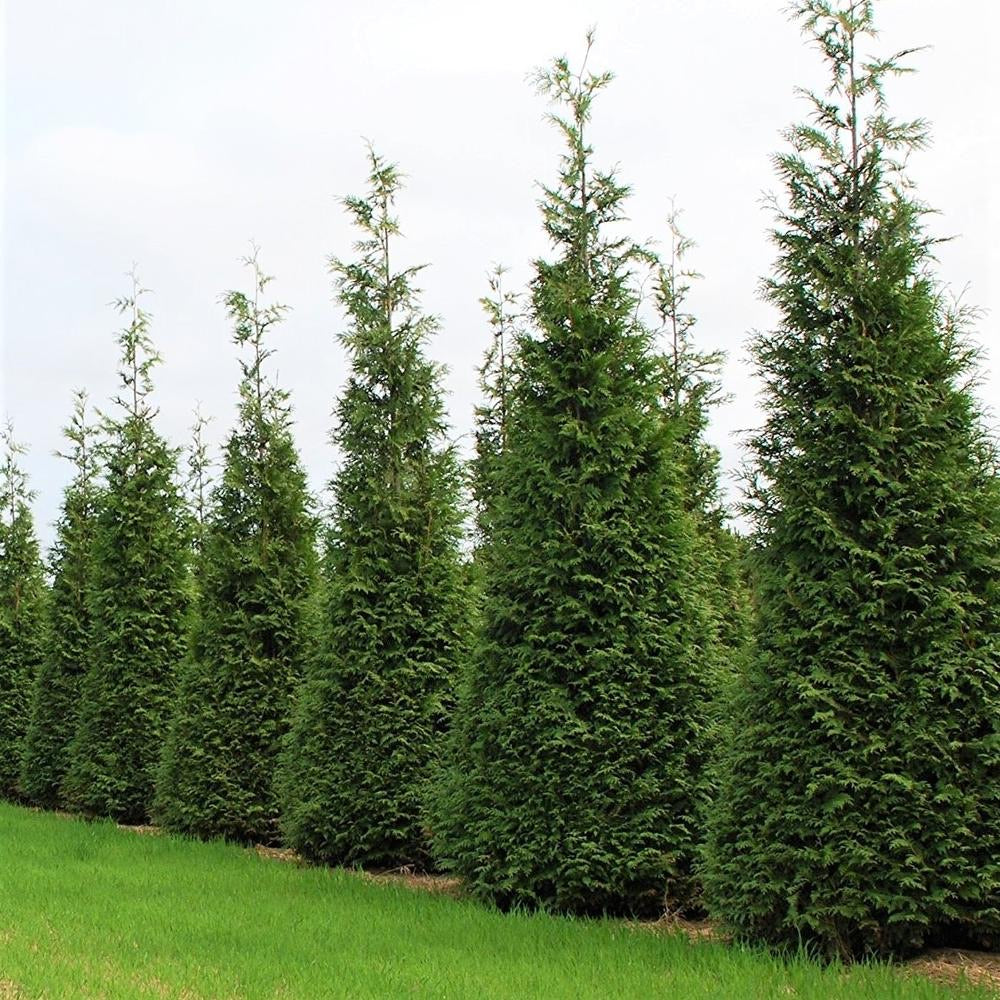
Both trees grow fast and make dense privacy screens — but they are not equal. Leyland Cypress has serious long-term problems that most buyers don’t find out about until it’s too late. Arborvitae, by contrast, is a proven long-term performer that stays healthy and full for decades with almost no maintenance.
Here’s the head-to-head before we go deep:
| Feature | Arborvitae (Green Giant) | Leyland Cypress |
|---|---|---|
| Growth rate | 3–5 ft/year | 3–5 ft/year |
| Mature height | 20–40 ft | 40–60 ft |
| Lifespan | 50–150+ years | 15–25 years (often less) |
| Disease resistance | Excellent | Poor — prone to Seiridium canker, Botryosphaeria |
| Cold hardiness | Zone 5–8 | Zone 6–8 (marginal in Zone 5) |
| Wind resistance | Good | Poor — shallow roots, prone to toppling |
| Maintenance | Very low | Moderate–high (disease management, pruning) |
| Long-term value | Excellent | Poor — often needs full replacement in 15–25 years |
Growth Rate: Essentially a Tie

Both Green Giant Arborvitae and Leyland Cypress grow at roughly the same rate — 3–5 feet per year under good conditions. If speed is your only criteria, it’s a wash. But growth rate is where the similarities end.
The real question isn’t which one grows faster — it’s which one is still standing and healthy in 20 years.
Arborvitae Growth Rate Guide →
Lifespan: Arborvitae Wins by a Landslide
This is the biggest difference most buyers don’t know about when they’re shopping.
Arborvitae lifespan: 50–150+ years. A well-sited Green Giant or Emerald Green planted today will likely outlive the person who planted it. These are long-term landscape investments.
Leyland Cypress lifespan: 15–25 years — and often less. Leyland Cypress is a sterile hybrid that was never meant to be a permanent landscape tree. It grows fast, looks great for 8–12 years, then starts declining from disease, wind damage, or simply running out of steam. Many homeowners who planted Leyland Cypress hedges in the 1990s and 2000s have already had to remove and replace them entirely.
When you factor in the cost of removal and replanting, Leyland Cypress is almost always the more expensive option long-term — even if it’s cheaper at the nursery.
Disease Resistance: Arborvitae Wins Decisively
Leyland Cypress has two serious disease problems that affect nearly every planting eventually:
Seiridium Canker
The most destructive Leyland Cypress disease. It causes branch dieback, oozing resin, and eventually kills entire trees. There is no cure — only removal of affected branches and, eventually, the tree. It spreads rapidly in warm, humid conditions and is nearly impossible to prevent in the Southeast and Mid-Atlantic.
Botryosphaeria Canker
Similar to Seiridium, this fungal disease causes branch dieback and is triggered by drought stress, wounding, or any other stress event. Once a Leyland Cypress is stressed, it becomes highly susceptible.
Arborvitae, by contrast, has excellent disease resistance. Green Giant in particular is remarkably disease-free — it’s resistant to the bagworm and spider mite problems that affect other arborvitae, and it doesn’t have the canker vulnerabilities of Leyland Cypress.
Cold Hardiness: Arborvitae Wins

Leyland Cypress is rated for Zones 6–8 and is marginal in Zone 5. A hard winter in Zone 5 or 6 can cause significant dieback or kill Leyland Cypress outright.
Arborvitae options by zone:
- Green Giant: Zone 5–8 — reliable through most of the US
- Emerald Green: Zone 3–8 — one of the most cold-hardy privacy trees available anywhere
- Elegantissima: Zone 5–8
- Golden Globe: Zone 3–8
If you’re in Zone 5 or colder, Leyland Cypress is a risky choice. Emerald Green Arborvitae is the clear winner for cold climates.
Shop Emerald Green Arborvitae →
Wind Resistance: Arborvitae Wins
Leyland Cypress has a shallow, wide-spreading root system that makes it prone to toppling in high winds — especially as the trees get large and top-heavy. This is a serious safety concern on exposed properties.
Arborvitae, particularly Green Giant, has a stronger root system and more flexible branching that handles wind much better. It’s a far safer choice for exposed sites, windbreaks, and properties in storm-prone areas.
Maintenance: Arborvitae Wins
Leyland Cypress requires:
- Regular monitoring for canker diseases
- Pruning to remove diseased branches (which can spread disease if done incorrectly)
- Potential fungicide applications in high-disease-pressure areas
- Eventual removal and replacement as the trees decline
Arborvitae requires:
- Watering in year 1
- Mulching
- Almost nothing after establishment
Green Giant in particular is one of the lowest-maintenance privacy trees you can plant. Once it’s established, it essentially takes care of itself.
When Leyland Cypress Makes Sense
To be fair, there are situations where Leyland Cypress is a reasonable choice:
- Zone 7–8, low disease pressure areas — in drier climates with good air circulation, canker diseases are less severe
- Short-term screening needs — if you need privacy for 10–15 years and plan to redesign the landscape anyway
- Very large properties in the South where the scale and fast growth outweigh the disease risk
But for most homeowners in Zones 5–7 who want a long-term privacy screen they don’t have to babysit, arborvitae is the better investment every time.
Which Arborvitae Should You Choose?

- Large property, want it fast: Green Giant — same growth rate as Leyland Cypress, far better long-term
- Tight space, urban lot, Zone 3–5: Emerald Green — narrow, cold-hardy, bulletproof
- Mid-size yard, want color interest: Elegantissima — unique silvery-gold foliage, columnar form
- Low border or accent: Golden Globe — dwarf globe, zero maintenance
Full Variety Comparison Guide →
Frequently Asked Questions
Is arborvitae better than Leyland Cypress?
For most homeowners, yes — arborvitae lives 50–150+ years vs. 15–25 for Leyland Cypress, has far better disease resistance, handles cold better, and requires almost no maintenance. The growth rate is similar, so there’s no meaningful trade-off in speed.
Why is my Leyland Cypress dying?
The most likely cause is Seiridium canker or Botryosphaeria canker — fungal diseases that are nearly impossible to prevent in warm, humid climates. Once established in a tree, there is no cure. Affected branches should be removed and the tree monitored for further decline.
How long does Leyland Cypress live?
Typically 15–25 years, though some trees in ideal conditions live longer. Many Leyland Cypress hedges planted in the 1990s and 2000s have already been removed and replaced.
What is the fastest-growing privacy tree that isn’t Leyland Cypress?
Green Giant Arborvitae — it grows at the same rate (3–5 feet per year) with none of the disease and longevity problems. It’s the most popular Leyland Cypress alternative for good reason.
Can arborvitae replace Leyland Cypress?
Yes — Green Giant is the most direct replacement. Same growth rate, better disease resistance, longer lifespan, better cold hardiness. If you’re replacing a failed Leyland Cypress hedge, Green Giant is the go-to choice.
Shop Arborvitae at Weaver Family Farms
All four varieties grown right here and shipped ready to plant.
Green Giant → Emerald Green → Elegantissima → Golden Globe →
More Arborvitae Resources
Best Arborvitae for Privacy Screens → How Fast Does Arborvitae Grow? → Which Arborvitae Should I Plant? → Arborvitae Winter Care Guide → Why Is My Arborvitae Turning Brown? →
About the Author
Dax Weaver is the owner of Weaver Family Farms Nursery, a family-run nursery specializing in fruit trees, berry plants, and privacy evergreens shipped direct to homeowners across the US. Dax has spent years growing and studying the plants he sells, with a focus on helping customers choose the right variety for their specific site, zone, and goals. When he’s not in the nursery, he’s writing practical growing guides based on real-world experience — not just what the textbooks say.